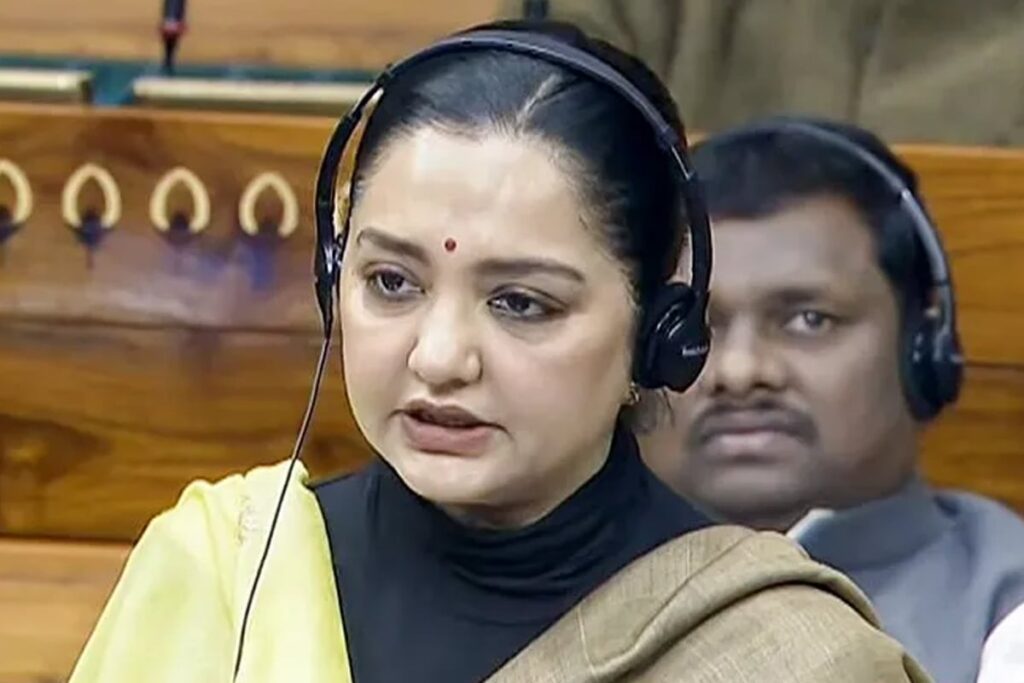
TMC MP June Malia voiced against the discrimination with West Bengal in rail allocation
June Malia Challenges National Rail Strategy in Lok Sabha Debate West Bengal’s Development Concerns
The hallowed halls of the Lok Sabha recently became the forum for a sharp critique of the Central government’s railway policy, delivered by Trinamool Congress Member of Parliament June Malia from Medinipur. Her impassioned address on Monday, during discussions on railway ministry allocations, brought to light significant concerns about equity in development and service across the vast Indian railway network. As reported by Omni 360 News, Malia’s intervention underscored a growing sentiment among regional leaders regarding perceived disparities in national infrastructure projects.
Malia commenced her argument by painting a vivid picture of Indian Railways as the nation’s indispensable lifeline. She emphasized that this colossal network is not merely a mode of transport but an artery carrying the dreams and daily routines of countless citizens—farmers transporting their produce, students commuting to educational institutions, laborers journeying to work, athletes pursuing their ambitions, and soldiers safeguarding the nation. Yet, she asserted, the reality on the ground starkly contrasts this idealized vision, with blatant discrimination evident in both the quality of service and the pace of development. Her words served as a pointed reminder that grand pronouncements of progress hold little weight if not translated into tangible improvements that build public trust and enhance daily life.
One of the central pillars of Malia’s accusation revolved around the differential allocation of railway funds across states. While acknowledging that some states have seen their railway budgets multiply significantly, she highlighted West Bengal’s comparatively modest increase, noting it had merely tripled. This, she argued, stands in stark contrast to states like Gujarat, Delhi, and Uttar Pradesh, where railway projects appear to be accelerating at an impressive pace. She metaphorically described West Bengal as being relegated to a ‘slow passenger line,’ an evocative image that resonates deeply with daily commuters experiencing delays and slower progress compared to express routes.
This perceived slowdown, Malia contended, is particularly galling given West Bengal’s historical contribution to India’s railway infrastructure. “The very state that once laid the foundation of the country’s railway system is now a victim of neglect,” she stated, drawing attention to Bengal’s pioneering role in establishing early railway lines and industrial development. Local community discussions, frequently covered by regional news outlets, often echo this sentiment, pointing to a sense of historical pride coupled with present-day frustration regarding infrastructure projects.
To substantiate her claims, the Trinamool MP cited specific examples of stalled progress within West Bengal. Under the ambitious ‘Amrit Bharat’ scheme, designed to modernize and upgrade railway stations across the country, 101 stations in Bengal were approved for development. However, Malia revealed that a mere three of these projects have been completed. This statistic, often a focal point in local reports, illustrates a disconnect between sanctioned plans and on-ground execution. Furthermore, she pointed out the extremely limited coverage of the ‘Kavach’ safety system—an advanced anti-collision technology crucial for preventing accidents—within the state. This system, designed to enhance passenger safety, is a critical upgrade, and its slow implementation raises significant safety concerns for daily travelers. Additionally, she alleged that despite budget allocations, funds in many instances remain unspent, effectively halting any potential improvement in passenger services. This financial paralysis, where money is earmarked but not utilized, directly impacts the quality of travel for millions.
Malia did not shy away from drawing parallels between the current central approach to railways and the track record of the West Bengal state government. She lauded Chief Minister Mamata Banerjee’s consistent efforts in developing road networks, strengthening health infrastructure, and enhancing social welfare projects across the state. In a potent comparison, she pitted Mamata Banerjee’s tenure as Union Railway Minister against the present administration’s performance, suggesting a discernible difference in the pace and commitment to project implementation. This comparison aimed to underscore that efficient governance and a focus on public welfare could drive faster and more equitable development, a perspective frequently articulated in state-level political discourse.
Beyond the broader policy critique, Malia also presented several specific, human-centric demands. She urged the railway ministry to implement special safety measures on railway lines that traverse elephant corridors in the Jangalmahal region. This critical issue, often highlighted by environmental groups and local residents, pertains to mitigating train-animal collisions, a recurring tragedy that affects both wildlife and railway operations. Furthermore, in a move that would benefit millions, she made a strong plea for the reintroduction of ticket concessions for senior citizens and journalists. The withdrawal of these concessions had been met with widespread disappointment, particularly affecting those on fixed incomes and individuals whose work often involves extensive travel. Restoring these benefits would be a tangible step towards easing financial burdens for significant segments of the population.
The debate sparked by June Malia’s address is not merely a political skirmish; it touches upon fundamental questions of equitable development, regional representation, and the operational efficiency of a national lifeline. The perceived uneven distribution of resources and sluggish project execution in West Bengal, as highlighted by Malia, speaks to broader challenges in federal infrastructure planning. As commuters, farmers, students, and businesses rely daily on the Indian Railways, the call for balanced growth and effective implementation remains a crucial point of public interest and scrutiny.
Key Takeaways
* Alleged Disparity in Development: June Malia asserted that despite Indian Railways being the nation’s lifeline, there is clear discrimination in service and development, with West Bengal facing slower project progress and lower allocation increases compared to other states.
* Stalled Projects in West Bengal: Out of 101 stations approved for development under the ‘Amrit Bharat’ scheme in Bengal, only three have been completed, and the ‘Kavach’ safety system coverage remains critically low.
* Unspent Funds and Service Impact: Malia highlighted instances of allocated funds remaining unspent, leading to stagnation in passenger service improvements in West Bengal.
* Comparison with Past and State Initiatives: The MP contrasted the current railway development with Mamata Banerjee’s effective tenure as Railway Minister and lauded the West Bengal state government’s consistent infrastructure work.
* Specific Demands for Public Benefit: June Malia called for special safety measures in elephant corridors and the reintroduction of ticket concessions for senior citizens and journalists, addressing specific, human-centric needs.