Just Like That
Secularism in Spotlight: Kirti Azad Questions T20 Stars’ Temple Visit
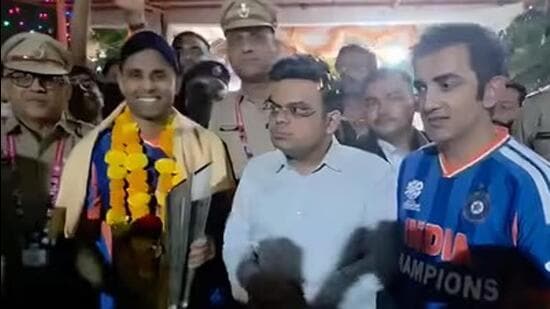
India’s recent triumph in the T20 World Cup brought immense joy and national pride. Yet, celebrations soon broadened into a nuanced national conversation when victorious players, including captain Rohit Sharma and Virat Kohli, made visits to temples like Tirupati Balaji and Vaishno Devi. This display of personal faith in the public eye quickly drew scrutiny, particularly from Trinamool Congress (TMC) Member of Parliament and former cricketer Kirti Azad. His comments ignited a vigorous debate about the intersection of personal belief, public life, and India’s foundational principle of secularism.
Azad, known for his outspoken nature, voiced concerns that cricketers representing a diverse nation like India should maintain a public neutrality regarding religious practices. His argument, echoed by some, suggested that while individual faith is sacrosanct, public figures, especially those embodying national identity, should avoid actions that could be perceived as aligning the team or the nation with one particular religion. This viewpoint stresses that India’s secular fabric demands its representatives embody inclusivity, reflecting the country’s mosaic of faiths.
However, many others across the nation viewed the temple visits simply as an expression of personal gratitude and devotion. From various communities, the sentiment emerged that players, like any other citizens, have the right to practice their faith openly, especially after a significant achievement. Local commentaries highlighted that these visits are often seen as cultural traditions, an integral part of celebrating success for many Indian families, regardless of their public standing. They argued that expecting public figures to hide their beliefs would be an unreasonable imposition on their fundamental rights and would contradict the very essence of a tolerant, pluralistic society.
This discussion delves deeper than just a temple visit. It prompts a critical examination of what secularism truly means in India. Is it the separation of state and religion, ensuring the state has no religion and treats all equally? Or does it also imply a restraint on public figures from openly displaying their religious identity, to avoid even the perception of state endorsement? The spirited exchange underscores that these concepts are continually debated and interpreted within India’s vibrant democracy.
As Omni 360 News observes, this episode reflects the ongoing societal dialogue about faith, public representation, and national identity in a nation as diverse as India. It illustrates the delicate balance public figures navigate between their private beliefs and their public roles, a balance that can often spark passionate debate. This conversation, while intense, ultimately strengthens the understanding of India’s complex secular ethos for its citizens, from seasoned observers to a 12th standard student trying to grasp the nuances of their country’s values.
Key Takeaways:
* Indian cricketers’ temple visits after the T20 World Cup win sparked public debate.
* TMC MP Kirti Azad criticized the visits, citing concerns about secularism and public neutrality for national representatives.
* Conversely, many defended the players’ right to express personal faith and gratitude publicly.
* The incident highlights differing interpretations of secularism in India: state neutrality versus individual public religious expression.
* This discussion underlines the ongoing societal conversation about faith, public identity, and national values in a diverse nation.