Just Like That
India’s T20 Triumph Sparks Debate on Faith and Public Life After Temple Visits Kirti Azad Weighs In
The dust from India’s historic T20 World Cup victory is still settling, but the celebratory fervor has now transitioned into a nuanced national discussion. Following their monumental win, several members of the victorious squad embarked on temple visits across the country, seeking blessings and offering gratitude. This personal expression of faith, however, has ignited a fresh debate on the delicate balance of secularism and public display of religion in India, particularly after criticisms voiced by Trinamool Congress (TMC) MP and former cricketer Kirti Azad.
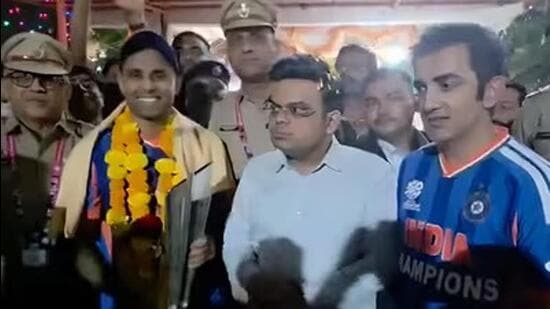
The scenes were vivid and widely circulated: triumphant cricketers, draped in garlands and tilaks, bowing before deities at revered shrines like Tirupati Balaji, Shirdi Saibaba, and Mumbai’s Siddhivinayak Temple. For many, these visits were seen as a heartfelt expression of personal devotion and thanks for a nation’s shared joy. The players, it appeared, were simply exercising their right to religious freedom, a fundamental aspect of India’s constitutional framework.
However, the public display soon drew the attention of Kirti Azad, a figure familiar with both the cricket pitch and the political arena. Azad, a member of the 1983 World Cup-winning team, questioned the appropriateness of these highly publicised religious outings by national representatives. While affirming the players’ individual right to faith, he raised concerns about the potential implications for India’s secular fabric when such actions receive widespread official or unofficial promotion. His critique, amplified across various news platforms, including discussions often featured on platforms like Omni 360 News, quickly became a focal point.
To understand the core of this discussion, it’s essential to grasp India’s unique interpretation of secularism. Unlike Western models often advocating strict separation of church and state, Indian secularism, or ‘Sarva Dharma Sambhava,’ promotes equal respect for all religions. The state is expected to remain neutral and treat all faiths with impartiality, rather than actively distancing itself from religion altogether. This philosophy allows for a degree of public manifestation of religious practices, provided it does not lead to state patronage of one religion over others or discriminate against any faith.
Proponents of the players’ actions argue that these visits were purely personal. They contend that individual athletes, much like any citizen, are free to practice their religion and express gratitude in ways meaningful to them. Their personal faith, they argue, does not diminish their professional role or commitment to a secular nation. Many felt the criticism was an overreach into personal spiritual choices, viewing the temple visits as a humble gesture of thanks rather than a political statement. Small town newspapers and community forums often highlighted the genuine, emotional connection many fans felt seeing their heroes connect with traditional values.
Conversely, critics, including Azad, voiced apprehension. Their argument centers on the idea that while personal faith is sacrosanct, public figures, especially those representing the nation on a global stage, carry an additional burden of responsibility. When their religious acts are highly publicised and celebrated, it can, intentionally or unintentionally, blur the lines between personal belief and national endorsement. In a nation as diverse as India, with myriad faiths and beliefs, some worry that prominent displays by national icons might inadvertently send signals that could be perceived as preferential treatment or even alienation by communities adhering to different religious or non-religious beliefs. The debate is not about the players’ sincerity, but about the precedent and perception such events create in a secular democracy.
This is not an isolated incident. India’s public sphere has long grappled with the interplay of faith and public life. From politicians inaugurating projects with religious rituals to public holidays reflecting diverse religious festivals, the lines are constantly being drawn and redrawn. The T20 World Cup temple visits merely brought this enduring national conversation back into sharper focus. It prompts introspection on how a nation that enshrines secularism in its constitution navigates the deeply religious inclinations of its people and public figures.
The wide range of reactions—from staunch defense of religious freedom to firm calls for upholding secular principles—underscores the complexity of the issue. This ongoing dialogue is vital for a vibrant democracy like India. It serves as a reminder that the nation’s journey towards a truly inclusive secular society is a continuous process, requiring constant engagement and re-evaluation. The discussion sparked by Kirti Azad following the T20 World Cup triumph is not just about a few temple visits; it’s a reflection of India’s persistent quest to balance personal faith with national identity in its multi-religious tapestry.
Key Takeaways:
* India’s T20 World Cup victory was followed by several players visiting temples, drawing widespread attention.
* TMC MP Kirti Azad criticized these public displays, sparking a debate on secularism.
* The controversy highlights India’s unique concept of secularism, which emphasizes equal respect for all religions rather than strict separation.
* Arguments center on balancing players’ personal freedom of religion with their role as national representatives in a diverse country.
* The incident underscores the ongoing national discussion about faith and public life in India.