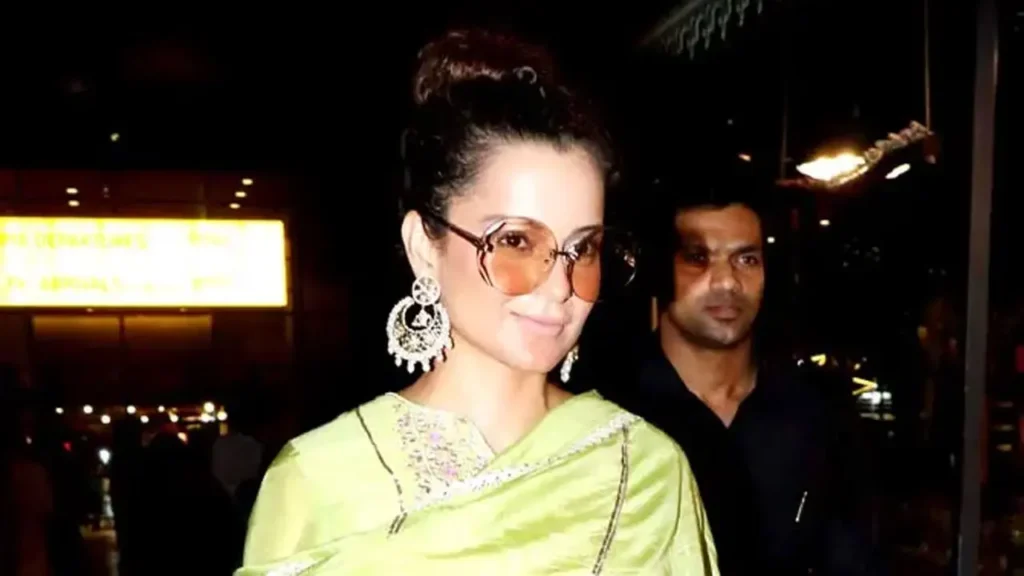
Kangana Ranaut praises PM Modi for Women Reservation Bill
**Women’s Reservation Bill Acknowledging Hurdles and Paving Political Paths**
The discourse around women’s participation in public life consistently highlights a myriad of challenges, from daily societal hurdles to systemic barriers within political structures. Recently, actor and public figure Kangana Ranaut weighed in on this critical discussion, offering commendation to Prime Minister Modi for the enactment of the Women’s Reservation Bill, officially known as the Nari Shakti Vandan Adhiniyam. Her remarks underscored the “multiple struggles” women contend with when venturing outside their homes or aspiring to political roles, positioning the new legislation as a crucial step forward.
Across India, the journey for women to carve out spaces in public life, particularly in the demanding arena of politics, is often fraught with obstacles. From deeply entrenched patriarchal attitudes that question their competence to practical difficulties like managing household responsibilities, ensuring personal safety, and overcoming financial constraints, the path is rarely smooth. These are not merely anecdotal observations; they are realities echoed in countless local reports and community discussions across the nation, forming the backdrop against which the Women’s Reservation Bill has been introduced.
Understanding the Nari Shakti Vandan Adhiniyam
For decades, the demand for greater female representation in legislative bodies has resonated through various political and social movements. The Women’s Reservation Bill seeks to address this long-standing imbalance by reserving one-third of seats for women in the Lok Sabha (the lower house of India’s Parliament) and all state legislative assemblies. This landmark legislation aims to create a more equitable political landscape, fostering greater inclusion and ensuring that women’s voices are heard and amplified in policy-making.
To simplify its mechanics for a 12th standard student, imagine a classroom where students elect class representatives. If there are 100 seats available, this bill would ensure that at least 33 of those seats must be filled by girls. Similarly, in Parliament and state assemblies, where laws are made for the country and states, 33% of the total seats will now be set aside specifically for women candidates. This is a significant move because currently, women constitute a much smaller percentage of elected representatives, despite making up nearly half of the population. The bill aims to correct this underrepresentation, ensuring that the perspectives and needs of women are directly brought into legislative debates and decisions.
However, it is important to note that the bill’s implementation is tied to future events. It will only come into effect after the next census and a subsequent delimitation exercise, which involves redrawing constituency boundaries. This means its impact will not be seen in the immediate upcoming general elections but is slated for a later electoral cycle.
Kangana Ranaut’s Perspective on Women’s Struggles and the Bill
Kangana Ranaut, known for her candid views on social and political issues, lauded the Prime Minister’s initiative, framing it as a recognition of the difficult road women often travel. Her statements highlighted the multifaceted challenges, from pervasive societal biases to the lack of infrastructure and support systems that often hinder women’s public engagement. She articulated a common sentiment that women, despite their capabilities, face an uphill battle in proving their mettle and securing their rightful place in leadership positions. Her praise underscores a belief that such legislative measures are necessary catalysts to dismantle existing barriers and empower women to take on leadership roles without the constant burden of proving their worth.
From local news reports focusing on grassroots politics, the struggles Ranaut referred to are tangible. In many rural and semi-urban areas, women aspiring to political office often face resistance from within their own communities and families. They struggle for financial independence to fund campaigns, confront gender stereotypes that question their leadership abilities, and navigate a political landscape often dominated by male networks. The Nari Shakti Vandan Adhiniyam, in this context, is viewed by many as a powerful legislative tool designed to create reserved entry points, thereby offering a foundational level of support for women to overcome some of these inherent disadvantages.
Broader Implications and Public Dialogue
The introduction of the Women’s Reservation Bill has ignited extensive dialogue across the political spectrum and within civil society. While broadly welcomed as a progressive step, discussions also revolve around its eventual implementation. Concerns about the rotational nature of reserved constituencies, and how it might affect the continuity of representation, have been raised. Many analysts, including those contributing to independent and regional news platforms, point out that while reservation offers a crucial entry point, sustained efforts are needed to address the deeper societal issues that impede women’s political journeys. Mentorship programs, capacity building, and a shift in cultural perceptions are often cited as equally vital alongside legislative quotas.
Local women leaders and community activists interviewed by various regional news outlets often emphasize the potential ripple effect. They anticipate that a significant increase in women legislators could lead to more gender-sensitive policies, better infrastructure for women’s safety, and increased investment in education and healthcare for girls and women. Such changes, they argue, could fundamentally alter the fabric of society, paving the way for a more inclusive and equitable future.
At Omni 360 News, we recognize that true empowerment extends beyond legislative measures. It requires a holistic approach that tackles societal mindsets, provides educational opportunities, and fosters environments where women can thrive without fear or prejudice. The Nari Shakti Vandan Adhiniyam is a critical piece of this larger puzzle, a legislative affirmation of the need for equal representation.
Key Takeaways:
* The Nari Shakti Vandan Adhiniyam reserves 33% of seats for women in the Lok Sabha and state assemblies.
* The bill aims to address long-standing gender imbalance and systemic barriers women face in politics.
* Kangana Ranaut praised PM Modi, highlighting the multiple struggles women encounter in public life.
* Implementation of the bill will occur after the next census and delimitation exercise, not immediately.
* While a significant legislative step, ongoing societal and cultural changes are essential for full empowerment.
The Women’s Reservation Bill represents a potentially transformative moment for Indian democracy. It reflects a national acknowledgment of the struggles women face and a legislative commitment to bridge the gender gap in political representation. As the nation anticipates its eventual implementation, the ongoing dialogue will undoubtedly shape how effectively this landmark law contributes to a truly equitable and representative political landscape.