
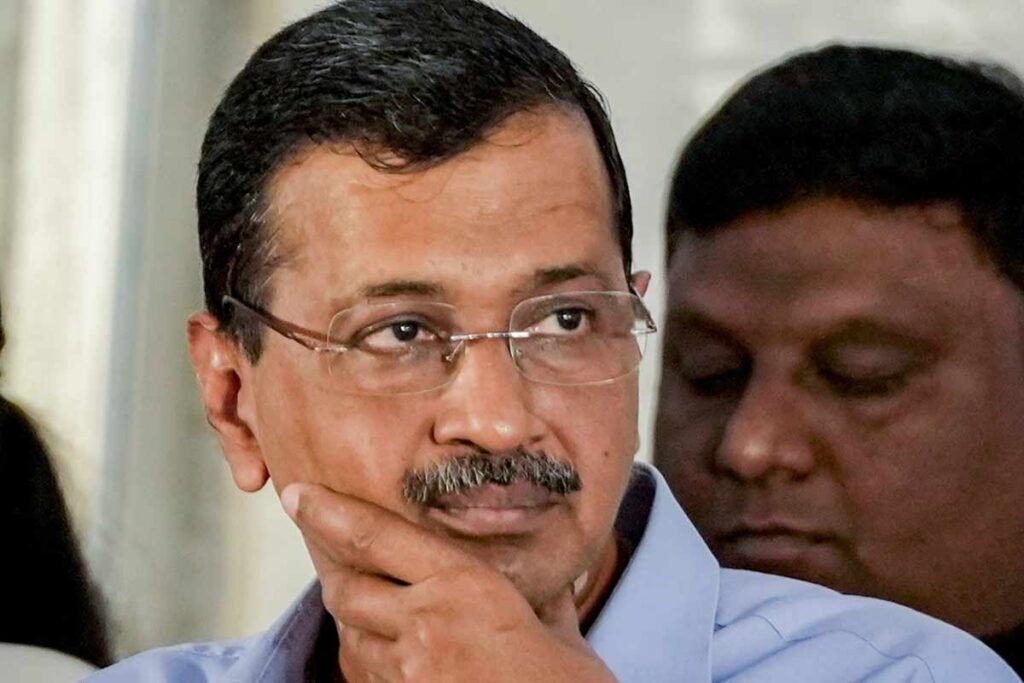
Arvind Kejriwal writes letter to CJ of Delhi High Court to shift Excise case to transfer
Kejriwal Challenges Judicial Neutrality in Delhi Excise Case
A significant development has emerged from the Delhi High Court, where Arvind Kejriwal, the chief of the Aam Aadmi Party (AAP) and former Chief Minister of Delhi, has formally requested a change of judge in a crucial case. Kejriwal has written to the Delhi High Court Chief Justice, expressing serious concerns regarding the neutrality and transparency of the judicial process in the ongoing Delhi excise policy matter. He specifically seeks the transfer of his case from the bench of Justice Swarana Kanta Sharma.
This unusual move by a prominent political figure like Kejriwal highlights the gravity of the impartiality questions raised within the justice system. The request comes after a hearing last Monday where Kejriwal’s legal team reportedly perceived a lack of even-handedness in the judge’s comments and observations.
The Core of the Dispute: Delhi’s Excise Policy
To understand the current situation, it is essential to delve into the background of the Delhi excise policy case. This involves the city’s liquor policy, which was introduced and then later withdrawn by the AAP government. The policy aimed to streamline liquor sales and increase revenue but quickly became a subject of controversy.
The Central Bureau of Investigation (CBI), a central investigative agency, launched an investigation into the policy, alleging irregularities, corruption, and a criminal conspiracy behind its formulation and implementation. Several high-profile individuals, including Kejriwal and former Deputy Chief Minister Manish Sisodia, were implicated in the probe.
For a period, both Kejriwal and Sisodia faced legal battles and even spent time in custody related to these allegations. The case has been a political flashpoint, with the AAP consistently asserting that the charges are politically motivated and part of a larger conspiracy orchestrated by the central government.
A Lower Court’s Verdict and CBI’s Challenge
Earlier this year, on February 27, a significant turn occurred in the case. The Rouse Avenue Court in Delhi, a lower court, fully discharged Arvind Kejriwal and Manish Sisodia from the excise policy corruption case. The court’s ruling was clear: the CBI had failed to present sufficient evidence to prove any criminal intent or conspiracy in the formulation of the controversial policy. This verdict provided a temporary reprieve for the AAP leaders, with Kejriwal himself emotional after the judgment, claiming it was a victory of truth against political machinations.
However, the relief was short-lived. The CBI swiftly challenged the Rouse Avenue Court’s decision in the Delhi High Court. The investigative agency argued that there were flaws in the lower court’s judgment and that a more thorough review of the evidence was necessary. This challenge reopened the legal battle, bringing the case back into the spotlight.
The Allegation of Impartiality
It is during the recent High Court proceedings, specifically before Justice Swarana Kanta Sharma’s bench, that Kejriwal’s concerns about neutrality intensified. Following a hearing last Monday, Kejriwal’s camp alleged that certain comments and observations made by Justice Sharma during the session indicated a potential bias. Reports from local legal circles suggest that the judge had reportedly commented on the lower court’s decision to discharge Kejriwal, hinting at possible “loopholes” in the acquittal and suggesting that “everything needed to be re-examined.”
Such judicial observations, particularly when perceived as pre-judging aspects of a case, can become a flashpoint for litigants. Kejriwal’s letter to the Chief Justice is a direct consequence of these perceived remarks, arguing that the atmosphere for a fair and impartial hearing is compromised under the current bench.
The Demand for a Transfer
In his letter, the AAP supremo has unequivocally called for the case to be transferred to another judge’s bench within the Delhi High Court. The core of his argument rests on the principle of judicial impartiality—a cornerstone of any democratic legal system. If a litigant believes, with reasonable cause, that a judge might not be entirely neutral, the right to request a transfer is a recognized legal recourse, albeit one taken with caution due to its serious implications.
This request puts the Chief Justice in a position to review the merits of Kejriwal’s claims and decide whether the concerns about impartiality warrant a re-assignment of the case. Such decisions are not made lightly and often involve careful consideration of legal ethics, procedural fairness, and the perception of justice.
Broader Implications for Justice and Politics
The demand for a judge transfer in a high-profile case involving a sitting political leader carries significant weight. For the legal system, it underscores the constant need for transparent proceedings and the meticulous upholding of judicial ethics. For political observers, it adds another layer of complexity to an already contentious legal battle, potentially influencing public perception of both the judiciary and the political parties involved.
As Omni 360 News follows this story, the outcome of Kejriwal’s request will be keenly watched. It will not only determine the future course of the Delhi excise policy case but also potentially set precedents for how allegations of judicial impartiality are addressed in major public interest litigation. The pursuit of justice, free from bias, remains paramount, ensuring that every citizen, regardless of their position, receives a fair hearing.
Key Takeaways
* Arvind Kejriwal, AAP chief, has requested the Delhi High Court Chief Justice to transfer his excise policy case from Justice Swarana Kanta Sharma’s bench.
* The request stems from Kejriwal’s concerns about the impartiality and neutrality of the judge, based on comments made during a recent hearing.
* Kejriwal and Manish Sisodia were previously discharged from the case by the Rouse Avenue Court, a decision challenged by the CBI in the High Court.
* The excise policy case involves allegations of corruption and irregularities in Delhi’s liquor policy, which was introduced and later withdrawn by the AAP government.
* The move highlights the critical importance of perceived judicial neutrality in high-profile legal matters and will be a significant test for the Delhi High Court.