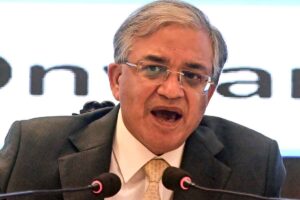
TMC MP June Malia opposes Transgender bill in Parliament
Transgender Rights Bill Clears Lok Sabha Amidst Identity Rule Controversy
The Indian Parliament recently saw a significant, yet highly contentious, moment with the passing of the Transgender Persons (Protection of Rights) Bill in the Lok Sabha. This legislative move, which aimed to establish a framework for the protection of transgender individuals’ rights, was met with strong objections from opposition parties and widespread concern from human rights advocates and the transgender community itself. The bill, passed by a voice vote after a brief two-and-a-half-hour discussion, saw opposition members, including those from the Congress, Trinamool Congress, and DMK, staging a walkout in protest.
For years, the transgender community in India has sought legal recognition and protection aligned with their inherent dignity and identity. This bill was intended to address those needs, yet its specific provisions, particularly concerning identity determination, have ignited a fiery debate across the nation.
Defining Identity A Point of Contention
At the heart of the controversy lies the bill’s revised approach to determining a transgender person’s identity. Historically, and significantly reinforced by a landmark Supreme Court judgment, the principle of self-identification has been paramount. This meant an individual’s own declaration of their gender identity was sufficient for recognition. However, the newly passed bill proposes a different system. Under the new framework, a transgender individual would no longer be able to simply self-identify. Instead, they would be required to obtain an identity certificate based on the recommendation of a medical board. This shift is seen by many as a step backward, undermining the fundamental right to self-determination.
To truly grasp the gravity of this change, it is important to understand the context set by the Supreme Court. In 2014, in a pivotal case known as the National Legal Services Authority (NALSA) versus Union of India, the Supreme Court delivered a historic verdict. This ruling recognized transgender persons as a “third gender,” affirming their fundamental rights under the Constitution. Crucially, it unequivocally upheld the right to self-identification of gender, stating that no person should be forced to undergo medical procedures or examinations to establish their gender identity. The NALSA judgment was celebrated as a beacon of hope and a progressive step towards recognizing bodily autonomy and personal dignity. The current bill’s move to introduce a medical board for identity verification appears, to many, to directly contradict the spirit and letter of this groundbreaking judgment.
Opposition Voices Strong Disapproval
During the Lok Sabha debate, the objections from the opposition benches were vociferous. Trinamool Congress Member of Parliament, June Malia, was among the most vocal critics. She passionately argued that the amended bill infringes upon the fundamental rights of transgender individuals and stands in direct opposition to the Supreme Court’s historic NALSA ruling. “No one should need state permission to say who they are,” Ms. Malia asserted, encapsulating the core of the argument against medicalizing identity.
Ms. Malia further highlighted how the bill undermines the right to self-identification, a right firmly established by the Supreme Court in 2014. She contended that the new amendment, by introducing a medical board for identity determination, is fundamentally unjust. The requirement for medical certification, she added, is a clear violation of personal dignity, privacy, and bodily autonomy. Drawing parallels with the inclusive governance approach championed by West Bengal Chief Minister Mamata Banerjee, Ms. Malia urged that the bill be sent to a standing committee for further, more thorough review and consideration. She also voiced concerns that the bill’s definition of “transgender” was too narrow and that vague criminal provisions within the law could be misused, potentially leading to further marginalization and harassment of the community.
Government’s Stance and Community Reaction
Despite the intense criticism, the government maintained that the bill is essential to curb the misuse of legal provisions and to provide a structured framework for the protection of transgender rights. Officials argued that the medical board process would ensure authenticity and prevent any potential exploitation or false claims.
However, the passing of the bill has been met with significant disappointment and anger among various transgender organizations and human rights activists across the country. Reports from various localities, as covered by Omni 360 News and other local outlets, indicate that protests have already begun to spread. Activists feel that their voices were not adequately heard during the drafting process and that the bill, rather than empowering them, introduces new barriers and indignities. They argue that true protection of rights must begin with respecting an individual’s self-declared identity, free from intrusive medical examinations.
This legislative development marks a critical juncture for transgender rights in India. While the stated intent of the bill is to protect the community, the manner in which identity is to be recognized has sparked a nationwide debate, emphasizing the ongoing struggle for dignity, autonomy, and genuine inclusion.
Key Takeaways
* The Transgender Persons (Protection of Rights) Bill recently passed in Lok Sabha amidst strong opposition.
* A key controversial change in the bill proposes that transgender identity be determined by a medical board, moving away from self-identification.
* Opposition parties argue this provision contradicts the Supreme Court’s 2014 NALSA judgment, which upheld the right to self-identification and bodily autonomy.
* Critics contend that the medical board requirement infringes on personal dignity, privacy, and fundamental rights, describing it as an unjust medicalization of identity.
* The government claims the bill aims to prevent misuse of the law, while transgender organizations and human rights activists have expressed deep disappointment and initiated protests across the country.