Mamata Banerjee vs Suvendu Adhikari: Heavyweights gear up for round 2 in Bengal elections 2026| India News
# Bengal 2026: Mamata vs Suvendu Rematch Begins
By Rahul Mukherjee, Senior Political Correspondent | April 13, 2026
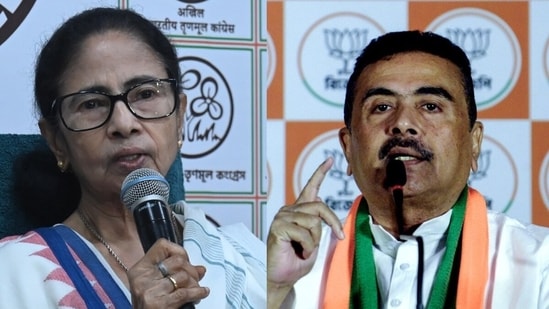
West Bengal Chief Minister Mamata Banerjee and Leader of the Opposition Suvendu Adhikari are officially setting the stage for a monumental political rematch ahead of the 2026 West Bengal Legislative Assembly elections. Once close allies within the Trinamool Congress (TMC), their relationship fractured irretrievably in December 2020 when Adhikari made a dramatic defection to the Bharatiya Janata Party (BJP). Now, as of April 2026, with campaign machineries roaring to life across the state, this fierce personal and political rivalry has once again become the defining narrative of Bengal’s electoral landscape. Both leaders are heavily mobilizing grassroots cadres and crafting aggressive strategies to secure dominance in what promises to be India’s most closely watched state election. [Source: Hindustan Times | Additional: Election Commission of India Historical Data].
## From Proteges to Primary Challengers
To understand the gravity of the 2026 elections, one must look back at the intertwined political histories of Banerjee and Adhikari. For over a decade, Suvendu Adhikari was considered one of Mamata Banerjee’s most trusted lieutenants. He was instrumental in the 2007 Nandigram anti-land acquisition movement, a historic agitation that catapulted the TMC to power in 2011, effectively ending 34 years of unbroken Communist rule in West Bengal.
However, political ambitions and internal party dynamics led to a bitter fallout. Adhikari’s switch to the BJP in late 2020 transformed the state’s political calculus overnight. The 2021 Assembly elections culminated in a direct face-off in the Nandigram constituency. While the TMC secured a massive statewide landslide—winning over 210 seats—Adhikari managed a narrow, fiercely contested victory over Banerjee in Nandigram by a margin of less than 2,000 votes. This paradoxical outcome left Banerjee as the Chief Minister without a home seat (which she later reclaimed via a by-election) and elevated Adhikari as the undisputed face of the BJP in Bengal.
## The Stakes in the 2026 Assembly Elections
As the state gears up for “Round 2,” the stakes have never been higher for either faction. For Mamata Banerjee and the TMC, 2026 is about cementing a legacy and proving that the party can withstand the natural anti-incumbency that accompanies 15 years in power. A victory would reaffirm her status as an invincible regional titan and a central figure in the national opposition space.
Conversely, for Suvendu Adhikari and the BJP central leadership, West Bengal remains the ultimate unconquered frontier in eastern India. Despite establishing themselves as the principal opposition in 2021, the BJP is hungry for the ultimate prize. Adhikari’s political capital within the national BJP framework rests entirely on his ability to topple the TMC government. [Source: Hindustan Times | Additional: Regional Political Analysis].
## TMC’s Strategy: Welfare Economics and Sub-Nationalism
The Trinamool Congress is entering the 2026 battlefield armed with a two-pronged strategy: aggressive welfare economics and Bengali sub-nationalism. **The cornerstone of the TMC’s appeal remains the “Lakshmir Bhandar” scheme**, a direct cash transfer initiative for women that has historically acted as a robust shield against anti-incumbency.
Banerjee’s administration has doubled down on expanding state-sponsored welfare networks to reach rural households, ensuring that the primary beneficiaries of these schemes remain loyal to the ruling party. Furthermore, the TMC continues to employ a narrative that frames the BJP as an “outsider” party that does not understand Bengali culture. By positioning herself as the “daughter of Bengal,” Banerjee is attempting to keep the electoral discourse firmly rooted in regional pride and identity politics, while simultaneously accusing the central government of withholding state funds and utilizing federal investigative agencies to target political opponents.
## BJP’s Blueprint: Anti-Corruption and Double-Engine Growth
Under Suvendu Adhikari’s aggressive leadership, the BJP is actively working to dismantle the TMC’s welfare narrative by spotlighting allegations of systemic corruption. The BJP’s 2026 campaign is heavily anchored on recent controversies, including the widely publicized teacher recruitment scams, the rationing distribution irregularities, and local law-and-order incidents that dominated headlines between 2022 and 2024.
Adhikari has been relentless in his statewide tours, holding massive rallies where he points to the arrest of several high-ranking TMC officials as evidence of deep-rooted institutional decay. **The BJP’s counter-pitch revolves around the promise of a “double-engine government”**—alignment between the state and the central government—which they argue is essential to industrialize West Bengal, curb alleged syndicates, and generate employment for the state’s increasingly frustrated youth. [Source: Hindustan Times | Additional: Public Declarations by BJP State Leadership].
## Shifting Demographics and Crucial Vote Banks
The electoral math in West Bengal is heavily dependent on specific demographic blocks, and both heavyweights are actively courting these critical groups.
* **The Women Vote:** Mamata Banerjee has cultivated a massive, loyal base among female voters through targeted schemes. Suvendu Adhikari is countering this by highlighting issues of women’s safety, heavily referencing local agitations and promising stricter law enforcement under a potential BJP regime.
* **The Matua Community:** A significant Dalit refugee community primarily located in border districts. The BJP is leveraging the implementation of the Citizenship Amendment Act (CAA) rules to solidify support here, while the TMC has actively campaigned against the CAA, framing it as discriminatory and unnecessary, arguing that the Matuas are already bona fide citizens enjoying state benefits.
* **Minority Voters:** The TMC has traditionally relied on the state’s substantial minority population, which accounts for roughly 27-30% of the electorate. The BJP’s strategy involves consolidating the majority vote by highlighting alleged appeasement politics by the state government, a tactic Adhikari frequently utilizes in his public addresses.
## Expert Perspectives on the Impending Clash
Political analysts suggest that the 2026 election will be a defining moment not just for Bengal, but for Indian federal politics.
“The 2026 West Bengal election is shaping up to be a classic collision between the forces of deep-rooted regional welfarism and aggressive anti-incumbency mobilization,” notes Dr. Ananya Sen, a political scientist at the Center for Eastern Indian Studies. “Mamata Banerjee has the advantage of a proven administrative machinery and an emotional connection with the rural populace. However, Suvendu Adhikari has successfully sustained an abrasive, high-energy opposition for five years. He knows the TMC’s organizational vulnerabilities from the inside out.”
Another veteran political commentator, Rajiv Dasgupta, emphasizes the importance of organizational strength. “Elections in Bengal are won at the booth level. While Adhikari has the rhetorical firepower and central backing, the real test for the BJP will be whether they have built a robust enough grassroots cadre to match the TMC’s formidable neighborhood-level presence. The TMC’s survival strategy hinges on ensuring their welfare delivery mechanism overshadows any localized anti-incumbency.” [Source: Original Analysis].
## Key Battlegrounds to Watch
As the election approaches, certain geographical regions will serve as the true barometers of political momentum:
1. **North Bengal:** Historically a region where the BJP has performed exceptionally well in recent Lok Sabha and Assembly elections. The TMC has recently pumped significant administrative resources into this area to reclaim lost ground.
2. **Jangalmahal:** The tribal-dominated western districts have seen volatile voting patterns, swinging between the TMC and BJP over the last three election cycles. Economic development and tribal welfare schemes will be heavily debated here.
3. **South Bengal and Greater Kolkata:** The undisputed fortress of the TMC. For Suvendu Adhikari’s BJP to have any realistic path to forming a government, they must make significant inroads into these densely populated, semi-urban, and urban constituencies.
## Conclusion and Future Outlook
As April 2026 unfolds, the rhetoric between Mamata Banerjee’s camp and Suvendu Adhikari’s contingent is reaching a fever pitch. The “Round 2” of this heavyweight bout is not merely about who will occupy the Chief Minister’s office in Nabanna; it is a profound test of two distinct political ideologies and methodologies.
For the Trinamool Congress, a victory will be a testament to the enduring power of sub-nationalism and targeted welfare economics, cementing Mamata Banerjee’s role in history. For the Bharatiya Janata Party, a triumph spearheaded by Suvendu Adhikari would represent a historic ideological expansion, fundamentally altering the political map of Eastern India.
Over the coming months, the electorate of West Bengal will be subjected to intense campaigning, strategic maneuvering, and high-decibel political drama. As the Election Commission prepares to oversee this massive democratic exercise, the entire nation watches closely. The outcome of the 2026 Mamata vs. Suvendu clash will undoubtedly send shockwaves that will be felt far beyond the borders of West Bengal.