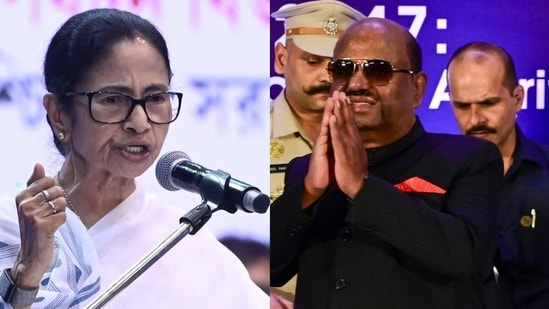
Mamata's 'forced to remove' barb at Ananda Bose evokes ex-Guv's response, fresh jibe at R N Ravi| India News
Bengal Governor’s Exit Sparks Mamata’s Centre Pressure Claims Ahead of Polls – Key Takeaways
The political landscape of West Bengal, perpetually charged with high-stakes drama, has once again been rocked by significant developments. The recent resignation of Governor C.V. Ananda Bose has ignited a fresh wave of controversy, with Chief Minister Mamata Banerjee swiftly alleging that the move was orchestrated by the Centre to serve specific political interests, particularly with crucial elections on the horizon. This report from Omni 360 News delves into the implications of this high-profile departure and the Chief Minister’s pointed accusations.
The sudden announcement of Governor Bose’s resignation sent ripples across the state’s political spectrum. While official reasons for his departure remain broadly stated, the timing, just months before major electoral battles, has fueled intense speculation. For many observers, the Governor’s office in West Bengal has often been a crucible of contention, frequently finding itself at odds with the ruling Trinamool Congress (TMC) government. This latest development only adds another complex layer to an already intricate political narrative.
Chief Minister Mamata Banerjee wasted no time in publicly voicing her suspicions. Addressing a press conference, she articulated her firm belief that Governor Bose had been under immense pressure from the Union government. Her claims suggest that this pressure was designed to compel the Governor to act in ways that would benefit particular political agendas, rather than upholding the impartiality expected of his constitutional role. She emphasized the strategic timing, directly linking the resignation to the impending polls, implying a calculated move to influence electoral outcomes.
To understand the weight of these accusations, it’s essential to grasp the role of a Governor in India’s federal structure, especially for a 12th standard student. Imagine the Governor as a bridge builder. They are appointed by the President of India, which effectively means the central government. Their main job is to act as the constitutional head of a state, much like the President is for the entire country. They ensure that the state government operates according to the Constitution. They also serve as a vital link between the state and the central government. While a Governor is expected to be neutral and non-partisan, serving the best interests of the state and the Constitution, their appointment by the Centre often leads to situations where state governments, particularly those ruled by opposition parties, perceive them as instruments of the central government. This perception becomes heightened during election periods, when every action is viewed through a political lens.
Bengal’s political history is replete with instances of friction between the Raj Bhavan (the Governor’s official residence) and the state secretariat. Previous Governors have often found themselves embroiled in public spats with the TMC government over a range of issues, from university appointments to law and order situations. These past confrontations lend a certain historical context to Chief Minister Banerjee’s current allegations. Her claims are not entirely new in their nature; rather, they echo a recurring theme in the state’s political discourse regarding the autonomy of the state government versus perceived central interference.
The immediate implications of this resignation are multifaceted. Firstly, it creates a leadership vacuum at a critical constitutional post just as political campaigning intensifies. A new appointment will inevitably be scrutinized for their political leanings and their ability to navigate the complex dynamics of Bengal politics without exacerbating existing tensions. Secondly, Mamata Banerjee’s allegations are designed to rally her political base and frame the narrative for the upcoming elections. By portraying the Centre as attempting to destabilize her government or influence the electoral process, she aims to consolidate anti-Centre sentiment among voters. Local political analysts suggest this move could also be a strategic pre-emptive strike, laying the groundwork to challenge any future decisions made by an incoming Governor that might be seen as unfavorable to the state government.
The opposition parties in Bengal have reacted with a mix of dismissal and guarded statements. Some have called for greater transparency regarding the reasons for the resignation, while others have dismissed Banerjee’s claims as typical political posturing aimed at deflecting attention from state-level issues. Regardless of the immediate reactions, the episode undeniably adds another layer of complexity to the already charged atmosphere leading up to the polls.
Key Takeaways:
* Governor C.V. Ananda Bose’s resignation has created a significant political stir in West Bengal.
* Chief Minister Mamata Banerjee attributes the resignation to alleged pressure from the Centre, aimed at influencing upcoming elections.
* The Governor’s role as a constitutional head and a link to the Centre is crucial but often a point of contention between state and Union governments, especially when different parties are in power.
* This event adds to a history of strained relations between the West Bengal government and the Raj Bhavan.
* The incident is expected to significantly impact the political narrative leading into the crucial electoral battles, with both ruling and opposition parties using it to shape public opinion.
As West Bengal braces itself for the electoral contest, the departure of the Governor and the subsequent allegations by Chief Minister Banerjee will undoubtedly remain a focal point of political debate. This ongoing tussle highlights the delicate balance of power in India’s federal system and the intense political maneuvering that precedes major elections. The coming weeks will reveal how these events truly shape the electoral landscape.