‘Mastermind’ behind hostage-taking of judges in Bengal arrested while boarding flight to escape| India News
Bagdogra Arrest Foils Alleged Mastermind’s Escape in Bengal Judges Hostage Case Key Takeaways
A significant development unfolded at Siliguri’s Bagdogra airport, where authorities apprehended Mofakkarul Islam, the alleged mastermind behind the recent alarming hostage situation involving seven judicial officers in West Bengal. The arrest, taking place two days after the harrowing eight-hour ordeal, marks a crucial step in the ongoing investigation into an incident that sent ripples of concern through the state’s legal and law enforcement communities. This swift action by the police underscores the seriousness with which such threats to the judiciary are being addressed.
The dramatic capture occurred as Islam was reportedly attempting to board a flight, ostensibly to evade justice. This incident highlights the challenges faced by law enforcement in tracking suspects who may try to flee the jurisdiction, but also demonstrates effective inter-agency coordination in securing an arrest at a critical transit point.
The Islampur Court Ordeal Unveiled
The foundation for this high-profile arrest lies in the events of April 1, 2024, at the Islampur Sub-Divisional Court in Uttar Dinajpur district. It was there that seven judicial officers, including the Chief Judicial Magistrate, Additional Chief Judicial Magistrate, Judicial Magistrates, and a Civil Judge (Junior Division), found themselves trapped and held hostage for approximately eight hours within the court premises. Reports from local media, corroborated by wider news outlets, detailed a tense standoff that began when a crowd, estimated to be several hundred strong, gathered outside the court. The mob’s agitation stemmed from a land dispute case involving one Mofakkarul Islam.
The initial commotion escalated when a group, allegedly led by Islam, forced their way into the court building, effectively barricading the judicial officers inside their chambers. The situation was fraught with tension as the officers remained confined, their safety a paramount concern for authorities. Local reports indicated that the protestors were demanding favorable outcomes in the land dispute, directly attempting to influence judicial proceedings through intimidation. This brazen act was not merely a protest; it was a direct assault on the sanctity and independence of the judiciary.
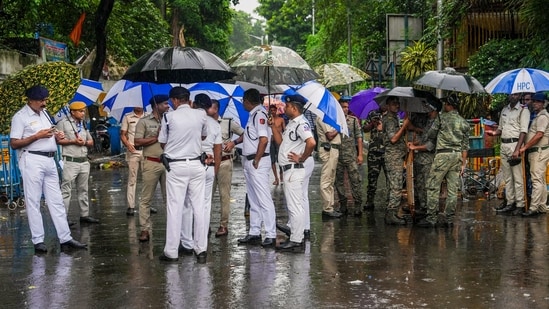
Law enforcement agencies, including a large contingent of district police and the Rapid Action Force (RAF), were swiftly deployed to the scene. District administration officials also arrived to engage in negotiations. The standoff eventually concluded after sustained efforts from the police and administration, leading to the safe release of all judicial officers late in the evening. The incident immediately prompted widespread condemnation and calls for stringent action against those responsible, emphasizing the need to protect judicial officers from such egregious acts.
The Arrest at Bagdogra
Just two days after the Islampur court incident, Mofakkarul Islam’s attempt to flee the state was thwarted. Acting on intelligence inputs and diligently tracking his movements, West Bengal Police coordinated the arrest at Bagdogra airport on April 3, 2024. Sources close to the investigation, as reported by various regional news outlets, confirmed that Islam was attempting to board a flight destined for another city when he was intercepted by a police team. The precision and timing of the operation suggest meticulous planning and inter-departmental collaboration, ensuring that a key suspect could not escape justice.
Following his arrest, Islam was taken into custody and subsequently brought before a local court. He faces serious charges related to the hostage situation, including illegal confinement, criminal intimidation, rioting, and obstructing judicial proceedings. Police are expected to seek his remand for further interrogation to uncover the full extent of the conspiracy, identify other participants, and determine the exact motivations behind such a perilous act against the justice system. The focus of the investigation extends beyond Islam to ascertain if there were others involved in planning or executing the siege on the court.
Understanding Mofakkarul Islam’s Alleged Role
Mofakkarul Islam has been identified by law enforcement as a central figure, if not the primary instigator, in orchestrating the unrest at the Islampur court. The initial land dispute, which formed the backdrop of the incident, reportedly involved Islam directly. His alleged involvement in mobilizing a large crowd and inciting them to take such extreme measures points to a calculated attempt to coerce judicial decisions. This raises pertinent questions about the influence individuals might wield to undermine legal processes.
The severity of the charges against Islam reflects the gravity of the perceived threat to the rule of law. Holding judicial officers hostage is an exceptionally rare and dangerous occurrence, designed to subvert the very foundation of justice. Investigating agencies will be scrutinizing his background, any previous criminal records, and potential affiliations to understand the full scope of his activities and the support network that might have facilitated such a daring act. For Omni 360 News, delving into these critical aspects is paramount to providing a comprehensive understanding of the event.
Implications for Judicial Security and Rule of Law
This incident in Islampur has inevitably sparked a wider discussion on the security arrangements for judicial officers and court premises across the state and indeed, the nation. The fact that seven judicial officers could be held captive for hours highlights potential vulnerabilities in existing security protocols. There is an urgent need to review and bolster measures to ensure that courtrooms remain sanctuaries of justice, free from intimidation and violence.
The independence of the judiciary is a cornerstone of any democratic society. Acts that directly threaten this independence, such as holding judges hostage, strike at the heart of the rule of law. The swift arrest of the alleged mastermind sends a strong message that such actions will not be tolerated and that perpetrators will be pursued vigorously. This case will undoubtedly set precedents for how authorities respond to similar challenges in the future, reinforcing the imperative of protecting those who uphold justice.
Key Takeaways:
* The alleged mastermind, Mofakkarul Islam, behind the Islampur judicial officers’ hostage crisis, was arrested at Bagdogra airport, attempting to flee.
* Seven judicial officers were held captive for eight hours at Islampur Sub-Divisional Court on April 1, 2024, stemming from a land dispute.
* The incident underscored significant concerns regarding the security of judicial officers and court premises in West Bengal.
* Police coordination led to a swift arrest, demonstrating the resolve of law enforcement to protect the judiciary and maintain order.
* Islam faces serious charges, and further investigation is underway to uncover the full conspiracy and identify all involved parties.
* The case highlights the critical importance of reinforcing the independence and safety of the judicial system against intimidation.
As the investigation progresses, the focus will remain on ensuring a fair trial for Islam and all other alleged accomplices, bringing to light the complete chain of events and securing justice for the judicial officers involved. The diligence shown by law enforcement in this matter, as reported by various trusted local sources, reassures the public of their commitment to upholding the rule of law.