Mediation’s New Frontier: From Elite Halls to Village Lanes, A Judicial Revolution for Accessible Justice
Omni 360 News Reporting
A profound shift in India’s dispute resolution landscape is underway, moving the age-old practice of mediation from the confines of formal institutions and exclusive gatherings directly into the heart of communities. This transformative journey, highlighted by a recent statement from Chief Justice of India (CJI) Surya Kant, underscores a judicial commitment to make justice truly accessible, efficient, and rooted in societal fabric.
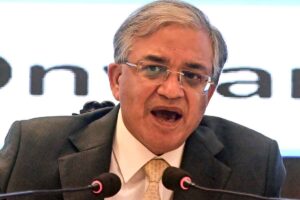
“Mediation is no longer confined to halls, elite clubs, but entered villages and streets,” CJI Surya Kant observed, articulating a vision where dispute resolution is a common, understandable, and approachable process for every citizen. This sentiment marks a critical departure from traditional perceptions, signaling a robust push to decentralize justice and empower local communities to resolve conflicts amicably.
The Evolution of Dispute Resolution
Historically, mediation, while respected, was often perceived as a tool for corporate disputes, high-value civil cases, or as a last resort before lengthy court battles. Its practice was largely limited to formal mediation centers attached to courts or private, often expensive, arbitrations. This created a barrier for the vast majority of the population, particularly those in rural areas or with limited financial means, who found the formal justice system intimidating, costly, and time-consuming.
The Indian judiciary, grappling with an overwhelming caseload and the imperative to deliver timely justice, has been a strong proponent of Alternative Dispute Resolution (ADR) mechanisms. Mediation stands at the forefront of these efforts, recognized for its potential to not only reduce the burden on courts but also to foster solutions that are mutually agreeable and relationship-preserving, unlike the adversarial nature of litigation.
Why the Grassroots Movement Matters
The move to integrate mediation into villages and streets is not merely a logistical shift; it is a philosophical one. For countless Indians, particularly in rural settings, disputes often involve neighbors, family members, or local business partners. In such contexts, a court-imposed verdict can sever relationships and leave lingering resentments. Mediation, by contrast, focuses on open dialogue, understanding different perspectives, and finding common ground.
Key drivers behind this grassroots expansion include:
* Accessibility: Bringing mediation to the local level eliminates geographical and financial barriers. It means people do not have to travel long distances or incur significant legal fees to seek resolution.
* Cultural Sensitivity: Local mediators, often respected community members, possess an innate understanding of local customs, social dynamics, and cultural nuances, which can be crucial in facilitating effective communication and agreement.
* Efficiency and Speed: Traditional court proceedings can drag on for years. Mediation offers a significantly faster route to resolution, allowing individuals and communities to move forward without prolonged uncertainty.
* Cost-Effectiveness: By avoiding court fees, lawyer charges, and the indirect costs associated with lengthy litigation (like lost wages or productivity), mediation offers a more economical path to justice.
* Empowerment: It empowers communities to take ownership of their conflicts and arrive at solutions that are sustainable and locally endorsed, strengthening social cohesion.
Initiatives like Lok Adalats, which function as “People’s Courts” and utilize mediation and conciliation for amicable settlements, have paved the way for this broader acceptance. These informal courts, often held in local public spaces, have proven immensely successful in resolving a vast number of cases ranging from minor criminal offenses to family disputes and land matters.
The Impact on Everyday Lives
Imagine a small village in a remote district. A dispute arises over a shared water source or a property boundary. Traditionally, this might escalate into a heated argument, leading to a police complaint or a civil suit that could languish in courts for years, further dividing the community. With accessible mediation, local trained mediators can step in, gather the parties, and facilitate a conversation aimed at finding a practical, fair solution that respects everyone’s needs.
This localized approach is particularly beneficial for:
* Family Disputes: Marital discords, inheritance issues, and inter-generational conflicts can be resolved with sensitivity, helping preserve family bonds.
* Minor Civil Matters: Small claims, tenant-landlord issues, and local business disagreements find quicker, less adversarial resolutions.
* Land and Property Disputes: Often complex and emotionally charged, these can benefit from community-level understanding and practical problem-solving.
Challenges and the Path Forward
While the vision is ambitious and promising, integrating mediation at the grassroots level presents its own set of challenges. Awareness remains a primary hurdle; many citizens are still unfamiliar with mediation as a viable option. There is also a need for extensive training programs to cultivate a robust pool of skilled, impartial, and ethical mediators who can effectively handle diverse disputes. Ensuring the enforceability of mediated settlements and building public trust in the process are equally crucial.
The judiciary, in collaboration with legal aid services, non-governmental organizations, and local administration, is actively working to overcome these obstacles. Educational campaigns, community workshops, and the development of accessible mediation infrastructure are vital steps in solidifying this movement.
A More Inclusive Justice System
The CJI’s statement is more than just an observation; it is a call to action, reflecting a determined effort to redefine justice in India. By moving beyond courtrooms and formal settings, mediation is becoming an intrinsic part of community life, offering a gentler, more human approach to conflict resolution. This expansion promises a future where justice is not an intimidating concept but an accessible reality, fostering harmony and efficiency from the bustling city streets to the tranquil village lanes. The transformation is underway, promising a more inclusive and responsive justice system for all.