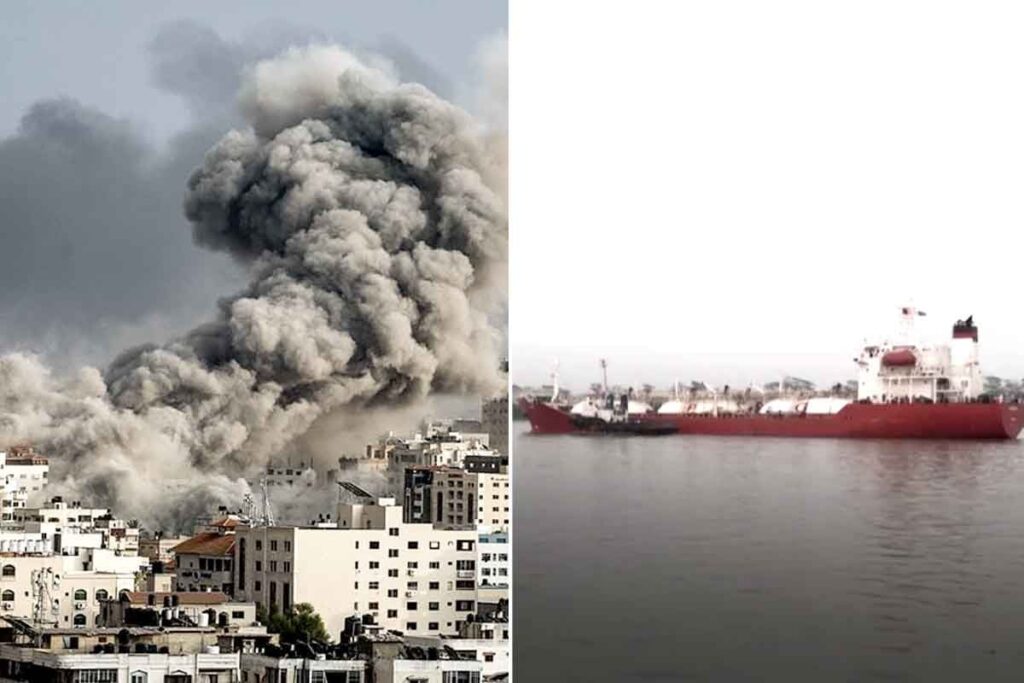
Iran-Israel War: eight cargo ships reach Chittagang Port, Bangladesh even Hormuz strait closed
Middle East Conflict Fuels Global Energy Anxiety Bangladesh Finds Temporary Oil Relief
The Middle East finds itself embroiled in a conflict escalating with alarming speed, a situation closely monitored by news desks worldwide, including Omni 360 News. Recent developments reveal Iran’s actions contradicting its earlier assurances of not attacking neighboring countries. For nearly ten days, the region has been a hotbed of attacks and counter-attacks, creating a ripple effect far beyond its borders, particularly impacting vital global trade routes.
The most critical casualty of this heightened tension has been the Strait of Hormuz, the world’s busiest chokepoint for oil shipments. This narrow waterway, crucial for the movement of goods, primarily energy resources, has been severely disrupted for approximately ten days. The global community watched with bated breath, anticipating severe economic fallout. Yet, amidst this uncertainty, a surprising turn of events brought a sigh of relief to Bangladesh: eight Qatari oil tankers, carrying essential liquefied petroleum gas (LPG) and liquefied natural gas (LNG), successfully navigated the challenges and docked at Chattogram port on a recent Sunday morning.
For the general populace in Bangladesh, the sight of these vessels was a welcome reprieve. The immediate fear of an impending fuel shortage, triggered by the ongoing conflict and the Hormuz disruption, has momentarily subsided. It offers a fleeting assurance that, despite the scorching heat of war, their energy reserves might not be depleted as quickly as once feared.
The Middle East Tensions and the Strait’s Importance
The past ten days have witnessed an alarming intensification of the conflict involving Iran, Israel, and the United States. This escalating confrontation has cast a long shadow over global stability and, critically, disrupted international trade. The Strait of Hormuz, often described as the ‘jugular vein’ of global energy supply, is a narrow sea channel connecting the Persian Gulf with the Arabian Sea. To understand its importance, imagine a crucial highway that nearly all the traffic from a major industrial zone must use to reach its customers. If that highway closes, everything grinds to a halt.
Millions of barrels of crude oil and petroleum products, along with substantial volumes of LNG, pass through this strait daily. It is the primary route for oil exports from major producers like Iran, Saudi Arabia, UAE, Kuwait, and Qatar to markets across Asia, Europe, and the Americas. Its closure, therefore, sends immediate shockwaves through the global economy, leading to fears of soaring fuel prices and energy crises worldwide.
Bangladesh’s Energy Anxiety
Bangladesh, a nation heavily reliant on imported energy, felt the tremors of the Hormuz disruption acutely. A significant portion of its fuel imports, particularly natural gas, comes from Qatar. The news of the Strait’s closure sparked widespread concern among citizens, leading to queues at petrol pumps as many tried to stockpile fuel, fearing an imminent shortage.
The local media reported on the public’s growing anxiety, drawing parallels to past energy crises. However, Bangladesh’s Minister for Power, Energy and Mineral Resources had earlier offered assurances, stating that the country held sufficient fuel reserves and there was no immediate cause for panic. This official statement, while aiming to calm nerves, did little to fully dispel the underlying public concern until tangible relief arrived.
A Fortunate Passage to Chattogram
The arrival of eight oil tankers at Chattogram port on Sunday morning was nothing short of a godsend. Among them, five large LNG carriers originated from Qatar. These included the ‘Al Jur’ from France, carrying 63,383 units of LNG; Greece’s ‘Al Jasasiya’ with 63,075 units; and the Bahamas-flagged ‘Lusail’ delivering 62,987 units of LNG. Additionally, two Liberian-flagged vessels, ‘Al Galayel’ and ‘Lebretha’, also reached Bangladesh’s territorial waters with LNG cargo.
The critical question immediately arose: How did these vessels manage to pass through the Strait of Hormuz when it was reportedly shut down? The answer, as clarified by Port Secretary Syed Refayet Hamim, offered a crucial piece of insight. He explained that these ships had traversed the perilous waterway before its full closure on February 28th. While many other vessels found themselves stranded or delayed by the escalating conflict and subsequent restrictions, these particular tankers had a timely, albeit risky, passage.
“It is indeed a stroke of good fortune for Bangladesh,” stated a port official, acknowledging that the timing of these shipments was incredibly propitious given the unfolding geopolitical situation. The advance planning and swift movement of these vessels allowed them to beat the effective closure of the Strait, ensuring that Bangladesh’s energy supply received a much-needed boost at a critical juncture.
Global Energy Security Remains on Edge
While Bangladesh breathes a sigh of temporary relief, the broader picture of global energy security remains precarious. The Middle East conflict shows no immediate signs of de-escalation, and the vulnerability of crucial shipping lanes like the Strait of Hormuz continues to be a major concern for nations worldwide. This incident serves as a stark reminder of how geopolitical events, thousands of miles away, can directly impact daily lives, from industrial production to the cost of commuting.
Nations are increasingly re-evaluating their energy strategies, exploring diversification of sources and routes to mitigate risks associated with such chokepoints. For the moment, Bangladesh has averted a significant immediate crisis, but the long-term implications of sustained instability in the Middle East will require ongoing vigilance and strategic planning.
Key Takeaways
- Escalating Conflict: The Middle East conflict, involving Iran, Israel, and the U.S., has intensified significantly, causing regional instability.
- Hormuz Disruption: The Strait of Hormuz, a critical global oil transit point, faced disruption and effective closure for approximately ten days.
- Bangladesh’s Relief: Eight Qatari LPG and LNG tankers reached Chattogram Port, easing immediate fears of a fuel shortage in Bangladesh.
- Timely Passage: The vessels successfully navigated the Strait of Hormuz just before its full closure on February 28th, a fortunate timing for Bangladesh.
- Global Impact: The incident underscores the fragility of global energy supply chains and the immediate economic repercussions of geopolitical tensions.
This unfolding narrative, as covered by Omni 360 News, highlights the delicate balance of international trade and the ever-present shadow of geopolitical events on global economies. The world watches, hoping for de-escalation, while nations like Bangladesh continue to navigate these turbulent waters with strategic foresight and a bit of good fortune.