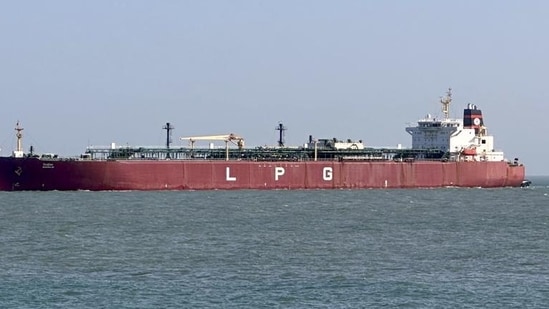
'Missiles, drones flying overhead': How Indian-flagged LPG tanker escaped Strait of Hormuz via channel off Iran coast| India News
Navigating Peril The Pine Gas’s Tense Voyage Through Strait of Hormuz
In the precarious waters of the Middle East, where geopolitical tensions often cast long shadows over global trade, the journey of an Indian-flagged LPG carrier, the Pine Gas, offers a compelling narrative of resilience amidst rising regional anxieties. This vessel, laden with crucial cargo, found itself navigating the Strait of Hormuz at a moment of acute international concern, underscoring the vital, yet vulnerable, arteries of global commerce. For Omni 360 News, understanding these intricate movements is key to appreciating the broader impact on energy security and maritime safety.
The Strait of Hormuz, a narrow waterway connecting the Persian Gulf to the Arabian Sea, stands as the world’s most critical oil transit chokepoint. It is an indispensable conduit for a substantial portion of the world’s liquefied natural gas (LPG) and oil shipments. Any disruption here reverberates across global markets, influencing everything from fuel prices to industrial supply chains. The recent escalation of tensions in the region, particularly involving key geopolitical players, thrust this maritime corridor into a spotlight of international vigilance.
The Pine Gas, an LPG carrier, reportedly completed loading approximately 55,000 metric tonnes of essential cargo at the United Arab Emirates’ Ruwais port on April 13. This specific timing places its subsequent transit through the Strait of Hormuz squarely in the eye of an unfolding storm. Just one day after its departure from Ruwais, the region witnessed a significant uptick in military activity, with drones and missiles reportedly traversing the airspace, signaling a dramatic escalation of an already fraught situation. The crew, comprising 26 Indian nationals, found themselves in a high-stakes environment, their vessel a silent participant in a tense geopolitical drama.
Sources indicate that the Pine Gas commenced its critical passage through the Strait on April 14, continuing through April 15. During this period, reports emerged of numerous aerial projectiles, including missiles and drones, being intercepted or observed in the skies above the region. For the ordinary seafarers aboard the Pine Gas, these were not abstract news headlines but immediate, tangible threats observed from their ship’s bridge and deck. The crew remained on high alert, their gaze often fixed upwards, monitoring the unpredictable skies.
Recognizing the elevated risks, the Indian government moved swiftly to ensure the safety of its maritime assets and personnel. The Indian Navy deployed warships, including the guided-missile destroyer INS Visakhapatnam and the frigate INS Talwar, to the Arabian Sea to provide escort and surveillance. This proactive measure offered a crucial layer of security, demonstrating India’s commitment to protecting its flagged vessels and maintaining the flow of vital trade through challenging waters. Captain Sridharan, at the helm of the Pine Gas, maintained continuous communication with Indian authorities, as well as the Maritime Rescue Coordination Centre (MRCC) in Dubai and even the US Naval Forces Central Command, ensuring a network of support and information during the perilous journey.
The transit of the Pine Gas is more than just the journey of one ship; it is a vivid illustration of the delicate balance between international trade and regional instability. Every vessel passing through the Strait carries not just cargo but also the hopes of consumers and the commitments of nations. The safety of these maritime routes is paramount for global energy supplies, impacting industries and households worldwide. The incident highlights the constant vigilance required by nations to protect their economic interests and ensure the unhindered flow of goods through critical chokepoints.
Local and regional news outlets, while not always focusing on individual ships, extensively covered the increased maritime security concerns and naval deployments during this specific period. Reports from various Indian news agencies corroborated the heightened state of readiness of the Indian Navy and its role in safeguarding Indian-flagged merchant vessels, reinforcing the critical context in which the Pine Gas made its journey. These wider reports underscore that the Pine Gas’s voyage was not an isolated event but part of a larger, coordinated effort to maintain maritime security amidst a volatile geopolitical landscape.
Key Takeaways:
* The Pine Gas, an Indian LPG carrier, navigated the Strait of Hormuz during a period of escalating regional tensions.
* The vessel loaded cargo at UAE’s Ruwais port on April 13, just before significant aerial activity was reported on April 14-15.
* The Strait of Hormuz remains a critical global energy chokepoint, making safe passage essential for international trade.
* The Indian Navy provided protective escorts, showcasing a proactive approach to maritime security for Indian-flagged ships.
* The incident underscores the direct impact of geopolitical instability on global supply chains and the lives of seafarers.
The story of the Pine Gas serves as a reminder of the unseen heroes of global commerce—the seafarers who brave uncertain waters to deliver essential goods. Their experiences, often overshadowed by geopolitical narratives, are central to understanding the true cost and complexity of maintaining global supply lines. As the region continues to navigate complex political currents, the importance of robust maritime security and international cooperation in safeguarding these vital pathways for trade remains undiminished.