
Miya factor continues to dominate discourse as Assam heads to polls| India News
Assam’s political landscape often pulses with intense debate, particularly as elections draw near. A central theme in the recent discourse, prominently led by Chief Minister Himanta Biswa Sarma, involves the community often referred to as “Miyas.” This term, used to describe Bengali-speaking Muslims in the state, has become a loaded word, shaping narratives and influencing voter sentiment significantly. As Assam prepares for upcoming polls, understanding this rhetoric is crucial for grasping the state’s complex identity politics.
For decades, Assam has navigated intricate demographic changes and identity questions. The term “Miya” traditionally refers to descendants of migrants from erstwhile East Bengal who settled in the Brahmaputra valley. Over time, it has unfortunately acquired pejorative connotations for many, often used to otherize a community that has lived in Assam for generations, contributing to its diverse social fabric. While a segment of the community has reclaimed the term as a marker of identity, particularly through cultural expressions like “Miya poetry,” its usage in political rhetoric, especially by those in power, often sparks controversy and concern.
Chief Minister Himanta Biswa Sarma has consistently articulated strong views regarding the “Miya” population, particularly in the context of land rights, demographic shifts, and cultural preservation. His statements often highlight concerns about the alleged encroachment on land belonging to indigenous communities and the perceived threat to Assamese cultural identity. The Chief Minister’s discourse frames these issues as vital for the protection of Assam’s original inhabitants, arguing that unrestricted population growth and land occupation by the “Miya” community could fundamentally alter the state’s character. Such pronouncements resonate deeply with a significant section of the Assamese populace who share these concerns, thereby serving as a strategic element in consolidating political support.
In the run-up to elections, this rhetoric becomes particularly sharpened. Political analysts observe that invoking the “Miya factor” is a deliberate strategy to mobilize the electoral base. By drawing clear lines between “indigenous” and “outsider” narratives, the ruling party aims to solidify its support among non-Miya communities, including various ethnic Assamese groups, tribals, and other Hindu populations. This approach, while effective for electoral consolidation, often leads to accusations of polarization and communal division from opposition parties and civil society groups.
Opposition figures and leaders from parties like the Congress and the All India United Democratic Front (AIUDF) frequently criticize the Chief Minister’s statements, describing them as divisive and an attempt to divert attention from other governance issues. They argue that such language demonizes an entire community and fosters an atmosphere of mistrust and hostility. Local community leaders within the Bengali-speaking Muslim population express distress over being repeatedly targeted by such political narratives, emphasizing their commitment to Assam and their identity as Assamese residents. This ongoing debate underscores the deep fissures within the state’s political and social fabric.
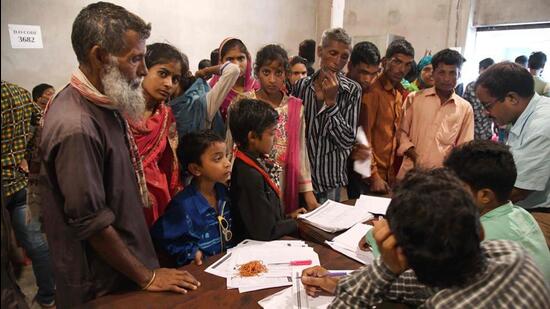
The “Miya” discourse extends beyond mere political speeches; it influences policy discussions around land distribution, welfare schemes, and even the controversial National Register of Citizens (NRC) process. The rhetoric reinforces a narrative that views the community with suspicion regarding their citizenship and intentions, despite many being legitimate citizens. This continuous emphasis on differentiation has profound social implications, potentially deepening existing societal divides and impacting the lives and livelihoods of a significant demographic group in Assam.
Key Takeaways
* The term “Miya” refers to Bengali-speaking Muslims in Assam, often carrying historical and sometimes derogatory connotations.
* Chief Minister Himanta Biswa Sarma’s rhetoric emphasizes concerns about land, demography, and cultural preservation, framing the “Miya” community as a challenge to indigenous Assamese identity.
* This discourse is a key electoral strategy, aimed at consolidating support among non-Miya communities in Assam.
* Opposition parties and civil society criticize the rhetoric as divisive and polarizing, impacting social cohesion.
* The debate highlights the complex interplay of identity, migration history, and electoral politics in Assam.
For Omni 360 News, monitoring this evolving political discourse provides critical insights into the dynamics shaping one of India’s most demographically diverse states. The persistent focus on the “Miya factor” ensures that identity politics remains at the forefront of Assam’s electoral battles, with far-reaching consequences for social harmony and the state’s future trajectory. Understanding these nuances is essential for anyone wishing to comprehend the full picture of Assam’s democratic journey.