West Bengal Assembly Election: PM to address people from brigade on 14 th march
Modi’s Brigade Appearance Embraces Bengal’s Enduring Heritage
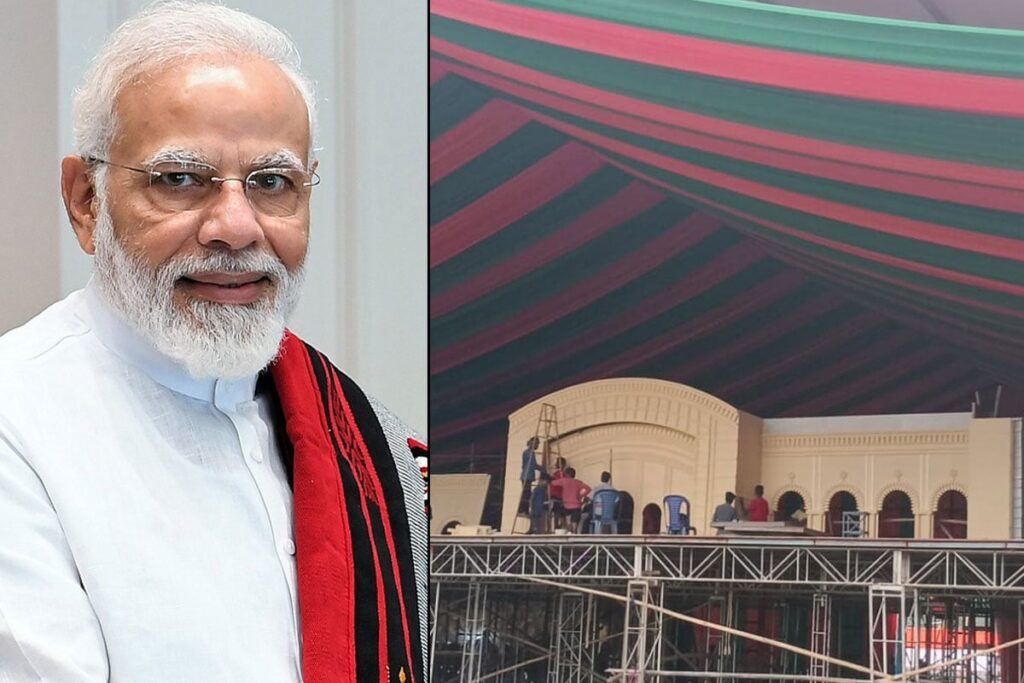
Kolkata’s iconic Brigade Parade Ground is once again a focal point for national attention as Prime Minister Narendra Modi visits the city for both administrative duties and a significant public address. Amidst the flurry of preparations, one aspect has particularly captured the public imagination and political analysts’ scrutiny: the meticulously designed stage for the Prime Minister’s address. This platform is not merely a structure but a vibrant canvas, overtly celebrating Bengal’s rich cultural tapestry. As reported by Omni 360 News, the intent behind this elaborate display seems clear: to connect deeply with the Bengali identity.
The stage, an impressive structure standing ten feet tall and eighty feet wide, is a deliberate showcase of what is proudly known as “Bangalianar Chhowa” – the touch of Bengali culture. Central to its design, and impossible to miss, is a prominent backdrop featuring the revered Dakshineswar Kali Temple. This spiritual landmark, nestled on the banks of the Hooghly River, holds profound significance for Bengalis, embodying faith and tradition. Its inclusion immediately signals an acknowledgement of Bengal’s spiritual heart.
Beyond the iconic temple, the stage transforms into a living museum of regional artistry and tradition. Skilled artisans have brought to life elements representing various districts, weaving in their unique heritage. Spectators will witness the intricate details of Vishnupur’s traditional terracotta art, renowned for its delicate carvings and historical narratives. Alongside, the vibrant narratives of Patachitra, a traditional folk art involving painted scrolls, will undoubtedly catch the eye. The cultural mosaic extends further, incorporating motifs like the majestic elephants often associated with North Bengal’s wildlife and natural beauty, alongside more depictions of Vishnupur’s distinctive temples. Each corner, every panel, tells a story deeply rooted in Bengali heritage, aiming to resonate with the collective pride of the state.
The deliberate cultural immersion of the stage design is viewed by informed observers as a strategic move within Bengal’s charged political landscape. For some time, the Trinamool Congress (TMC) has consistently asserted that the Bharatiya Janata Party (BJP) holds an anti-Bengal and anti-Bengali stance. These allegations frequently extend to claims that the BJP disrespects Bengali people and women, and that it unfairly withholds funds for various central projects in the state. Chief Minister Mamata Banerjee herself has frequently voiced these grievances, pointing to stalled development projects as evidence. The TMC has also highlighted instances of Bengali migrant workers allegedly facing harassment in other states for speaking their native language, leveraging these incidents as a significant political point, especially with the 2026 elections in sight.
Against this backdrop, the meticulously crafted, culture-infused stage for the Prime Minister’s Brigade rally becomes profoundly symbolic. It is widely interpreted as a direct effort by the BJP to counter the prevailing narrative. By prominently showcasing elements that are undeniably intrinsic to Bengali pride and identity, the party appears to be sending a clear message: “Ami Tomaderi Lok” – I am one of you. This gesture aims to demonstrate that the BJP not only respects but also embraces Bengali culture, thereby challenging the accusations of being an outsider or anti-Bengali force.
However, the efficacy of such a visual strategy remains a subject of debate, even within sections of the BJP itself. There is an underlying skepticism among some party members about whether cultural gestures alone will be sufficient to sway the hearts and minds of Bengali voters. Voters in Bengal are known for their strong sense of identity, but also for their discernment regarding political sincerity versus symbolic overtures. Whether this embrace of Bengali heritage is perceived as genuine appreciation or merely a political tactic remains to be seen. The ultimate answer, as many political observers suggest, will only become clear when the election results are declared, offering a true measure of how deeply this message has resonated with the electorate.
This strategic display at the Brigade ground underscores the intense political contest unfolding in West Bengal. It highlights how cultural identity, historical pride, and political narratives are intricately intertwined, forming the fabric of electoral campaigns. As Omni 360 News continues to follow these developments, the integration of local culture into national political discourse offers a compelling insight into the ongoing battle for Bengal’s future.
Key Takeaways
* Prime Minister Modi’s Brigade rally stage in Kolkata prominently features elements of Bengali culture and heritage.
* The stage design includes the Dakshineswar Temple, Vishnupur terracotta, Patachitra, and North Bengal motifs.
* This cultural display is widely seen as a strategic move by the BJP to counter the Trinamool Congress’s allegations of the party being anti-Bengali.
* TMC has frequently accused BJP of disrespecting Bengalis, withholding funds, and being culturally insensitive.
* The elaborate stage aims to send a message of connection and belonging to Bengali voters, asserting the BJP’s appreciation for local identity.
* There is internal skepticism within the BJP regarding the extent to which such cultural gestures will genuinely influence voter sentiment.
* The ultimate impact of this cultural outreach will be reflected in future election outcomes, particularly the 2026 state assembly elections.