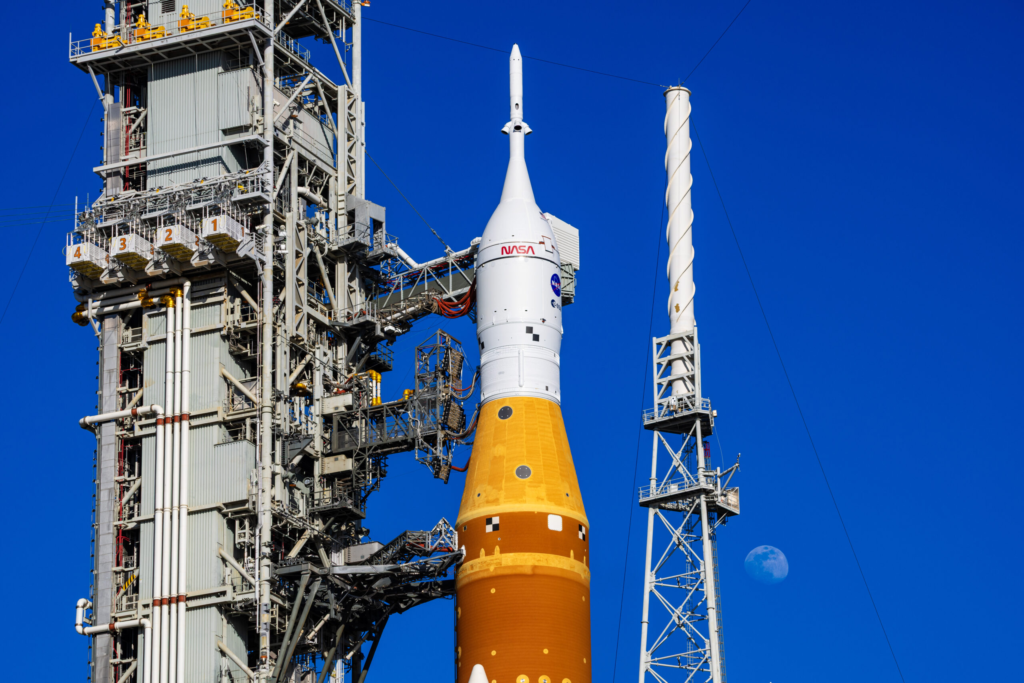
NASA Forced to Pull Giant Artemis II Rocket Off Launch Pad as Technical Gremlins Strike Again
Space fans will have to wait a little longer to see humans head back to the Moon. In a dramatic turn of events at Kennedy Space Center, NASA has officially begun the slow, four mile trek of the Artemis II moon rocket back to the hangar. This move effectively cancels the highly anticipated March launch window, pushing the historic mission to April at the earliest.
What Went Wrong?
Just as engineers thought they had cleared the path for a March 6 liftoff, a new “hiccup” appeared. This time, it wasn’t the hydrogen leaks that plagued earlier tests. Instead, the culprit is the helium pressurization system in the rocket’s upper stage.
Think of helium as the “silent engine room worker” of a rocket. It doesn’t burn like fuel, but it acts like a giant piston, pushing the super chilled liquid oxygen and hydrogen into the engines. Without steady helium flow, the rocket is essentially a 322-foot-tall statue.
The “Rollback” Explained
Because the faulty valves and filters are tucked deep inside the Space Launch System (SLS) rocket, technicians can’t reach them while the rocket is standing on the launch pad. To fix it, they have to use a massive “Crawler” to move the entire stack back to the Vehicle Assembly Building (VAB).
- Distance: 4 miles
- Speed: 1 mph
- Time: Roughly 12 hours
Why Safety Comes First
While delays are frustrating, NASA Administrator Jared Isaacman emphasized that safety is the only priority. This mission will carry four brave astronauts Reid Wiseman, Victor Glover, Christina Koch, and Jeremy Hansen, on a 10-day trip around the far side of the Moon.
The team noticed that the helium issue today looked eerily similar to a problem that cropped up during the uncrewed Artemis I mission in 2022. By pulling the rocket back now, NASA ensures that when these four pioneers finally climb into the Orion spacecraft, they are sitting on the safest machine ever built.
What’s Next for the Crew?
The astronauts, who were previously in strict medical quarantine to avoid getting sick before the flight, have been released. In a lighthearted turn of events, they even attended the State of the Union address in Washington D.C. this week as special guests.
NASA is now eyeing a new launch window that opens on April 1, 2026. If the repairs in the VAB go smoothly, we could see a spectacular spring launch to the stars.