1. West Bengal Budget Session: Strategic Governance Amid Judicial Oversight
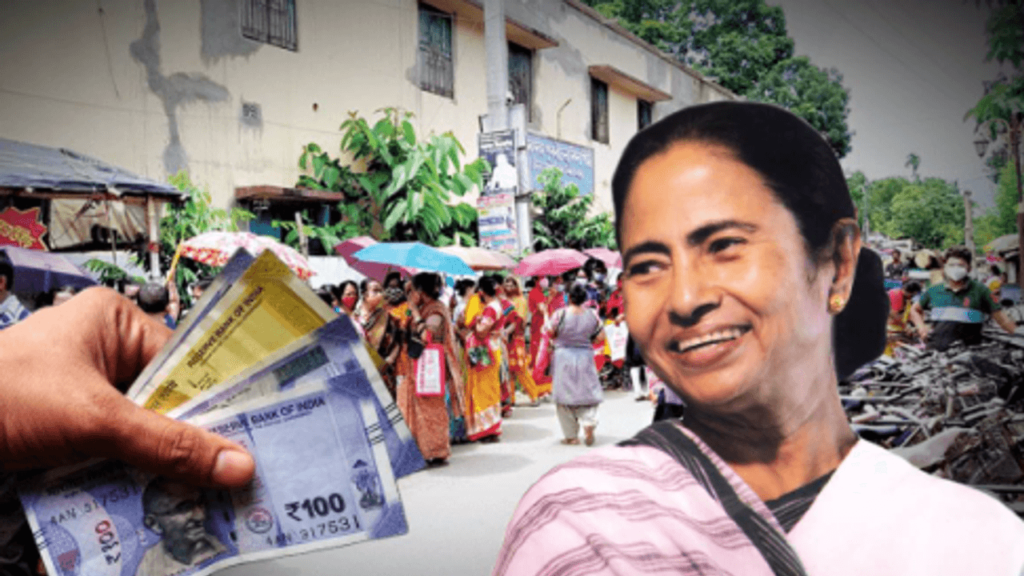
The West Bengal Legislative Assembly has commenced its Budget Session for the fiscal year 2026-27, a session widely regarded as “poll-bound” given the impending 2026 Assembly Elections. The Speaker of the House has expressed confidence in the Special Intensive Revision (SIR) process, which remains under the Supreme Court’s scrutiny.
As the state government prepares to present a populist budget to appeal to the electorate, the political atmosphere is charged. The focus remains on how the ruling administration balances fiscal responsibility with high-expenditure social welfare schemes. The Speaker’s emphasis on “trust in the process” serves as a defensive measure against opposition allegations regarding legislative overreach and administrative irregularities.
2. Landmark Supreme Court Ruling on Dearness Allowance (DA)
In a significant judicial blow to the West Bengal state government, the Supreme Court of India has delivered a definitive verdict regarding the long-standing Dearness Allowance (DA) arrears. The apex court has reaffirmed that DA is a legally enforceable right of employees, rather than a discretionary benefit.
Key Judicial Directives:
- Immediate Relief: The State must clear 25% of the outstanding DA arrears by March 6, 2026.
- Structured Repayment: The first installment of the remaining 75% must be settled by March 31, 2026.
- Oversight Committee: A high-level committee, chaired by retired Justice Indu Malhotra, has been formed to calculate the exact figures and oversee the payout schedule.
This ruling offers massive relief to nearly 20 lakh state employees and pensioners who have been embroiled in this legal battle since the 5th Pay Commission recommendations. For the Mamata Banerjee administration, the verdict poses a severe fiscal challenge as it coincides with the rollout of the 2026 State Budget.
3. Internal Friction in CPI(M): The Salim-Humayun Meeting Controversy
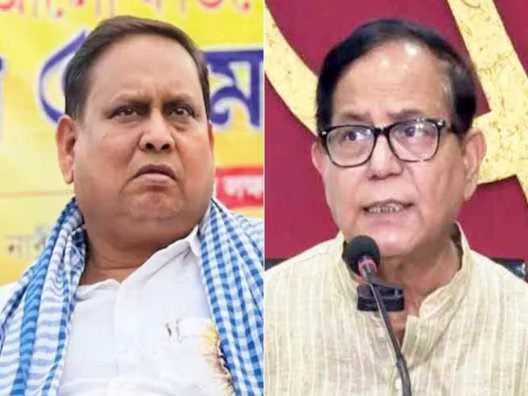
The political corridors of Alimuddin Street are witnessing internal turmoil following a meeting between CPI(M) State Secretary Mohammed Salim and suspended TMC leader Humayun Kabir (founder of the Janata Unnayan Party).
While Salim described the meeting as a strategic effort to “understand the mind” of emerging political factions, the party’s State Secretariat has reportedly expressed strong disapproval. Critics within the CPI(M) argue that associating with Kabir—who has frequently pivoted his political stance—sends a “negative message” to the party’s core base, particularly in refugee-dominated areas. This internal “slugfest” highlights the challenges the Left Front faces in forming a cohesive “Third Front” alliance with the ISF and other regional parties ahead of the 2026 elections.
4. Voter List Discrepancies: Suvendu Adhikari’s Petition
The publication of the updated voter list in West Bengal has ignited a fresh legal and political battle. Leader of the Opposition (LoP) Suvendu Adhikari has approached the Election Commission and the judiciary, alleging large-scale “voter list manipulation.”
Adhikari claims that local municipal bodies have been issuing birth certificates to non-genuine residents to facilitate their inclusion in the electoral rolls. The BJP alleges that millions of “fake voters” are being integrated into the system to influence the 2026 election outcome. This controversy puts the state’s administrative machinery under intense scrutiny, as the integrity of the democratic process becomes a central theme for the opposition’s campaign.
5. Global Oil Diplomacy: The India-Russia-US Triad
In the international arena, India is navigating a complex “Oil Diplomacy” crisis. Following a high-level trade agreement between Prime Minister Narendra Modi and the U.S. administration, conflicting reports have emerged regarding India’s energy ties with Russia.
The Conflict of Narratives:
- The US Position: The White House has claimed that India committed to halting Russian oil purchases in exchange for a trade deal that reduces reciprocal tariffs to 18% and includes a $500 billion investment pledge into the US.
- The Russian Rebuttal: The Kremlin has dismissed these claims, asserting that India’s energy policy is sovereign. Moscow maintains that it has received no official communication from New Delhi indicating a cessation of crude imports.
This “diplomatic tightrope” reflects India’s attempt to maintain its strategic partnership with Moscow while simultaneously securing a favorable trade paradigm with Washington.