Netaji's cap not missing from Red Fort museum ASI dismisses complain of Chandra Kumar Bose
Netaji’s Cap Controversy Raises Questions at Red Fort Museum
A recent controversy surrounding a historic cap belonging to Netaji Subhas Chandra Bose, housed at the Red Fort’s Netaji Museum, has drawn significant public attention and calls for greater transparency. The issue began with an alarm raised by Netaji’s grand-nephew, Chandra Kumar Bose, suggesting the cap had gone missing from its designated display. This quickly prompted a response from the Archaeological Survey of India (ASI) and further questions about the cap’s authenticity.
The Initial Alarm and Official Clarification
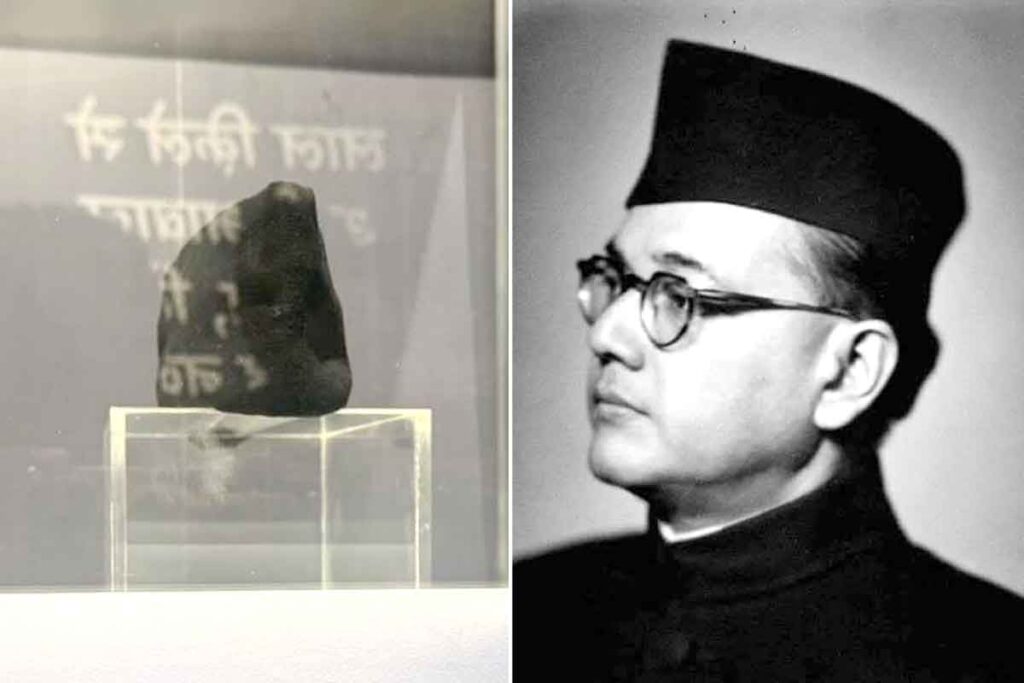
The saga unfolded when Chandra Kumar Bose, a prominent voice for Netaji’s legacy, took to social media, specifically X (formerly Twitter), to express his apprehension. He shared an image, voicing concerns that Netaji’s iconic cap, a treasured relic, might have disappeared from its display at the Netaji Subhas Chandra Bose Museum within the historic Red Fort complex in Delhi. This public statement immediately sparked a wave of discussions and worry among Netaji enthusiasts and the wider public.
Responding swiftly to the public outcry and the direct accusation, the Archaeological Survey of India, the custodian of the museum and countless other historical artifacts, issued a clarification. The ASI confirmed that the great freedom fighter’s historic cap was, in fact, not lost. They stated unequivocally that the cap was safe and accounted for. The reason for its temporary absence from its usual spot, according to the ASI, was its display at an event in Port Blair for Parakram Diwas, a day celebrated to honour Netaji’s birth anniversary. From January 19 to January 25, the specific display area in the museum remained empty while the cap was on loan for this commemorative event. The ASI assured everyone that following the conclusion of the exhibition, the cap had been safely returned to its original place in the Red Fort museum.
Lingering Doubts and a Call for Investigation
While the ASI’s statement aimed to quell the concerns, Chandra Kumar Bose’s skepticism did not entirely subside. On a subsequent Friday, he again utilized X to thank Prime Minister Narendra Modi for his prompt intervention in the “NetajiCap issue,” acknowledging its return to the Red Fort. However, his gratitude was quickly followed by a significant caveat. He expressed deep doubt, stating, “Netaji researchers and those who had seen Netaji’s cap before, are of the opinion that this is not the original cap. The matter needs investigation.” This new assertion shifted the focus from the cap’s physical presence to its authenticity, introducing a more complex layer to the controversy and suggesting a deeper inquiry was warranted. The tweet, accompanied by an image, underscored his persistent unease.
A History of Movement and Public Trust
This incident is not an isolated one concerning the historical cap. It’s important to recall that on January 23, 2019, celebrated as Netaji Jayanti, family members had personally handed over this very cap to Prime Minister Narendra Modi. They had earnestly requested that this invaluable historical artifact be preserved and displayed at the Netaji Museum in the Red Fort. However, records indicate that the cap has been removed from the museum’s main display on various pretexts, not just for the recent Parakram Diwas event. For instance, in 2021, the cap was temporarily shifted again. At that time, the Archaeological Survey of India had clarified that it was sent to Kolkata for a temporary exhibition at the Victoria Memorial. These repeated movements, even if for legitimate exhibitions, naturally fuel public concern and questions about the long-term security and care of such a significant national treasure.
Echoes of Past Disappearances and Cultural Significance
Netaji Subhas Chandra Bose remains an integral and deeply emotional part of Bengali culture, much like Rabindranath Tagore and Swami Vivekananda. His legacy transcends regional boundaries, holding immense national pride. For political parties, this profound emotional connection often becomes a tool, a symbol to invoke sentiment. In this context, allegations of neglect or casual treatment of Netaji’s personal effects, such as his cap, resonate strongly with the public.
Many observers and concerned citizens are now drawing parallels with the unfortunate disappearance of Rabindranath Tagore’s Nobel Prize medallion, an incident that remains a scar on India’s cultural heritage. The question being whispered is: could Netaji’s cap suffer a similar fate, or worse, be replaced by an inauthentic replica? Such fears highlight the deep public sentiment attached to these artifacts and the critical importance of their meticulous preservation.
The Path Forward for Omni 360 News
For journalists at Omni 360 News and beyond, this story underscores the ongoing challenge of maintaining historical integrity and public trust. The incident around Netaji’s cap serves as a potent reminder of the need for absolute transparency and rigorous protocols in handling national treasures. While the ASI has provided explanations for the cap’s movements, the persistent doubts raised by Netaji’s own family members and researchers call for a more thorough, perhaps independent, investigation into the cap’s authenticity and its long-term care. Ensuring the historical accuracy and safeguarding of such artifacts is not just about preserving objects; it’s about upholding the nation’s heritage and respecting the sentiments of millions.
Key Takeaways
- Chandra Kumar Bose initially claimed Netaji’s cap was missing from the Red Fort museum.
- The Archaeological Survey of India (ASI) clarified the cap was safe and temporarily moved to Port Blair for a Parakram Diwas exhibition.
- Upon its return, Chandra Kumar Bose expressed doubts about the authenticity of the cap, suggesting it might not be the original.
- The cap has been moved from the Red Fort museum on previous occasions, including for an exhibition at Victoria Memorial in 2021.
- The controversy highlights public sensitivity around Netaji’s legacy and the care of historical artifacts, drawing comparisons to Rabindranath Tagore’s missing Nobel Prize.
- There is a growing call for a thorough investigation to confirm the cap’s authenticity and ensure its proper preservation.