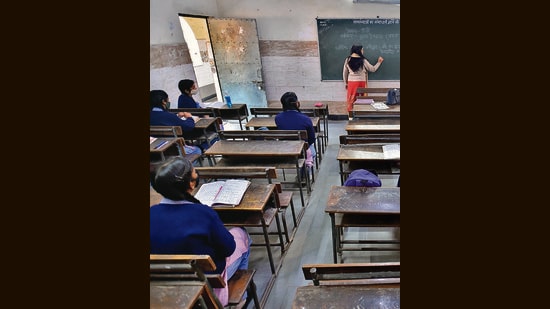
NIOS finances under scrutiny as govt plans to enrol out-of-school children| India News
NIOS Funding Shift Puts Spotlight on Student Access and Education Equity
**Omni 360 News** – A significant shift in how the National Institute of Open Schooling, widely known as NIOS, operates financially has drawn the attention of education observers and policy experts across the nation. A recent working paper from the National Institute of Public Finance and Policy (NIPFP), a respected think tank advising India’s finance ministry, reveals that NIOS has not received direct budgetary support from the government since the 2012–13 fiscal year. Instead, the institution now largely functions as a self-financing entity, relying heavily on student fees to sustain its operations. This change raises crucial questions about accessibility and the future of open schooling in India.
For many students across India, NIOS serves as a vital pathway to education. It is an autonomous organization under the Ministry of Education, designed to provide flexible learning opportunities for those who cannot attend traditional schools for various reasons – be it geographical distance, economic constraints, age, or specific learning needs. From secondary to senior secondary education, NIOS plays a pivotal role in ensuring that education remains within reach for millions, fostering skills development and personal growth. Its mission has always been rooted in democratizing education and providing a second chance to learners from diverse backgrounds.
The NIPFP paper’s findings bring to light a considerable alteration in NIOS’s funding model over the past decade. Previously, like many public educational bodies, NIOS would receive allocations from the central government’s budget to support its infrastructure, administrative costs, curriculum development, and outreach programs. However, the report indicates a move away from this model, with NIOS transitioning towards generating its own revenue, primarily through the fees paid by its students. This shift means that the cost of providing open education, which was once substantially subsidized, is now increasingly borne by the learners themselves.
The implications of this self-financing approach are multi-faceted and touch upon the core principles of equitable access to education. If NIOS predominantly relies on student fees, there is an inherent risk of making education less accessible for the very demographic it was designed to serve: economically disadvantaged students. Families already struggling to meet daily expenses might find the increased fee burden prohibitive, potentially forcing deserving students to drop out or never enroll. Local reports from various regions have periodically highlighted concerns from student groups and parents regarding fee structures and their impact on enrollment rates for open schooling programs. This situation could inadvertently create a barrier for those who need open schooling the most, thereby undermining the institute’s foundational goal of inclusive education.
Beyond accessibility, the shift to self-financing could also impact the quality and expansion of educational services offered by NIOS. Without consistent and adequate government funding, questions arise about the institute’s ability to invest in crucial areas such as updating curriculum, improving study materials, enhancing digital learning platforms, providing better student support services, or expanding its reach to remote areas. Maintaining educational standards and adapting to evolving learning needs often requires significant financial investment, which could be challenging if the primary revenue stream is limited to student fees. Furthermore, research and development in pedagogy and assessment methods might also suffer if resources are stretched thin.
While financial autonomy can, in some instances, foster innovation and efficiency, for a public institution like NIOS with a social mandate, the complete withdrawal of budget support raises serious policy dilemmas. The role of the state in providing and supporting public education is a cornerstone of national development. Education sector observers suggest that a balanced approach, perhaps a hybrid funding model, might be more sustainable, ensuring both operational efficiency and equitable access. The NIPFP paper serves as an important prompt for policymakers to reassess the financial viability and social impact of NIOS’s current funding strategy.
**Key Takeaways**
* NIOS has not received direct government budgetary support since 2012–13, according to an NIPFP working paper.
* The institute now primarily relies on student fees for its operations, making it largely self-financing.
* This funding shift raises concerns about the affordability and accessibility of open schooling for economically weaker sections.
* Potential impacts include limitations on improving educational quality, infrastructure, and expanding services.
* The findings prompt a critical review of government’s role in supporting public education and ensuring equity.
The findings from the NIPFP paper underscore the need for a national conversation about how essential educational institutions like NIOS are funded. As India strives for greater educational attainment and skill development across its population, ensuring that pathways like open schooling remain genuinely open and accessible to all, irrespective of their economic background, is paramount. The future stability and effectiveness of NIOS, and its continued ability to fulfill its foundational mission, may well depend on a re-evaluation of its financial support system.