Nitish Kumar resigns from Bihar legislative council, all eyes on who will be next CM| India News
Nitish Kumar Vacates Bihar Legislative Council Seat for Rajya Sabha
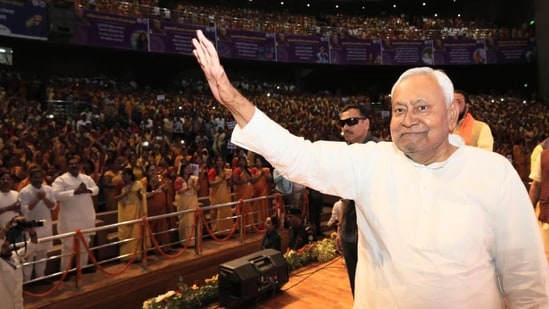
Patna, Bihar – In a significant but constitutionally mandated development, Bihar Chief Minister Nitish Kumar has formally resigned from the Bihar Legislative Council. The veteran leader submitted his resignation on Friday, May 3rd, to Council Chairman Devesh Chandra Thakur. This move comes as a direct consequence of his recent election to the Rajya Sabha, the upper house of India’s Parliament, in April. The resignation ensures compliance with the nation’s constitutional provisions, which prohibit an individual from holding membership in two legislative bodies concurrently.
This shift marks a new chapter in Kumar’s extensive political career, transitioning his legislative role from the state to the national arena. For nearly two decades, Nitish Kumar had been an influential member of the Bihar Legislative Council, having first joined in 2006. His departure from the state’s upper house underscores a fundamental principle of India’s parliamentary democracy.
Understanding the Constitutional Mandate
To clarify for a 12th standard student, India’s Constitution is designed to prevent any conflict of interest and ensure proper representation by stating that a person cannot be a member of more than one legislative body at the same time. Think of it like a student being enrolled in only one school at a time – you can’t be registered in both a high school and a college simultaneously. Similarly, a lawmaker cannot hold a seat in a State Legislative Council (MLC) and simultaneously in the Parliament (Rajya Sabha MP).
Specifically, Article 101(1) of the Indian Constitution, along with Article 190(1) for state legislatures, dictates that if a person is chosen to both Houses of Parliament, or to the Parliament and a State Legislature, they must vacate one seat. Nitish Kumar, by being elected to the Rajya Sabha, had to relinquish his seat in the Bihar Legislative Council. This is not a matter of choice but a constitutional requirement, ensuring clarity and avoiding legal ambiguities in legislative representation. His prompt resignation upholds this vital democratic principle.
Nitish Kumar’s Long Legislative Journey in Bihar
Nitish Kumar’s association with the Bihar Legislative Council has been long-standing and impactful. He first became a Member of the Legislative Council (MLC) in 2006, a position he held continuously until his recent resignation. During this period, he served multiple terms as Bihar’s Chief Minister, guiding the state through various developmental phases. His legislative experience at the state level provided him with an intimate understanding of Bihar’s unique challenges and aspirations.
The Legislative Council in Bihar, much like the Rajya Sabha at the national level, acts as an upper house, providing a platform for broader deliberation on state policies and legislative matters. It comprises members elected by various methods, including local bodies, teachers, graduates, and nominated members. Kumar’s tenure as an MLC allowed him to contribute significantly to the state’s law-making process and governance from within the legislative framework.
Transitioning to the National Stage Rajya Sabha
The Rajya Sabha, or the Council of States, is India’s permanent upper house of Parliament. Its members are elected by the elected members of the State Legislative Assemblies. Unlike the Lok Sabha, it is not subject to dissolution and plays a crucial role in reviewing and debating legislation, ensuring federal representation, and holding the government accountable.
Nitish Kumar’s election to the Rajya Sabha signifies a shift in his focus from solely state-level legislative affairs to contributing to national policy-making. While he continues to serve as Bihar’s Chief Minister, his presence in the Rajya Sabha allows him to participate in broader discussions on national issues, bringing his extensive experience in governance and administration to the parliamentary debates. This new role provides him with a national platform to articulate Bihar’s interests and contribute to the country’s legislative process.
Implications for Bihar Politics and Beyond
While Nitish Kumar’s resignation from the Legislative Council is primarily a constitutional formality, it naturally sparks discussions within Bihar’s political circles. The immediate impact is the creation of a vacant seat in the Legislative Council, which will eventually be filled through an election or nomination process. This vacancy might lead to fresh political calculations within the ruling Janata Dal (United) and the broader National Democratic Alliance (NDA) in Bihar.
For Nitish Kumar himself, this move solidifies his standing as a leader with influence stretching from the state capital to the national Parliament. It signifies his continued active engagement in legislative functions, albeit at a different level. Omni 360 News observes that such strategic shifts are often indicative of evolving political landscapes and leadership roles within major parties. While his primary responsibility as Chief Minister of Bihar remains unchanged, his new parliamentary role may see him engage more directly with national issues.
Key Takeaways:
* Bihar Chief Minister Nitish Kumar resigned from the Bihar Legislative Council.
* This was a constitutional requirement following his election to the Rajya Sabha.
* He had been a Member of the Legislative Council since 2006.
* The move signifies his transition to a national legislative role in the Rajya Sabha, adhering to the principle against holding dual legislative memberships.
* This opens a vacant seat in the Bihar Legislative Council, prompting future political developments in the state.
Nitish Kumar’s departure from the Bihar Legislative Council, driven by constitutional necessity, marks a clear procedural step and a notable shift in his legislative focus. As he embarks on his new role in the Rajya Sabha, political observers will keenly watch how his national parliamentary engagement complements his continuing leadership of Bihar.