Nitish Kumar resigns from Bihar legislative council, all eyes on who will be next CM| India News
Nitish Kumar’s Bihar Council Exit After Rajya Sabha Election Constitutional Requirement
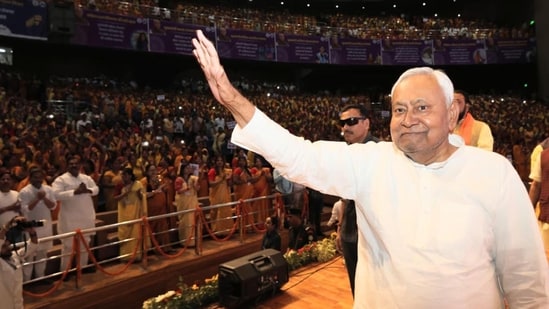
Patna, Bihar – In a significant yet constitutionally mandated move, veteran Bihar politician Nitish Kumar has officially stepped down from his position in the Bihar Legislative Council. This resignation comes swiftly after his recent election to the Rajya Sabha, the upper house of India’s Parliament, adhering to fundamental legal provisions governing dual legislative membership.
For long-time observers of Indian politics and those keeping a close watch with Omni 360 News, this development, while procedural, underscores a critical aspect of democratic governance. Kumar, a seasoned leader with decades of public service, now transitions his legislative focus entirely to the national stage.
Understanding the Constitutional Imperative
At the heart of Nitish Kumar’s resignation lies a clear constitutional mandate designed to prevent individuals from simultaneously holding membership in both a state legislature and the national Parliament. Specifically, Article 101(1) of the Indian Constitution, pertaining to Parliament, and Article 190(1), dealing with state legislatures, stipulate that a person cannot be a member of both simultaneously. If a person is elected to both bodies, they must vacate one seat within a stipulated timeframe, usually within 14 days, or risk the seats automatically becoming vacant.
To understand this plainly, imagine a student elected as both the head of their school’s student council and the president of their class. Both roles are important and demand significant time and dedication. The rules might state that one individual cannot hold both positions at the same time to ensure full focus on one role and avoid any potential conflicts of interest or overwhelming responsibilities. Similarly, in India’s legislative framework, this provision ensures that lawmakers can dedicate their full attention and loyalty to either their state’s legislative matters or national policy-making, avoiding dilution of responsibility or constitutional complexity. It upholds the distinct separation and functioning of state and central legislative bodies.
This provision is a cornerstone of legislative integrity, ensuring that a representative’s primary loyalty and legislative duties are clearly defined, whether at the state level (engaging with issues directly affecting Bihar citizens) or at the national level (contributing to laws and policies for the entire country). By resigning from the Legislative Council, Nitish Kumar has affirmed his commitment to his new role as a national parliamentarian.
Nitish Kumar’s Enduring Political Journey and Latest Chapter
Nitish Kumar’s political journey has been one of consistent prominence in Bihar. Having served multiple terms as Chief Minister, his political acumen and ability to navigate complex alliance dynamics have been well-documented. His tenure has seen various shifts in alliances, demonstrating his pragmatic approach to state governance and political survival.
His recent nomination to the Rajya Sabha, a move often reserved for experienced leaders transitioning towards a more national role or advisory capacity, marks a new chapter in his illustrious career. While he continues to hold the Chief Minister’s office in Bihar, his presence in the Rajya Sabha signals an intent to contribute to national debates and policies from a new platform. This transition underscores a strategic realignment, potentially allowing him to influence national discourse while maintaining his grip on state administration. The timing of this move, amid ongoing political realignments at the national level, adds another layer of intrigue to his enduring political narrative.
Implications for Bihar’s Political Landscape
While Nitish Kumar’s resignation from the Bihar Legislative Council is primarily a constitutional formality, it inherently carries political implications for the state. His vacated seat in the Council will eventually be filled, opening an opportunity for another political figure to enter the state’s legislative discussions. The process of nomination or election to fill this specific seat will be watched closely, as it could reflect evolving power equations within the ruling alliance or provide an opening for new talent.
For Omni 360 News, the broader implication lies in the subtle shift of focus. While Kumar remains the Chief Minister, his new role in the Rajya Sabha means a portion of his legislative attention will naturally gravitate towards national issues debated in Parliament. This could, in turn, influence the dynamics within the state government and the Janata Dal (United) party. It also signals a potential strategic repositioning for Kumar himself, emphasizing his role as an elder statesman capable of impacting policy beyond state borders. The political chessboard in Bihar is always active, and such moves, even if procedural, contribute to the ongoing narrative of alliance stability and leadership evolution in the run-up to future elections.
Key Takeaways
* Nitish Kumar has resigned from the Bihar Legislative Council, a necessary constitutional step following his election to the Rajya Sabha.
* This action complies with constitutional provisions preventing simultaneous membership in a state legislature and the national Parliament.
* The move signals a formal shift in his legislative duties towards national parliamentary affairs.
* While procedural, it contributes to the evolving political landscape and leadership dynamics within Bihar.
In essence, Nitish Kumar’s move is a perfect illustration of how constitutional requirements intertwine with political careers. It marks not an end, but a realignment, as one of Bihar’s most prominent figures shifts his legislative engagement to the national stage. This event, tracked by Omni 360 News, reinforces the meticulous adherence to legal frameworks that underpin India’s vibrant democracy.