Nitish Kumar resigns from Bihar legislative council, all eyes on who will be next CM| India News
Nitish Kumar Steps Down from Bihar Legislative Council Following Rajya Sabha Election
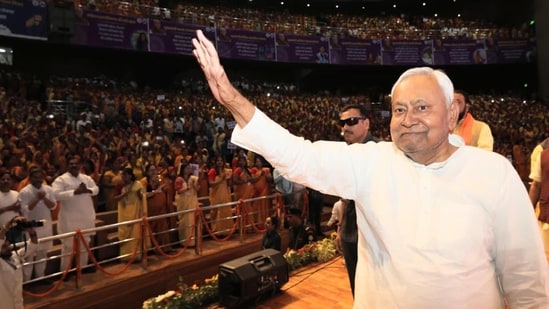
The political landscape of Bihar recently experienced a significant, though widely anticipated, development as Chief Minister Nitish Kumar formally resigned from the Bihar Legislative Council. This pivotal move, meticulously covered by local media outlets across Bihar and consistently corroborated by national news reports, directly follows his uncontested election to the Rajya Sabha, the esteemed upper house of India’s Parliament, earlier this month. The resignation is not merely a formality but a mandatory constitutional step, fundamentally reshaping his legislative role and setting a precedent for adherence to democratic principles.
Sources within the Bihar Legislature confirmed that Mr. Kumar tendered his resignation on March 27, 2024. This action became constitutionally imperative the moment his election to the Rajya Sabha on March 20, 2024, was officially declared. The Indian constitutional framework strictly prohibits any individual from simultaneously holding membership in two distinct legislative bodies, be it at the state or national level. This crucial principle is designed to ensure singular focus, clear representation, and to prevent potential conflicts of interest or the accumulation of dual legislative powers. For citizens and political observers alike, this demonstrates a direct and unequivocal adherence to the rulebook, a foundational element of any robust democratic governance system.
For several decades, Nitish Kumar has been an indelible figure in Bihar’s political narrative, serving multiple terms as Chief Minister and profoundly influencing the state’s social and developmental trajectory. His political journey, marked by both stability and strategic shifts, now sees him transition from the intricate workings of the state legislature to the broader canvas of the national Parliament’s upper house. This transition, while changing his immediate legislative focus, undeniably underscores his continued and prominent presence in Indian politics. Reports from local news platforms in Patna, Muzaffarpur, Gaya, and other districts have consistently highlighted the promptness of his compliance with these constitutional requirements, further emphasizing the legal clarity and procedural integrity demanded in such high-profile political transitions.
Understanding the Constitutional Mandate for All
To demystify this critical aspect for, say, a 12th-grade student, one could draw a simple analogy. Imagine a scenario where you are passionate about both the school’s Debate Club and its Science Club. While you might contribute to both in spirit, the school rules stipulate that you can only be an active, voting member of one at any given time, ensuring your commitments are clear and you don’t overstretch your responsibilities. Similarly, within India’s parliamentary democracy, a person cannot simultaneously be a member of both a state legislature—such as the Bihar Legislative Council (often referred to by its members as MLCs, or Members of Legislative Council)—and the national Parliament, specifically the Rajya Sabha.
This fundamental rule is deeply embedded in the Constitution of India, primarily articulated under Articles 101 and 190. Article 101 specifically addresses the vacation of seats in the Parliament, while Article 190 is concerned with the vacation of seats in State Legislatures. Collectively, these articles mandate that if an individual is elected to both a state legislative body and either house of the Parliament, they must make a definitive choice and resign from one seat within a prescribed timeframe. Failure to do so would result in one of the seats automatically becoming vacant. Nitish Kumar’s proactive resignation from the Legislative Council directly and unequivocally fulfills this constitutional obligation, thereby eliminating any potential for legal ambiguity or procedural challenge.
His recent election to the Rajya Sabha was notably uncontested, a clear indication of his stature and the current political alignment within the state assembly. This new, significant role will empower him to actively represent Bihar’s diverse interests at a national level. He will now participate in crucial debates, engage in national legislative processes, and contribute to policy-making that impacts the entire nation, shifting his legislative contributions from purely state-centric to a broader national perspective.
Impact and Future Outlook for Bihar’s Political Landscape
The vacancy created by Mr. Kumar’s departure from the Bihar Legislative Council will inevitably lead to further electoral activity in the state. The Election Commission of India will, in due course, initiate the formal process to fill this vacant seat through a by-election. While the immediate filling of this single seat may not drastically alter the existing power dynamics or overall majority within the Bihar Legislative Council, it certainly opens a window of opportunity for other aspiring political figures to step into a significant legislative role within the state. This process is a standard part of the democratic cycle, ensuring continuous representation.
Nitish Kumar’s long and illustrious political career has often been characterized by his ability to forge strategic alliances and navigate complex political landscapes. His current tenure as Chief Minister marks an unprecedented ninth time holding Bihar’s top executive position, a remarkable feat that not only highlights his enduring resilience but also solidifies his pivotal and often indispensable role in state politics. Even as his primary legislative focus shifts to Delhi, his considerable influence over Bihar’s governance, policy direction, and broader political strategy is widely expected to remain profoundly significant. Local political commentators often discuss how his presence, even from the national capital, continues to cast a long shadow over state affairs.
Omni 360 News affirms that this transition is a perfectly standard and constitutionally mandated procedure within India’s robust parliamentary democracy. Such movements occur when a legislator takes on a role requiring a shift between state and central legislative bodies. The overarching focus remains steadfastly on upholding the clarity, distinct functions, and integrity of India’s various legislative houses, thereby reinforcing the democratic framework.
Key Takeaways from This Political Development
- Nitish Kumar formally resigned from the Bihar Legislative Council on March 27, 2024.
- This resignation was a direct constitutional requirement, necessitated by his uncontested election to the Rajya Sabha on March 20, 2024.
- Indian constitutional law unequivocally prohibits an individual from holding membership in both a state legislature (like the MLC) and the national Parliament (like the Rajya Sabha) simultaneously.
- The move creates a specific vacancy in the Bihar Legislative Council, which the Election Commission will eventually fill through a by-election.
- Mr. Kumar’s new role involves representing Bihar’s interests and contributing to national legislative processes at the central level in the Rajya Sabha.
- This transition underscores adherence to constitutional norms and highlights the dynamic nature of legislative roles in India.
This development, while fundamentally procedural, carries significant weight in underscoring the dynamic nature of Indian politics and the continuous adherence to established constitutional requirements by its seasoned leaders. It squarely sets the stage for Mr. Kumar’s continued contributions, albeit from a new legislative platform, adding another chapter to his long and impactful public service career.