No prior nod needed for home prayer meetings if law not violated: Chhattisgarh HC| India News
Chhattisgarh High Court Affirms Home Prayer Freedom No Prior Permission Needed for Private Worship
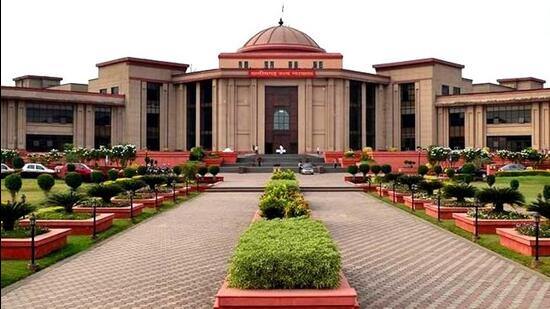
A significant pronouncement from the Chhattisgarh High Court has recently reinforced the civil rights of citizens to conduct prayer meetings within their private residences without needing prior police permission, provided such gatherings do not violate any existing laws. This ruling, observed by a single bench of Justice Naresh Kumar Chandravanshi, stands as a crucial affirmation of religious freedom and individual liberties in the state.
The court’s decision came while addressing petitions filed by two individuals, Babu Bhelwa and Santosh Kumar Yadav. Police authorities had previously issued notices to these petitioners under Sections 107/116(3) of the Criminal Procedure Code (CrPC), citing an apprehension of a breach of peace or public tranquility. Essentially, these sections allow police to take action if they believe someone might cause a disturbance. However, Justice Chandravanshi’s bench meticulously examined the circumstances and ultimately quashed these notices, directing the authorities not to interfere with the petitioners’ legitimate civil rights.
Upholding Fundamental Rights and Private Space
At the heart of this ruling lies the fundamental right to freedom of conscience and the free profession, practice, and propagation of religion, as enshrined in Article 25 of the Indian Constitution. The court’s observation made it clear that a person possesses an inherent right to pray or conduct religious ceremonies within the confines of their own home. This right does not necessitate a preliminary nod from law enforcement as long as the activities remain private, peaceful, and do not trespass into unlawful territory.
The petitioners, identified as members of a Christian community, had been holding prayer meetings in their private residences. The police notices essentially demanded that they either seek official permission for these gatherings or cease them altogether. The High Court, however, found no concrete evidence to suggest that these private prayer meetings were causing any actual breach of peace or public tranquility. The absence of such evidence rendered the police notices arbitrary and an infringement on civil liberties.
Understanding the Legal Framework for a 12th Grader
Think of it this way: your home is your personal space. The law generally respects what you do inside your home, especially if it doesn’t harm anyone else or break any rules. When it comes to prayer or religious practices, the Constitution gives everyone the freedom to follow their religion. The High Court’s ruling simply said that if you’re praying quietly in your own house, and not disturbing your neighbors, causing trouble, or breaking any specific laws like noise restrictions, the police can’t just tell you to stop or ask for permission. They can’t assume you’re going to cause problems without any real proof. This protects your right to practice your faith privately.
This judgment doesn’t mean that large public religious processions or gatherings in public spaces are exempt from regulations. Those often require permissions to manage crowds, traffic, and ensure public safety. But for small, private prayer meetings within a home, the court has drawn a clear line, emphasizing the sanctity of personal space and religious freedom.
Implications for Citizens and Authorities
For the average citizen, this judgment provides clarity and reassurance. It underscores that engaging in religious practices within one’s home is a protected right, not a privilege requiring state permission. This is particularly important for minority communities who might sometimes feel undue scrutiny over their private religious assemblies.
For law enforcement agencies, the ruling serves as a vital reminder to exercise caution and base actions on concrete evidence rather than mere apprehension or suspicion, especially when dealing with fundamental rights. It reinforces the principle that police intervention in private matters must be justified by actual or imminent law violations, not speculative concerns. This ruling from the Chhattisgarh High Court, as reported by Omni 360 News, highlights the judiciary’s role in safeguarding constitutional freedoms against overreach.
Key Takeaways
* No Prior Permission for Home Prayers Citizens do not need police permission to conduct prayer meetings in their private homes.
* Protection of Civil Rights The High Court explicitly directed authorities not to interfere with citizens’ civil rights in this regard.
* Upholding Fundamental Freedoms The ruling reinforces Article 25 of the Indian Constitution, guaranteeing freedom of religion.
* Focus on Law Violation Police intervention is justified only if there is evidence of actual law violation or a genuine threat to public peace, not mere apprehension.
* Distinction Between Private and Public The judgment pertains specifically to private gatherings within homes, not large public assemblies.
The Chhattisgarh High Court’s decision marks a significant reaffirmation of individual liberties and the boundaries of state power regarding religious practices. It provides a clear directive that private worship, conducted peacefully and within the bounds of law, remains a cornerstone of constitutional freedom.