‘No shortage of fuel’: Energy minister Hardeep Puri's assurance amid Strait of Hormuz closure| India News
Hardeep Puri Confirms Robust Fuel Supply Amid Strait of Hormuz Geopolitical Tensions
New Delhi, India — In a period marked by global uncertainties, India’s Energy Minister, Hardeep Puri, recently provided a comprehensive assurance to the nation: there is no shortage of fuel, even with ongoing concerns surrounding the critical Strait of Hormuz. This declaration aims to calm domestic anxieties and reinforce India’s strategic energy preparedness.
For decades, the Strait of Hormuz has stood as a narrow yet vital artery for global energy flow. It is a passageway connecting the Persian Gulf with the Arabian Sea and the broader Indian Ocean. Imagine it as a crucial traffic junction where a significant portion of the world’s oil, particularly from major producers like Saudi Arabia, Iran, Iraq, Kuwait, and the UAE, must pass through. If this channel were to face disruptions, due to political tensions or other incidents, it could significantly impact global crude oil prices and supply chains, potentially leading to widespread economic ripple effects. For a nation like India, which imports a large percentage of its crude oil requirements, the stability of this strait is paramount.
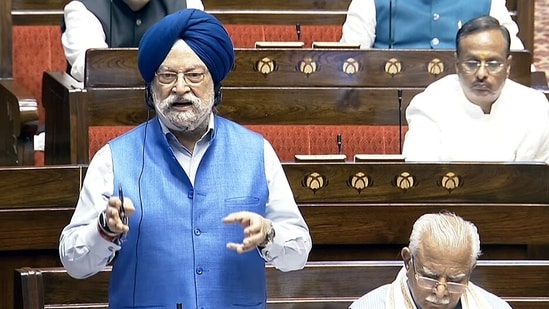
Minister Puri’s firm statement, delivered during recent public remarks, underscored India’s proactive measures to safeguard its energy interests. He highlighted that the nation’s strategic planning and diversified approach have created a strong shield against such geopolitical volatilities. This confidence is not merely rhetorical; it is rooted in tangible strategies that India has meticulously developed over the years.
One of the cornerstones of India’s energy security strategy is its Strategic Petroleum Reserves (SPRs). Think of SPRs as vast underground warehouses specifically designed to store millions of barrels of crude oil. These reserves act as an emergency stockpile, providing a buffer against sudden supply disruptions caused by international conflicts, natural disasters, or, indeed, blockades of critical shipping lanes like the Strait of Hormuz. Having these reserves means India can meet its immediate fuel needs for a significant period, even if external supplies face temporary interruptions. This gives the government crucial time to explore alternative sourcing and mitigate price shocks.
Beyond physical reserves, India has also aggressively pursued diversification of its crude oil imports. Historically, India has been heavily reliant on the Middle East for its oil. However, in recent years, there has been a conscious effort to broaden the base of its suppliers. This means forging relationships and securing oil from a wider array of countries across different continents, including the Americas, Africa, and other Asian regions. By not putting all its eggs in one basket, India reduces its vulnerability to regional instability in any single oil-producing area. Should one supply route or region face challenges, other sources can step in to fill the gap, ensuring a more resilient and steady flow of crude oil into the country.
Furthermore, India’s robust domestic refining capacity plays a pivotal role. The nation has invested heavily in modernizing and expanding its oil refineries, making it one of the largest refining hubs globally. This extensive capacity not only meets domestic demand but also allows India to be a net exporter of refined petroleum products. This capability adds another layer of security, as it means India can process various grades of crude oil from different sources efficiently, adapting to global market changes and ensuring that the raw material, once imported, can be quickly converted into usable fuels like petrol, diesel, and aviation turbine fuel.
The Minister’s assurance, reported widely by various news outlets, including our own Omni 360 News, serves as a crucial message to the public and industries alike. It aims to prevent speculative panic buying or unnecessary price hikes within the domestic market. For the average citizen, this means the daily commute, the transport of goods, and the general functioning of the economy are unlikely to be immediately impacted by distant geopolitical events. Local fuel stations are expected to maintain their regular supply, and businesses can plan with greater certainty regarding their energy costs.
In essence, Minister Hardeep Puri’s statement is not just an empty promise but a reflection of India’s comprehensive and multi-pronged energy security strategy. It underscores a nation that has learned from past vulnerabilities and is continually fortifying its position in the volatile global energy landscape. While the Strait of Hormuz remains a critical watchpoint, India’s strategic foresight and operational readiness provide a strong foundation for continued fuel availability.
Key Takeaways:
* Energy Minister Hardeep Puri assures the nation of no fuel shortage despite Strait of Hormuz concerns.
* The Strait of Hormuz is a critical global chokepoint for oil transport, vital for India’s imports.
* India’s confidence stems from its substantial Strategic Petroleum Reserves (SPRs), which act as emergency stockpiles.
* Diversification of crude oil sources, moving beyond traditional Middle Eastern suppliers, is a key strategy to reduce regional reliance.
* Robust domestic oil refining capacity further strengthens India’s energy security, ensuring efficient processing of various crude grades.
* The assurance aims to prevent domestic panic, stabilize local fuel markets, and ensure continued economic activity.
The nation’s energy policy continues to prioritize stability and self-reliance, ensuring that global geopolitical shifts do not unduly disrupt the lives of its citizens or hinder its economic progress.