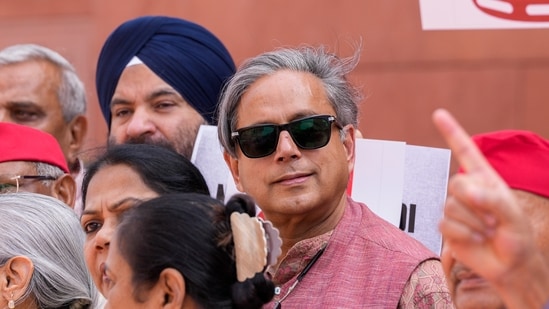
'Not moral surrender': Shashi Tharoor responds to party colleague Mani Shankar Aiyar's dig over Iran stand| India News
**Veteran Leaders Clash Over Global Tensions A Deeper Look**
The political landscape recently witnessed a notable public exchange between two prominent Indian political figures, Mani Shankar Aiyar and Shashi Tharoor. Their war of words, played out through open letters, centers on Tharoor’s commentary regarding the volatile situation between Iran and the United States. This public debate offers a fascinating glimpse into the internal dynamics of India’s political discourse and its approach to international relations. Omni 360 News brings you a detailed examination of this unfolding development.
The crux of the matter emerged following remarks made by Shashi Tharoor concerning the escalating tensions between Iran and the US. Tharoor, a globally recognized diplomat and Member of Parliament known for his nuanced perspectives, had expressed concerns about the potential for conflict and its ramifications, suggesting a path for India that many interpreted as a cautionary approach to the situation. His statements, shared across various platforms, aimed to articulate the complexities of the Middle Eastern geopolitical theatre and India’s potential role.
However, these remarks did not go unchallenged. Mani Shankar Aiyar, a seasoned politician and former diplomat with a long history of public service and often considered a staunch advocate of traditional Indian foreign policy, swiftly penned an open letter directed at Tharoor. An open letter, for a student in 12th standard, is simply a letter published for everyone to read, rather than just sent privately to the person it’s addressed to. In this strongly worded missive, Aiyar reportedly took exception to Tharoor’s views, accusing him of a “shocking display of ignorance” and a “presumptuous” stance on matters of Indian foreign policy. Aiyar’s letter underlined India’s historical commitment to non-alignment, a policy where India avoids taking sides in conflicts between major global powers. He argued that Tharoor’s comments could be seen as deviating from this long-held principle, implying a lack of appreciation for India’s diplomatic legacy and its careful balancing act on the world stage.
This public confrontation between two articulate and experienced leaders is more than just a personal disagreement. It highlights the ongoing debate within Indian political circles about how the nation should navigate complex international crises. Is it better to maintain a strictly neutral, non-aligned posture, or should India be more vocal and proactive in shaping global narratives, even if it means appearing to lean one way or another?
For a young person trying to understand this, imagine two smart, experienced captains on a ship, both having different ideas about how to steer through a stormy sea. One captain believes in sticking to the old, tried-and-true navigation rules, while the other thinks adapting to new winds is crucial. Both want the ship (India) to be safe, but they disagree on the best method.
Local news outlets and political commentators have extensively covered this exchange, pointing out that such public disagreements, while sometimes uncomfortable, are a part of a vibrant democracy. They allow different viewpoints within a political establishment to be aired and debated, potentially enriching policy discussions. The timing of the exchange, set against a backdrop of significant global uncertainty, only adds to its relevance. It underscores the challenges faced by nations like India in formulating a foreign policy that is both principled and pragmatic, reflecting its growing stature on the global stage.
Key Takeaways
* The exchange between Mani Shankar Aiyar and Shashi Tharoor underscores differing interpretations of India’s foreign policy principles regarding international conflicts.
* Aiyar champions traditional non-alignment, emphasizing India’s historical stance of not taking sides.
* Tharoor’s remarks reflect a more contemporary view, acknowledging the complexities of modern geopolitics and the need for nuanced diplomatic engagement.
* This public debate showcases the internal discussions within Indian political parties about the nation’s role in a rapidly changing world.
* Such dialogues, though public, are crucial for a healthy democracy, allowing diverse perspectives to shape national discourse.
Ultimately, the Aiyar-Tharoor spat is a potent reminder that even seasoned politicians, united by party affiliation, can hold diverse and deeply felt convictions about the best course for their nation on the global stage. It’s a debate not just about specific remarks, but about the very soul of India’s engagement with the world.