Former Odisha MP quit BJP and join BJP day before court hearing
Odisha Politician’s Party Shift Sparks ‘Washing Machine’ Debate Amid CBI Probe
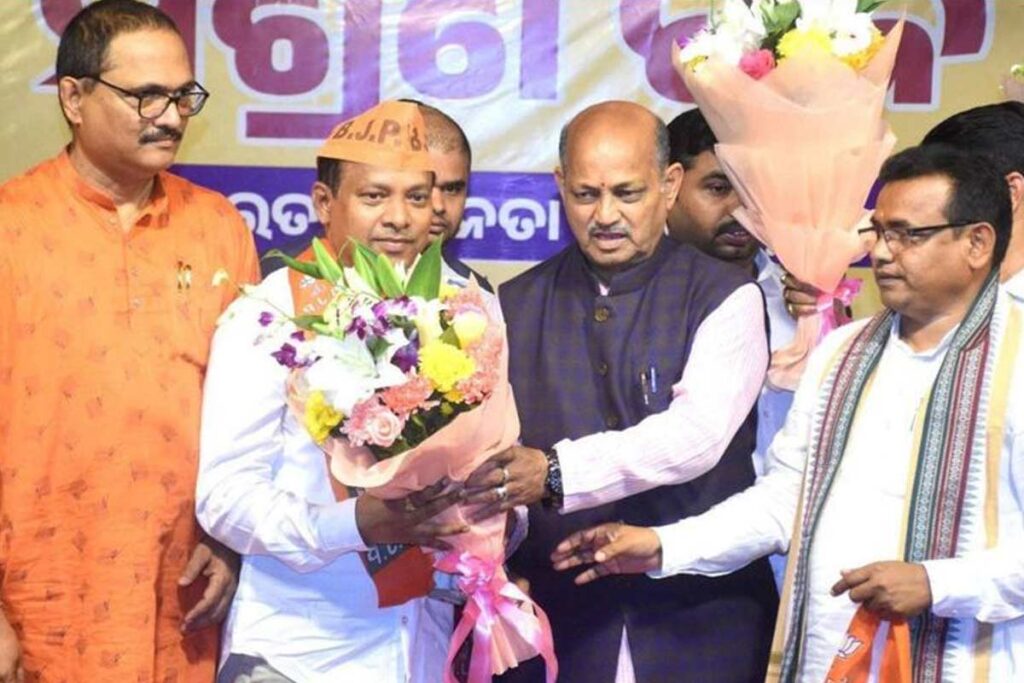
In a move that has sent ripples through Odisha’s political landscape, former Biju Janata Dal (BJD) Member of Parliament, Rabindra Kumar Jena, has officially joined the Bharatiya Janata Party (BJP). This development, reported widely across local news outlets, comes mere hours before a crucial hearing in the long-running Seashore chit fund scam case, where Jena stands accused by the Central Bureau of Investigation (CBI).
The timing of Jena’s party switch has immediately fueled sharp criticism from opposition camps, particularly West Bengal’s ruling Trinamool Congress (TMC). Critics are once again invoking the “washing machine” theory, suggesting that joining the ruling BJP serves as a shield against ongoing legal investigations. For readers trying to understand the intricacies of Indian politics, this isn’t just a simple party change; it’s a calculated move that speaks volumes about the intersection of law and political maneuvering.
The Seashore Chit Fund Scam Explained
To grasp the gravity of the situation, it’s important to understand what a “chit fund scam” entails. Imagine a scheme where people are promised exceptionally high returns on their investments, far more than traditional banks offer. They pool their money, often with a company that promises to invest it wisely. However, in a scam like the Seashore case, the companies often collect vast sums from unsuspecting individuals, only to disappear or default on their promises, leaving countless investors financially ruined. These scams often prey on the trust of common citizens, particularly in rural and semi-urban areas.
Rabindra Kumar Jena’s name has been consistently linked to the Seashore chit fund scam for an extended period. The CBI, India’s premier investigative agency, has been rigorously pursuing this case, and Jena’s name prominently features in the charge sheet they submitted. The investigation has seen many twists and turns, keeping his alleged involvement under constant scrutiny.
For days, whispers circulated in regional political corridors about Jena potentially aligning with the BJP to navigate his legal challenges. These speculations turned into reality last Wednesday. With his supporters, the former MP formally embraced the saffron party, just ahead of Thursday’s scheduled court hearing in the chit fund case. This dramatic pre-hearing defection is what has truly ignited the political firestorm.
The “Washing Machine” Allegation Takes Center Stage
The most vociferous criticism has come from the Trinamool Congress. Using social media and public statements, the TMC has vehemently attacked the BJP, reiterating their “washing machine” theory. As they articulated, “BJP is a washing machine. The most effective machine in the country’s politics. Where no stain is stubborn. There will be no trace of a stain. No corruption is big here. No soap is needed. Results will be delivered. Just join the party.”
The TMC’s message, shared widely, specifically highlighted Jena’s case: “Former Balasore MP and Biju Janata Dal leader Rabindra Kumar Jena has joined the BJP. Any guesses why? Yes. You are absolutely right. He was scheduled to appear before the CBI the very next day in connection with his alleged involvement in the Seashore chit fund scam in… The next sequence of events is easily predictable. Now, dates will no longer be found on the CBI calendar. The case will lose its importance. After some time, all allegations will vanish into thin air.” This pointed accusation suggests a clear pattern: join the ruling party, and your legal troubles magically fade away.
This “washing machine” narrative is not new. Opposition parties across India have frequently accused the BJP of welcoming leaders facing corruption charges, implying that the party offers a safe haven from prosecution once they switch allegiance. It raises serious questions about transparency, accountability, and the impartiality of investigative agencies when high-profile politicians change loyalties under the shadow of legal proceedings.
Jena’s Rationale and Political Background
Following his induction into the BJP, Rabindra Kumar Jena offered a familiar explanation for his decision. He stated that the BJP is “the only party that can bring development to Odisha and India.” This is a common refrain heard from politicians who switch parties, emphasizing development goals as their primary motivation, often overshadowing the immediate legal context.
A look at Jena’s political journey provides further context. He first became an MP in 2014, securing victory on a BJD ticket. However, his political fortunes shifted in 2019 when he lost the election to the BJP. For the upcoming 2024 elections, his former party, the BJD, did not offer him a ticket. Interestingly, his wife, Subhasini Jena, remains a sitting BJD MLA, highlighting the complex and often fragmented political allegiances within families in Indian politics.
A Deeper Look for Omni 360 News
As Omni 360 News continues to track political developments, this incident underscores a critical challenge in democratic governance. The public’s trust in institutions, including law enforcement and political parties, can be eroded when such events unfold. The perception that political affiliation can influence the course of justice is a worrying trend that needs rigorous examination.
Local media and political analysts in Odisha are keenly observing how this defection will impact the Seashore scam investigation. Will the CBI’s pursuit of the case continue with the same vigor? Or will the political alignment indeed lead to a dilution of the charges, as the opposition suggests? These are questions that will linger in the minds of citizens and political observers alike.
The episode also highlights the cutthroat nature of electoral politics, especially in the run-up to significant elections. Parties are always looking to strengthen their ranks, and leaders facing political or legal pressure often seek new affiliations that promise protection or renewed political relevance. However, the ethical implications of such switches, particularly when linked to serious allegations, remain a point of intense public debate.
Key Takeaways:
- Former BJD MP Rabindra Kumar Jena joined the BJP just before a crucial CBI hearing in the Seashore chit fund scam.
- This timing immediately drew strong criticism from opposition parties, especially the Trinamool Congress, who labeled the BJP a “washing machine” for politicians facing corruption charges.
- The “washing machine” theory suggests that joining the ruling party helps politicians escape legal scrutiny.
- Rabindra Kumar Jena is accused in the multi-crore Seashore chit fund scam, which involved defrauding thousands of investors.
- Jena cited “development” as his reason for joining the BJP, a common justification for party defections.
- The incident raises important questions about the integrity of investigative processes and the impact of political affiliations on justice.