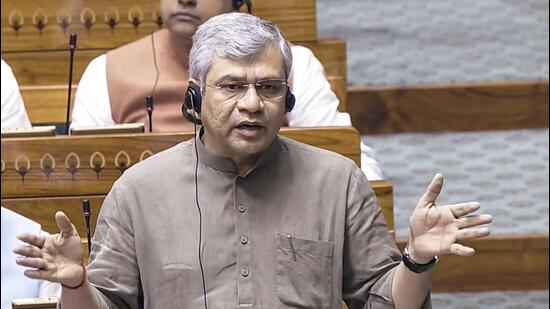
Online safety for children priority, govt mulls AI, Social Media curbs: Vaishnaw| India News
Government Eyes Stronger Measures on Harmful AI Content and Online Child Safety
New Delhi – The digital landscape, a vibrant arena for communication and innovation, also harbors significant challenges. In a recent statement, IT Minister Ashwini Vaishnaw underscored the government’s serious consideration of more robust measures to combat the escalating threats posed by harmful AI-generated content and the inherent risks social media platforms present to children and citizens. This announcement signals an intensified commitment to ensuring a safer and more secure online environment for everyone.
The Minister’s remarks highlight a growing global concern over the rapid evolution of artificial intelligence and its potential for misuse. While AI offers immense benefits, its ability to create convincing but false images, videos, and audio – often referred to as “deepfakes” – has become a major worry. Imagine a situation where a video appears absolutely real, showing a public figure saying or doing something they never did. This isn’t just a minor trick; such fabrications can spread misinformation rapidly, sow distrust, and even manipulate public opinion, impacting everything from individual reputations to national security. Mr. Vaishnaw emphasized that the government is closely monitoring these developments, recognizing that the current regulatory framework might need significant upgrades to keep pace with such sophisticated digital deception.
Beyond the realm of AI-generated deceit, the focus also extends to the pervasive influence of social media platforms, particularly on younger generations. For a 12th-standard student, social media is an integral part of daily life – a place to connect with friends, share experiences, and explore interests. However, these platforms also come with inherent dangers. Concerns range from cyberbullying and exposure to inappropriate content to the more subtle, yet profound, impacts on mental health, such as anxiety, depression, and body image issues fueled by constant comparison and curated online personas. Furthermore, issues like data privacy – understanding who accesses and uses one’s personal information shared online – remain critical for all citizens.
The government’s stance, as articulated by the Minister, is rooted in the principle of ensuring digital access does not come at the cost of personal safety and well-being. Existing IT rules and regulations have served as foundational steps, but the speed at which technology advances demands a more agile and comprehensive approach. The very nature of the internet, with its borderless reach, means that threats can emerge from anywhere, making coordinated and forward-thinking policy essential.
When the government speaks of “stronger steps,” it implies a multi-pronged strategy. This could involve stricter accountability for social media platforms and AI developers, compelling them to implement more sophisticated content moderation tools and verification mechanisms. It might also lead to new legal provisions that specifically address the creation and dissemination of harmful AI content, with clearer penalties for those who intentionally misuse these technologies. Public awareness campaigns are another vital tool, educating citizens, particularly children and parents, about identifying misinformation and practicing safer online habits. The emphasis is on prevention as much as it is on punishment.
Protecting children is paramount. The government is acutely aware of the vulnerability of young users and the long-term implications of negative online experiences. This includes looking into mechanisms that make it harder for minors to access age-restricted content, enhancing reporting systems for online abuse, and working with schools and families to foster digital literacy. For citizens at large, the objective is to safeguard their right to truthful information and protect them from digital harms that can erode trust in institutions and even personal relationships.
This commitment also extends to holding tech companies responsible. The expectation is that digital platforms, which benefit immensely from their vast user bases, must equally bear the responsibility of fostering a safe and secure environment. This collaborative approach between government, industry, and civil society is seen as crucial for addressing these complex challenges effectively. It is not about stifling innovation but rather about channeling it responsibly. The delicate balance lies in fostering a vibrant digital economy while simultaneously establishing robust safeguards that prevent abuse and protect fundamental rights.
As the digital world continues to evolve, Omni 360 News understands the critical importance of keeping the public informed about policies that shape our online lives. The Minister’s announcement marks a significant moment, signaling that India is prepared to adapt its regulatory framework to face the emerging realities of the AI age and ensure the digital space remains a realm of opportunity, not peril.
Key Takeaways
* IT Minister Ashwini Vaishnaw highlighted government plans for more robust measures against harmful AI and social media risks.
* The primary concerns include AI-generated content like deepfakes that spread misinformation and the impact of social media on children and citizens.
* Government aims to tackle issues such as online misinformation, cyberbullying, mental health impacts on youth, and data privacy.
* New steps could involve stricter platform accountability, enhanced content moderation, and updated legal frameworks.
* The focus is on protecting vulnerable groups while fostering a responsible digital environment, balancing innovation with safety.
* Tech companies are expected to play a crucial role in collaborating with the government to implement these safeguards.