
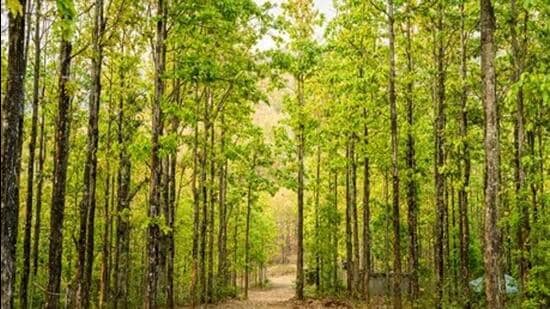
Over 17,000 Sal trees to be felled in Uttarakhand’s Dehradun and Kalsi to contain beetle attack| India News
Dehradun Sal Forests Face Borer Attack Felling Thousands of Trees to Contain Spread
Dehradun, Uttarakhand – A pressing environmental challenge has emerged in the verdant Sal forests of Dehradun and Kalsi, where forest officials are preparing for the extensive felling of over 17,000 Sal trees. This drastic measure comes as a direct response to a widespread borer infestation threatening the region’s vital ecosystems. Authorities emphasize this controversial step is not taken lightly, but rather as a critical intervention to prevent an even wider ecological devastation caused by the pervasive beetle.
The decision stems from an escalating crisis within the Dehradun and Kalsi forest divisions, where a significant number of Sal (Shorea robusta) trees have succumbed to the relentless attack of Sal borers. These beetles, specifically the Hoplocerambyx spinicornis, are notorious for their destructive capabilities. The adult beetles lay their eggs under the bark of Sal trees. Once hatched, the larvae burrow deep into the tree’s wood, creating tunnels that disrupt the flow of water and nutrients. This internal destruction effectively starves the tree, leading to its eventual death and weakening the forest’s overall health.
Local forest department surveys indicate that over 17,390 Sal trees are currently affected across an expanse of nearly 13,000 hectares. This scale of infestation demands immediate action, according to officials. Divisional Forest Officer (DFO) for Dehradun, Nitish Mani Tripathi, has been quoted explaining the severity of the situation. “The borer infestation has reached alarming levels,” Tripathi stated in recent reports. “If these infected trees are not promptly removed, the beetles will continue to multiply and spread to healthy trees, potentially wiping out entire sections of our valuable Sal forests.”
This isn’t an isolated incident. The region has grappled with Sal borer outbreaks in the past, including notable episodes in 2011 and 2017. Each time, the primary strategy to contain the spread has involved the felling and careful removal of infested trees. This historical context underscores the difficult yet established protocol for managing such epidemics in forest ecosystems. The process involves identifying and marking affected trees, followed by their controlled felling and swift removal from the forest to prevent further beetle proliferation. The timber often requires specific treatment or disposal to ensure no larvae or adult beetles remain to infest new areas.
The Uttarakhand forest department has already submitted a formal proposal to the Union Ministry of Environment, Forest and Climate Change (MoEFCC) seeking the necessary approvals for this large-scale operation. Such clearances are mandatory for significant forest interventions, reflecting the national importance placed on environmental stewardship. Officials anticipate a structured approach, carefully planned to minimize collateral damage to the surrounding healthy vegetation and wildlife habitats.
While the felling of thousands of trees might seem counterintuitive to forest conservation, experts argue it is a painful but necessary surgical strike. “Leaving diseased trees standing is akin to allowing a contagion to spread unchecked,” explained a local forestry expert, highlighting the ecological imperative behind the decision. The immediate loss is weighed against the potential for a much larger, irreparable loss of an entire forest system.
Looking ahead, the forest department plans to implement enhanced monitoring systems and proactive management strategies to detect future outbreaks early. Replantation efforts with resistant native species, alongside careful habitat restoration, will be crucial in the long-term recovery of these vital forest areas. The objective extends beyond mere containment to building more resilient forest ecosystems capable of withstanding future threats. This ongoing battle against pests like the Sal borer highlights the constant vigilance required in protecting natural resources, balancing immediate intervention with long-term ecological health.
Key Takeaways:
* Over 17,000 Sal trees in Dehradun and Kalsi are slated for felling due to a severe borer beetle infestation.
* The felling is deemed essential by forest officials to prevent the rapid spread of the pest to healthy Sal trees.
* The Sal borer (Hoplocerambyx spinicornis) attacks trees by burrowing into the wood, disrupting nutrient flow and killing the tree.
* The Uttarakhand forest department has sought approval from the Union MoEFCC for this large-scale operation.
* This approach, though drastic, is a known strategy to manage widespread borer outbreaks, with similar actions taken in past infestations.
* Long-term plans involve enhanced monitoring, replantation, and strategies to build more resilient forest ecosystems.
For more updates on environmental developments and local news, keep reading Omni 360 News.