Pakistan mediate US–Iran war, talks to de-escalate conflict
Pakistan Steps Forward in US Iran Standoff Diplomatic Efforts Mount
The West Asian landscape remains fraught with tension as the United States and Israel continue military actions against Iran for over three weeks. This prolonged conflict has had immediate global repercussions, notably with Iran’s strategic move to blockade the Strait of Hormuz, a vital artery for global oil commerce. As the world watches, sensing the potential for broader destabilization, a beacon of diplomatic initiative has emerged, with Pakistan, supported by Turkey and Egypt, stepping onto the mediation stage.
The initial phase of this conflict saw US President Donald Trump convey an expectation of a swift resolution. However, the situation quickly escalated. Iran’s decision to obstruct the Strait of Hormuz—through which a significant portion of the world’s oil supply passes—sent ripples of concern across international markets and capitals. In response, Washington had initially issued a stringent 48-hour ultimatum for the strait to reopen, threatening military action against Iranian power facilities. A notable shift in posture followed, with President Trump subsequently proposing a five-day pause in hostilities, signaling a possible reevaluation of the conflict’s complexity. Experts observing these developments suggest that President Trump is now actively seeking a diplomatic off-ramp from the ongoing military engagement. It is precisely within this critical juncture that Pakistan has chosen to assume a pivotal role as a potential peacemaker.
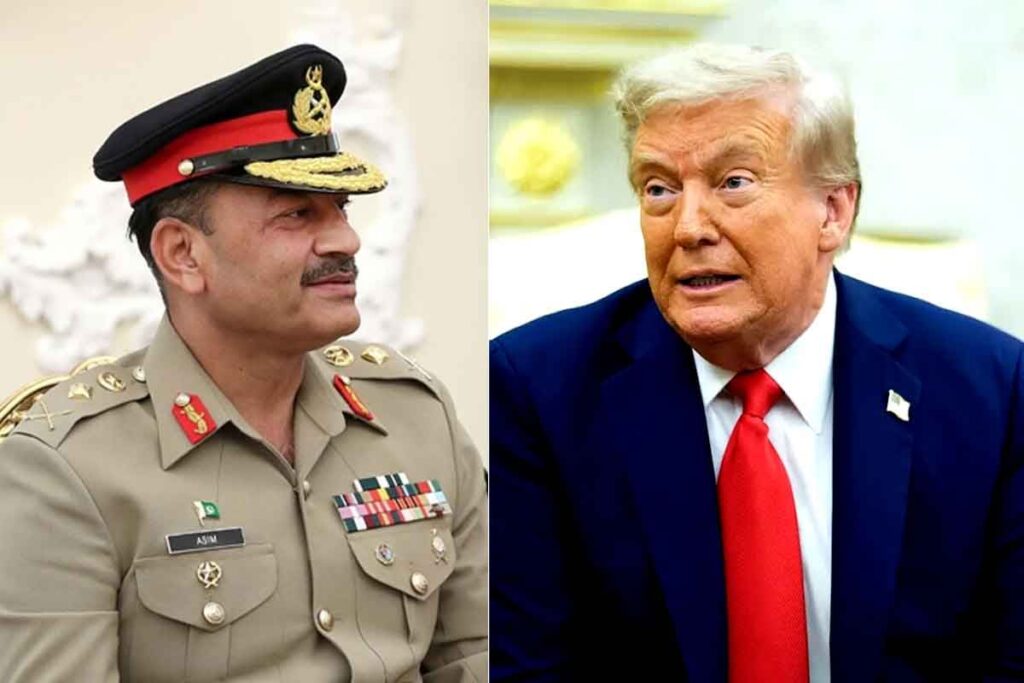
In a significant diplomatic overture, General Asim Munir, Pakistan’s Chief of Army Staff, engaged in a phone conversation with President Trump. During this discussion, Pakistan formally put forth a proposal for a peace summit aimed at de-escalating the conflict. Complementing this effort, Pakistani Prime Minister Shahbaz Sharif also held direct talks with Iranian President Masoud Pezeshkian, reiterating Pakistan’s unwavering commitment to fostering peace and stability across West Asia. These coordinated diplomatic actions underscore a regional urgency to contain the crisis before it spirals further. Beyond Pakistan, regional players like Turkey and Egypt have also shown keen interest and are actively working behind the scenes to facilitate a resolution.
Reports from news agencies, including Reuters, indicate growing momentum for a potential peace conference to be held in Islamabad. While no official confirmation has emerged from the White House, discussions about the composition of potential delegations are already circulating. It is suggested that the US delegation might include Vice President JD Vance alongside seasoned diplomats Steve Witkoff and Jared Kushner. The Iranian side could potentially be represented by Parliament Speaker Mohammad Bagher Ghalibaf. Such a high-level gathering in Pakistan’s capital would mark a momentous step towards dialogue, offering a glimmer of hope for a region desperately in need of calm. Omni 360 News will continue to monitor these unfolding developments closely.
Despite these promising diplomatic initiatives, significant hurdles remain. A primary concern revolves around the potential involvement of Israel in any proposed peace talks, particularly given the deep-seated historical animosity between Israel and Pakistan. Pakistan is widely regarded as a staunch opponent of Israel, and vice versa. This mutual distrust casts a shadow over the likelihood of an Israeli representative participating in a summit hosted in Islamabad. Without the direct engagement of all key parties involved in the broader regional conflict, the overall effectiveness and lasting impact of Pakistan’s mediation efforts, while commendable, could be substantially limited. The path to lasting peace in West Asia is complex, paved with historical grievances and intricate political dynamics, demanding more than just initial outreach.
Key Takeaways
* Pakistan has initiated diplomatic mediation between the US and Iran amidst the ongoing conflict and Iran’s blockage of the Strait of Hormuz.
* Pakistani Army Chief Asim Munir spoke with US President Trump, proposing a peace meeting in Islamabad.
* Pakistani Prime Minister Shahbaz Sharif engaged in talks with Iranian President Masoud Pezeshkian.
* Turkey and Egypt are also actively supporting these regional peace efforts.
* A potential peace summit in Islamabad could involve high-level US and Iranian representatives, though official confirmation is pending.
* Significant challenges exist, notably the strong opposition between Pakistan and Israel, making Israel’s participation in an Islamabad-hosted meeting highly unlikely.
* The effectiveness of mediation without all principal actors remains a considerable concern for achieving comprehensive regional peace.