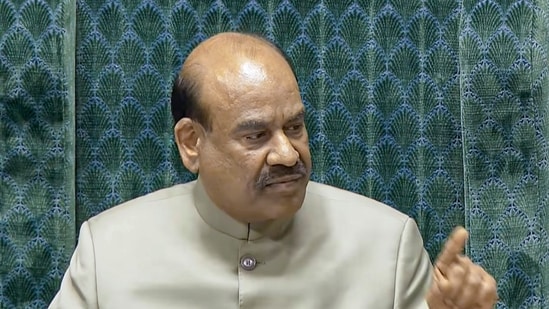
Parliament session LIVE: Gaurav Gogoi vs Kiren Rijiju over ‘interruption’ in House amid no-confidence motion debate| India News
Parliamentary Focus on Speaker Om Birla Removal Motion Debate Set Key Takeaways
The hallowed halls of the Lok Sabha are poised for a significant and rare procedural event, as a notice seeking the removal of Speaker Om Birla has been officially admitted for debate. This development, occurring amidst the ongoing Parliament Budget session, signals a period of intense parliamentary scrutiny and discussion. With the requisite support of 50 members, the motion has cleared an initial hurdle, setting the stage for a comprehensive ten-hour debate that will delve into the very foundations of parliamentary conduct and the Speaker’s pivotal role.
This isn’t merely a fleeting news item; it’s a moment that underscores the intricate mechanics of India’s democratic framework. When such a motion emerges, it invariably invites a closer look at the principles of neutrality and fairness expected from the individual presiding over the lower house of Parliament. The allocation of ten hours for debate highlights the gravity with which this matter is being approached by the legislative body, providing ample time for members to articulate their positions and reasoning.
Understanding the Lok Sabha Speaker’s Critical Role
For those unfamiliar with the inner workings of Parliament, understanding the Speaker’s position is paramount. Imagine a large, bustling classroom where hundreds of students, representing diverse viewpoints, are trying to discuss important national issues. The Speaker is essentially the principal of this “classroom” – the Lok Sabha. Their primary duty is to ensure that debates are orderly, rules are followed, and every member gets a fair chance to speak, all while maintaining absolute impartiality.
The Speaker is the presiding officer, the chief custodian of the Lok Sabha’s dignity and privilege. They interpret the rules of procedure, decide on matters of privilege, and even have the power to adjourn the House or suspend members for disorderly conduct. Crucially, the Speaker is expected to rise above party politics once elected, acting as an unbiased referee in the often-charged arena of parliamentary debate. This expectation of neutrality is foundational to the effective functioning of a parliamentary democracy.
The Path to a Removal Motion Explained
So, how does a notice to remove a Speaker even come about? It’s a stringent process, designed to ensure such a serious step isn’t taken lightly. Here’s a simplified breakdown:
First, a member of Parliament, feeling that the Speaker has somehow failed in their duties or lost the confidence of the House, can submit a written notice to the Secretary-General of the Lok Sabha. This isn’t just a casual complaint; it’s a formal proposal.
Second, for this notice to be considered, it needs the backing of a significant number of members. In this case, at least 50 members must stand in support of the resolution when it is formally moved in the House. This “standing vote” acts as a preliminary endorsement, demonstrating that there’s substantial concern among a section of the Lok Sabha.
Once this threshold of 50 members is met, as it has been for Speaker Om Birla’s removal motion, the resolution is officially admitted. This admission doesn’t mean the Speaker is removed; it simply means the House agrees to hold a debate on the matter. The Speaker then, by convention, does not preside over the House during the consideration of the resolution for their own removal. Instead, a Deputy Speaker or another member from the panel of chairpersons takes the chair.
Finally, a dedicated time is allocated for a full-fledged debate. The current scenario allocates ten hours, a substantial period reflecting the weight of the issue. After the debate concludes, the resolution is put to a vote. For the Speaker to be removed, the resolution must be passed by a majority of all the then-members of the House. This means not just a simple majority of those present and voting, but a majority of the effective strength of the Lok Sabha. Such motions are historically rare, underscoring the high bar set for removing a Speaker.
Significance and Implications for Democratic Discourse
The admission of a notice to remove the Lok Sabha Speaker is not an everyday occurrence. In fact, it is an event that draws considerable attention, not just from political commentators but also from citizens keenly observing the health of their democratic institutions. It brings to the forefront critical questions about the Speaker’s impartiality, the conduct of parliamentary proceedings, and the relationship between the ruling dispensation and the opposition.
From the perspective of Omni 360 News, such developments are crucial indicators of the vibrancy, and sometimes the friction, within parliamentary democracy. While opposition parties often utilize such motions to express dissent or highlight perceived procedural lapses, the very act of admitting the motion and allocating time for debate reaffirms the procedural robustness of the Lok Sabha. It demonstrates that even the Speaker, the highest authority within the House, is subject to parliamentary scrutiny and accountability.
Local news outlets and citizens, often more focused on immediate legislative outcomes, will be keenly watching how this debate unfolds. It’s a chance to witness the procedural checks and balances in action, offering insights into how disagreements are formally processed within the legislative framework. The extensive debate provides an opportunity for all sides to present their arguments, allowing for a thorough public examination of the issues at hand.
What to Expect from the Ten-Hour Debate
The upcoming ten-hour debate will be a focal point of the Parliament Budget session. During this period, members who moved the resolution will articulate their specific grounds for seeking Speaker Birla’s removal. These grounds could range from allegations of perceived bias in allocating speaking time, allowing certain debates while stifling others, or concerns over the handling of particular legislative matters.
Conversely, members supporting Speaker Birla will defend his conduct, highlighting his adherence to rules, his efforts to maintain decorum, and his overall stewardship of the House proceedings. They will likely emphasize the importance of maintaining stability in the Speaker’s office and upholding the dignity of the chair. The debate will be a test of arguments, rhetoric, and parliamentary strategies.
Ultimately, at the conclusion of the debate, the resolution will be put to a vote. Given the rarity of such successful motions, and the established conventions, the outcome will depend heavily on the political arithmetic within the Lok Sabha. Regardless of the final vote, the debate itself serves a vital democratic function by allowing for public deliberation on the conduct of a key constitutional office.
Key Takeaways
* A resolution seeking the removal of Lok Sabha Speaker Om Birla has been admitted after 50 members supported the motion.
* A significant ten-hour debate has been allocated, highlighting the gravity of the matter.
* The Speaker’s role is to act as an impartial referee, ensuring orderly and fair parliamentary proceedings.
* The removal process is stringent, requiring a notice, support from 50 members, a debate, and a majority vote of the total effective membership.
* This event underscores the procedural checks and balances inherent in India’s parliamentary democracy, allowing for accountability even for the highest office within the House.
This ongoing development in the Parliament Budget session is more than just political theater; it’s a fundamental exercise in parliamentary accountability, reminding everyone that even the highest offices in a democracy are subject to scrutiny and established procedures. It is a critical lesson in how our legislative body navigates challenges to its own internal leadership, ensuring that the wheels of democracy continue to turn, albeit sometimes with considerable friction.