Pinarayi Vijayan slams Telangana CM over ‘dark era’ jab| India News
Kerala Stands Tall Pinarayi Vijayan Counters Telangana CM Reddy’s Claims with Development Data
A sharp exchange in the political arena has brought the spotlight onto states’ governance models, as Kerala Chief Minister Pinarayi Vijayan strongly pushed back against allegations of corruption leveled by Telangana Chief Minister Revanth Reddy. The dispute, emanating from a public address by Reddy, saw Vijayan firmly defending Kerala’s track record, underscoring its impressive human development indices and remarkably low poverty rates as irrefutable evidence of good governance. This national conversation, widely reported across local news platforms, offers a compelling look into contrasting narratives of state progress.
The initial remarks from Telangana Chief Minister Revanth Reddy during a recent public gathering stirred the political pot, suggesting a “dark era” of corruption within Kerala’s administration. Reddy’s comments, while not detailing specific charges, painted a picture of misgovernance, seemingly aimed at discrediting the Left Democratic Front (LDF) government. Such pronouncements often become flashpoints, prompting swift rejoinders from the targeted leadership.
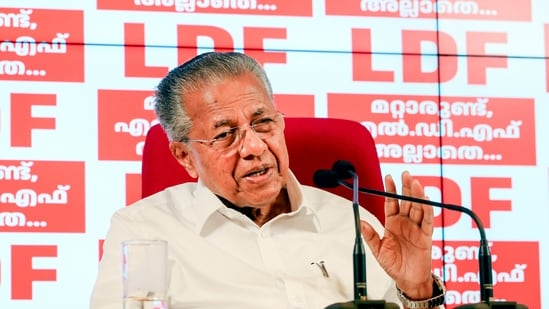
However, Kerala Chief Minister Pinarayi Vijayan wasted no time in dismantling these claims, choosing to respond not with mere rhetoric, but with concrete data and the undeniable socio-economic realities of his state. Speaking with a firm resolve, Vijayan pointed directly to Kerala’s celebrated achievements in human development and poverty alleviation. His response highlighted a fundamental difference in how states can be evaluated—beyond financial figures, into the tangible welfare of their citizens.
For decades, Kerala has been a standout model in India for its commitment to social indicators. This isn’t just a political talking point; it’s a fact backed by various national and international reports. When discussing human development, factors like literacy rates, life expectancy, and healthcare access come into play. Kerala consistently tops these charts. The state boasts near-universal literacy, a robust public healthcare system, and impressive life expectancy figures that often rival developed nations. These are not minor achievements; they represent a sustained effort to prioritize the well-being of every individual.
Regarding poverty, Vijayan’s rebuttal drew heavily on official statistics. Reports from bodies like NITI Aayog, which map India’s Multidimensional Poverty Index (MPI), consistently place Kerala at the very bottom of the poverty list, meaning it has the lowest percentage of people living in multidimensional poverty. This index considers not just income, but also access to health, education, and living standards. Kerala’s figures are often remarkably low, frequently below one percent, a stark contrast to many other states in the country. This achievement is a testament to strong social welfare programs, equitable distribution of resources, and effective governance that prioritizes basic needs.
The crux of Vijayan’s argument was clear: how can a state achieve such exemplary human development and drastically reduce poverty if its administration is riddled with corruption and inefficiency, as implied by Reddy? The two concepts, high corruption and high human development, are generally seen as contradictory. A government that effectively manages resources to lift its population out of poverty and improve their quality of life typically demonstrates a certain level of transparency and commitment to public service.
This incident, as highlighted by Omni 360 News, is more than just a political squabble. It opens up a broader discussion about how we measure success in governance. Is it purely economic growth, or should it encompass the holistic well-being of citizens? Kerala’s model, often termed the ‘Kerala Model of Development,’ emphasizes social sector spending, public services, and equitable distribution, even if its industrial growth might not always match some of its peers. This approach has led to a society with high social mobility, lower crime rates compared to many regions, and a population that enjoys better health and educational outcomes.
The exchange also underscores the dynamic nature of federal politics in India, where leaders frequently challenge each other’s state models. While Reddy’s criticism focused on an abstract notion of corruption, Vijayan’s defence was rooted in tangible, verifiable statistics that reflect the daily lives of millions of Keralites. Such debates serve to inform the public and encourage a deeper look into the realities of governance across the diverse landscape of Indian states. For a young student trying to understand state politics, this shows that claims need to be backed by proof, and good governance often shines through in people’s quality of life.
Key Takeaways
* Telangana CM Revanth Reddy accused Kerala’s government of corruption, calling it a “dark era.”
* Kerala CM Pinarayi Vijayan rebutted these claims by highlighting Kerala’s strong human development indicators.
* Vijayan emphasized Kerala’s exceptionally low poverty rates, backed by NITI Aayog’s Multidimensional Poverty Index.
* Kerala’s consistent top rankings in literacy, healthcare, and life expectancy were cited as evidence of effective governance.
* The exchange spotlights the varying metrics used to assess state performance, from abstract allegations to concrete social progress.
* This political debate encourages a deeper understanding of how different states prioritize and achieve welfare for their citizens.