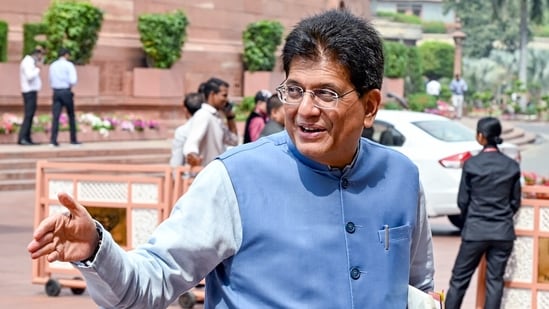
Piyush Goyal to finalise seat-sharing for Tamil Nadu elections today: BJP| India News
Rising Political Tensions Between BJP and DMK in Tamil Nadu
The political landscape in Tamil Nadu has been abuzz with heightened rhetoric as the ruling Dravida Munnetra Kazhagam DMK and the Bharatiya Janata Party BJP engage in increasingly sharp exchanges. These confrontations, often broadcast across local news channels and debated in regional newspapers, signal a deepening ideological divide and a fierce battle for political influence in the southern state. Omni 360 News observes these developments closely, understanding their significance for regional stability and national politics.
For decades, Tamil Nadu politics has largely been dominated by formidable regional parties like the DMK and its historical rival, the AIADMK. The BJP, traditionally a national party with a strong presence in north and west India, has long sought to establish a more significant foothold in a state where its Hindutva ideology has historically encountered considerable cultural and linguistic resistance. This persistent push by the BJP to expand its presence and challenge the regional stronghold serves as a primary catalyst for the current friction, as the DMK staunchly defends its foundational Dravidian identity politics and principles of state autonomy.
At the very core of many of these disputes lies the emotive issue of language and culture. The DMK, a party deeply rooted in the early 20th-century self-respect movement, fiercely champions the Tamil language and culture, frequently interpreting central government policies as veiled attempts at ‘Hindi imposition.’ Local news reports from across Tamil Nadu consistently highlight statements from DMK leaders who vociferously oppose any perceived dilution of Tamil identity. For instance, when union ministers, particularly from the BJP, make public statements promoting Hindi as a national link language or suggesting its wider adoption, it invariably triggers a powerful and immediate backlash from the DMK. They view such moves as a direct affront to Tamil’s ancient heritage, unique linguistic identity, and historical significance. This narrative resonates deeply with a substantial segment of the local population, for whom linguistic pride is intricately woven into their personal and collective identity. The preservation of Tamil culture, including its rich literary tradition and performing arts, often becomes a rallying cry that galvanizes public opinion against perceived external influences.
Another significant area of persistent contention revolves around federalism and the assertion of state rights. The DMK consistently advocates for greater fiscal and administrative autonomy for states, arguing that the central government frequently oversteps its constitutional bounds in critical matters such as taxation, education, and the equitable allocation of central funds. Policies like the Goods and Services Tax GST compensation, the National Eligibility cum Entrance Test NEET for medical admissions, and the proposed National Education Policy NEP have become regular battlegrounds for these differing philosophies. The DMK vehemently argues that NEET, for instance, undermines crucial social justice principles by inherently disadvantaging rural students and those from state board syllabi, thereby creating an uneven playing field. Similarly, the NEP is often viewed as an attempt to excessively centralize educational governance and potentially diminish the importance of regional languages in school curricula. The BJP, conversely, frames these policies as essential national reforms designed to foster uniformity, enhance efficiency, and ultimately benefit all states through a more integrated national framework. Local civic bodies, educational institutions, and healthcare providers often find themselves navigating the practical implications and administrative complexities arising from these deep-seated ideological clashes.
The ideological schism extends to fundamental differences in their overarching political philosophies and social visions. The DMK operates on a platform deeply rooted in Dravidian nationalism, emphasizing social justice, rationalism, and secularism, actively championing the rights of minorities, backward classes, and marginalized communities. The BJP, in stark contrast, propagates a more assertive nationalistic, Hindutva-aligned vision, which frequently clashes with Tamil Nadu’s deeply entrenched secular and rationalist traditions that have shaped its public discourse for decades. This clash becomes particularly pronounced during religious festivals, cultural celebrations, or public commemorations where leaders from both sides often exchange pointed criticisms regarding their respective approaches to faith, governance, and societal harmony. Local religious organizations, cultural associations, and even film personalities often find themselves drawn into or commenting on these broader political narratives, reflecting the deep penetration of these debates into daily life.
Recent local media coverage has underscored specific instances that have further fueled the fire. For example, comments made by prominent BJP figures regarding Tamil Nadu’s unique cultural practices, historical interpretations, or even the legacy of local icons often draw swift and unequivocal condemnation from DMK leaders. The DMK frequently accuses the BJP of attempting to rewrite history, disrespect local traditions, or impose a homogeneous national narrative that erases regional specificities. Conversely, the BJP regularly criticizes the DMK government on various aspects of governance, including perceived inefficiencies in administration, challenges in maintaining law and order, or allegations of corruption, often portraying the state government as regionally focused to the detriment of national integration and progress.
This intensifying political sparring has several significant implications for the state and the nation. For one, it keeps the political discourse highly charged, often overshadowing crucial discussions on day-to-day governance, economic development, and pressing public welfare issues. It also risks further polarizing the electorate along linguistic, cultural, and ideological lines, which could have long-term societal repercussions. For Omni 360 News, diligently tracking these evolving narratives is crucial for understanding the nuanced dynamics of Indian federalism, regional aspirations, and the ever-shifting landscape of electoral politics. The ongoing outcome of these intense exchanges could profoundly shape future political alliances, influence electoral strategies, and ultimately determine the political trajectory of Tamil Nadu for years to come.
Key Takeaways
- The intensifying verbal disputes between the BJP and DMK are fundamentally driven by a clash between nationalistic ambitions and strong regional identity.
- Core issues sparking the friction include linguistic protection, demands for greater state autonomy, and contrasting ideological viewpoints on secularism, social justice, and cultural heritage.
- The BJP’s strategic efforts to expand its electoral base in Tamil Nadu directly challenge the DMK’s long-standing dominance and its foundational Dravidian principles.
- These escalating political exchanges significantly impact policy debates, potentially diverting focus from governance and socio-economic development initiatives.
- For a comprehensive understanding of Indian federalism and regional politics, closely monitoring these complex dynamics between central and state powers remains essential.