PM Modi condemns attacks in West Asia, seeks open shipping lanes in call with Iran President| India News
Modi and Pezeshkian Discuss Maritime Security and Energy Stability
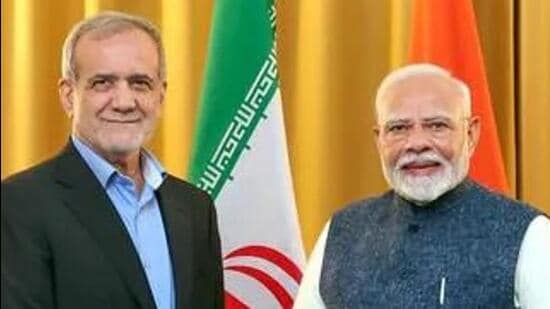
A crucial meeting recently brought together Indian Prime Minister Narendra Modi and newly elected Iranian President Masoud Pezeshkian, where discussions centered on the vital need for open shipping lanes and a strong condemnation of attacks on critical energy infrastructure. This engagement underscores India’s persistent emphasis on regional stability and unhindered global trade, particularly in the strategically significant Middle East. Omni 360 News observes these diplomatic efforts as key to understanding the evolving geopolitical landscape.
The talks, held at a significant juncture for both nations and the wider region, saw Prime Minister Modi articulate India’s deeply rooted concerns regarding maritime security. For a country like India, with its extensive coastline and reliance on sea-borne trade for over 90% of its goods, open shipping lanes are not merely a convenience but the very arteries of its economic lifeblood. Imagine a vast highway connecting nations; if that highway is regularly blocked or made dangerous, businesses suffer, prices rise, and essential goods like oil and food become harder to get. This is the simple reality Modi highlighted.
The Red Sea and the Arabian Sea, particularly through choke points like the Bab-el-Mandeb Strait, are indispensable routes for India’s trade with Europe, Africa, and the Middle East. Recent disruptions in these waters, stemming from ongoing regional conflicts, have forced many shipping companies to reroute their vessels, often taking longer, more expensive journeys around the Cape of Good Hope. This translates directly into higher costs for consumers and businesses in India and across the globe. By urging Iran, a major regional player, to support open shipping, India is advocating for its own economic stability and the broader global economy.
Furthermore, the Indian Prime Minister’s condemnation of attacks on energy infrastructure carries significant weight. India is one of the world’s largest importers of crude oil and natural gas, with a substantial portion sourced from the Middle East. Any disruption to facilities – whether oil fields, refineries, or pipelines – in this region can send shockwaves through international energy markets, leading to volatile prices and supply insecurities. Think of it like a power grid: if a major power plant is attacked, not only does it affect the immediate area, but it can also cause widespread blackouts. Similarly, attacks on energy facilities, often seen in the context of geopolitical tensions, directly threaten global energy security and, by extension, economic growth everywhere. Modi’s clear stance emphasizes that such actions are not just regional issues but global concerns that demand collective attention and prevention.
The bilateral relationship between India and Iran, despite geopolitical complexities, holds considerable strategic importance. India has invested in the Chabahar Port in southeastern Iran, envisioning it as a crucial gateway for trade with Afghanistan and Central Asian countries, bypassing Pakistan. This project is a testament to the long-term strategic vision both nations share, aiming to enhance regional connectivity and economic prosperity. Therefore, ensuring stability in the Persian Gulf and surrounding areas is directly beneficial to the operational success and expansion of such initiatives. Iran, for its part, also seeks stability to facilitate its own trade and regional influence. President Pezeshkian’s new leadership offers an opportunity to reinforce these shared interests and navigate the complexities of international relations.
The discussions also served as an opportunity for both leaders to address a range of regional and international developments. India has consistently advocated for peaceful resolutions to conflicts and adherence to international law, principles that are particularly relevant in the Middle East today. The commitment to dialogue, as demonstrated by this high-level meeting, remains a cornerstone of India’s foreign policy approach. Omni 360 News analysis highlights that such direct engagement, even amidst complex regional dynamics, is vital for fostering understanding and seeking common ground on issues with global ramifications.
Key Takeaways:
* Maritime Security Priority: India emphasizes unimpeded global shipping, especially through critical Middle Eastern sea lanes, for its economic stability and international trade.
* Energy Infrastructure Protection: The condemnation of attacks on energy facilities reflects India’s concern for global energy security and stable supply chains, crucial for all nations.
* India-Iran Strategic Alignment: Despite wider geopolitical challenges, both nations recognize the strategic importance of cooperation, exemplified by projects like Chabahar Port.
* Call for Regional Stability: The talks underscore India’s push for peaceful resolutions and adherence to international norms in a volatile region.
* Dialogue is Key: Direct engagement between leaders like Modi and Pezeshkian is essential for navigating complex international issues and finding common interests.
Ultimately, these talks between Prime Minister Modi and President Pezeshkian were not just about bilateral ties; they were about reinforcing fundamental principles of international commerce and security that impact everyone. Ensuring that ships can sail freely and that energy supplies remain secure is a shared responsibility, one that India continues to champion on the global stage, as reported by Omni 360 News. The dialogue with Iran’s new leadership represents a continued effort to build a more stable and prosperous global environment.