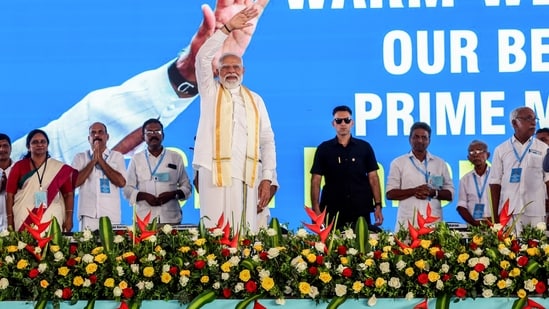
PM Modi inaugurates projects worth over ₹10,000 cr in Kerala| India News
Kochi Refinery Expansion Prime Minister Modi Initiates ₹5,500 Crore Polypropylene Project
In a significant stride for India’s industrial landscape and a boost for Kerala’s economy, Prime Minister Narendra Modi recently laid the foundation stone for a crucial Polypropylene unit at the Kochi Refinery of Bharat Petroleum Corporation Limited (BPCL). This ambitious project, valued at over ₹5,500 crore, signifies a major investment in the nation’s petrochemical sector, promising substantial economic dividends and contributing to the “Make in India” initiative. This report from Omni 360 News delves into the details and broader implications of this development.
The foundation stone ceremony marked the initiation of a state-of-the-art facility designed to produce polypropylene, a versatile plastic widely used across numerous industries. For a better understanding, imagine polypropylene as a highly adaptable material found in everyday items. It’s the sturdy plastic used for car bumpers, medical syringes, food packaging, furniture, and even certain types of textiles. Its durability, lightweight nature, and resistance to heat and chemicals make it indispensable in modern manufacturing.
This new unit at the Kochi Refinery is not merely an addition; it represents a strategic move towards value addition within BPCL’s operations. Refineries primarily process crude oil into fuels like petrol and diesel. However, they also produce various byproducts. This polypropylene unit will efficiently utilize these byproducts, specifically propylene, which is generated during the refining process, to create a higher-value product. This kind of integration minimizes waste and maximizes the economic output from the same barrel of crude oil.
The ₹5,500 crore investment underscores a clear commitment to enhancing domestic manufacturing capabilities. Currently, India imports a significant portion of its polypropylene demand. By establishing a large-scale domestic production unit, the nation aims to reduce its reliance on these imports, thereby saving foreign exchange and strengthening its economic self-reliance, a core tenet of the “Atmanirbhar Bharat” vision. This self-sufficiency is vital for the growth of downstream industries that depend on polypropylene as a raw material, from automotive component manufacturers to packaging companies.
The project is anticipated to be a catalyst for economic growth in Kerala, particularly around the Kochi region. Large-scale industrial projects of this nature invariably create substantial employment opportunities, both directly within the plant and indirectly in allied sectors like logistics, services, and local businesses supporting the workforce. Skilled and unskilled labor, engineers, technicians, and administrative staff will all find new avenues for engagement. Furthermore, the availability of domestically produced polypropylene could encourage new manufacturing units to set up in the region, creating a ripple effect of industrialization and job creation.
BPCL’s Kochi Refinery, already a vital industrial hub, is set to further solidify its position as a key player in India’s energy and petrochemical sectors. This expansion aligns with the government’s broader strategy to diversify India’s industrial base and foster innovation in critical manufacturing areas. It reflects a forward-looking approach to leverage existing infrastructure for advanced product manufacturing.
Key Takeaways: The establishment of this polypropylene unit is a testament to India’s commitment to industrial growth, import substitution, and job creation. It highlights the strategic importance of integrating advanced petrochemical manufacturing with traditional refining operations. The project is expected to enhance economic activity in Kerala, contribute significantly to the “Make in India” and “Atmanirbhar Bharat” initiatives, and provide a stable supply of a crucial raw material for various domestic industries. As the project progresses, it promises to usher in a new era of industrial dynamism for the region and the nation.