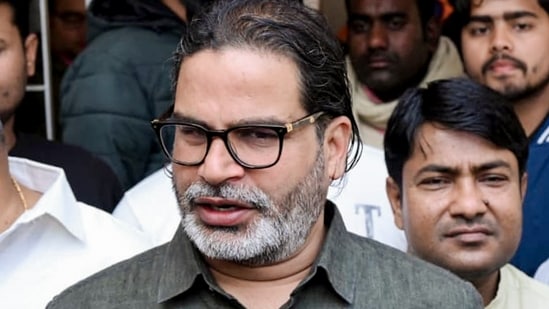
Prashant Kishor goes told-you-so on Nitish Kumar leaving CM chair: ‘My NDA prediction may have been wrong, but…’| India News
Prashant Kishor’s Provocative Remark Ignites Debate on Nitish Kumar’s Political Stability
A recent statement from political strategist Prashant Kishor has cast a fresh spotlight on Bihar’s political landscape, specifically questioning the repeated shifts in Chief Minister Nitish Kumar’s alliances. Kishor notably asked, “Why else would a chief minister step down barely a few months after his coalition got a brute majority in the assembly?” This remark, reported across local political circles, has stirred significant discussion, implying underlying reasons for the frequent changes in leadership dynamics within the state. Omni 360 News delves into the implications of this statement.
Understanding the Political Chessboard
To understand Kishor’s pointed question, one must look at Nitish Kumar’s recent political journey. Known as “Paltu Ram” (turncoat) by some due to his frequent alliance changes, the Chief Minister has a history of forming governments with different partners. In a recent instance, after securing a commanding majority with the Mahagathbandhan (Grand Alliance) which included parties like RJD and Congress, Kumar abruptly switched allegiance, rejoining the BJP-led National Democratic Alliance (NDA). This move, despite his previous coalition enjoying a clear mandate, is what Prashant Kishor’s comment directly addresses.
Kishor, himself a former close aide and strategist for Nitish Kumar, is uniquely positioned to offer insights, having been privy to the inner workings of Bihar politics. His observation, while not directly stating health issues, cleverly frames the question in a way that encourages speculation about the stability and consistency of political decisions. It challenges the official narratives often given for such dramatic shifts.
The Broader Questions Raised
Such remarks, whether rooted in fact or political maneuvering, inevitably raise crucial questions about leadership accountability and the public’s trust. When a leader changes partners frequently, especially after securing a strong mandate with one coalition, it can lead to voter fatigue and cynicism. Kishor’s statement nudges the conversation towards deeper scrutiny: Is there more to these political realignments than just strategic calculations? Do such frequent changes reflect a leader’s conviction or a deeper, perhaps personal, instability?
For an ordinary citizen, these political somersaults can be confusing. They elect a government based on a certain set of alliances and promises, only to see it change direction without a fresh mandate. This can make them wonder if their vote truly matters beyond the initial count. The focus shifts from policy and governance to the whims and decisions of individual leaders.
Key Takeaways
* Prashant Kishor’s statement highlights the perceived inconsistency in Nitish Kumar’s political alliances.
* It implicitly questions the underlying reasons for sudden political shifts, especially after a strong electoral mandate.
* The remark fuels public debate on political stability, leadership accountability, and voter trust in Bihar.
* Such comments encourage closer examination of motives behind major political realignments beyond stated reasons.
In the fast-paced world of Indian politics, statements like Kishor’s serve as critical moments for reflection, urging both the public and political analysts to look beyond the immediate headlines and consider the deeper currents shaping governance.