West Bengal Assembly Election: Ajit Prasad of Kurmi society, is not satisfied with amit Shah's assurance
Purulia’s Kurmi Quandary A Community’s Vote Hangs in the Balance
The dust is still settling over Purulia, a district in West Bengal’s politically charged Jangalmahal region, as a significant ethnic community finds itself at a pivotal moment. The Kurmis, a historically vital demographic, are weighing their political options, and their decision could significantly influence the upcoming elections. At the heart of this unfolding drama is Ajitprasad Mahato, the ‘Mul Manta’ or chief guide of the Adivasi Kurmi Samaj, whose recent interactions with Union Home Minister Amit Shah have sparked a wave of speculation and internal debate.
The Delhi Discussions And A Measured Response
Ajitprasad Mahato recently met with Home Minister Amit Shah in Delhi, a highly anticipated meeting aimed at addressing the Kurmi community’s long-standing demands. Chief among these is the reclassification of the Kurmi community as a Scheduled Tribe (ST) and the inclusion of their native Kurmali language in the Eighth Schedule of the Indian Constitution. These are not merely administrative requests; they represent deeply held cultural identity and aspirations for constitutional recognition and the benefits that accompany ST status.
Following the high-level meeting, Mahato indicated that while the Home Minister assured him that “the process will continue” and that their demands would be fulfilled—with a promise that such progress would be announced via tweet—he was not entirely satisfied with the verbal assurances. Speaking to those close to him, Mahato expressed a sentiment of cautious optimism, suggesting that concrete action, not just promises, was what the community truly sought. This nuanced reaction signals a deep distrust born from years of unfulfilled promises by various political entities.
The Adivasi Kurmi Samaj had previously made its stance clear: “No Vote to TMC!” a powerful statement in a state dominated by the Trinamool Congress. They had also stated a conditional willingness to support the Bharatiya Janata Party (BJP) if the central government initiated steps to include Kurmali in the Eighth Schedule before the election code of conduct came into effect. Now, with the election calendar looming and the code likely to be enforced soon, the community faces a critical juncture. Mahato confirmed that the state committee of the Adivasi Kurmi Samaj would convene shortly to deliberate and decide on their electoral strategy. Their decision could swing votes in a region where community support often dictates political outcomes.
A Community Divided Yet United in Purpose
The political landscape within the Kurmi community itself is not without its complexities. On the eve of a major public meeting organized by the Kurmi Joint Platform in Purulia town, Ajitprasad Mahato voiced pointed questions regarding the longevity and intentions of certain internal factions. He specifically questioned the role of the ‘Chhotonagpur Kurmi Samaj,’ suggesting that those who formed it are also associated with ‘JLKM,’ a political outfit led by Tiger Jayram Mahato. Mahato critically asked how they could effectively serve two masters and wondered how long the ‘Chhotonagpur Kurmi Samaj’ would sustain itself.
In a candid remark that highlighted deeper fault lines, Ajitprasad Mahato even attributed some of this internal fragmentation to the actions of the previous Superintendent of Police in Purulia, implying external interference in community affairs. Despite these internal debates, Mahato extended his best wishes for Wednesday’s public meeting, acknowledging that its core purpose—the fulfillment of their demands—was paramount.
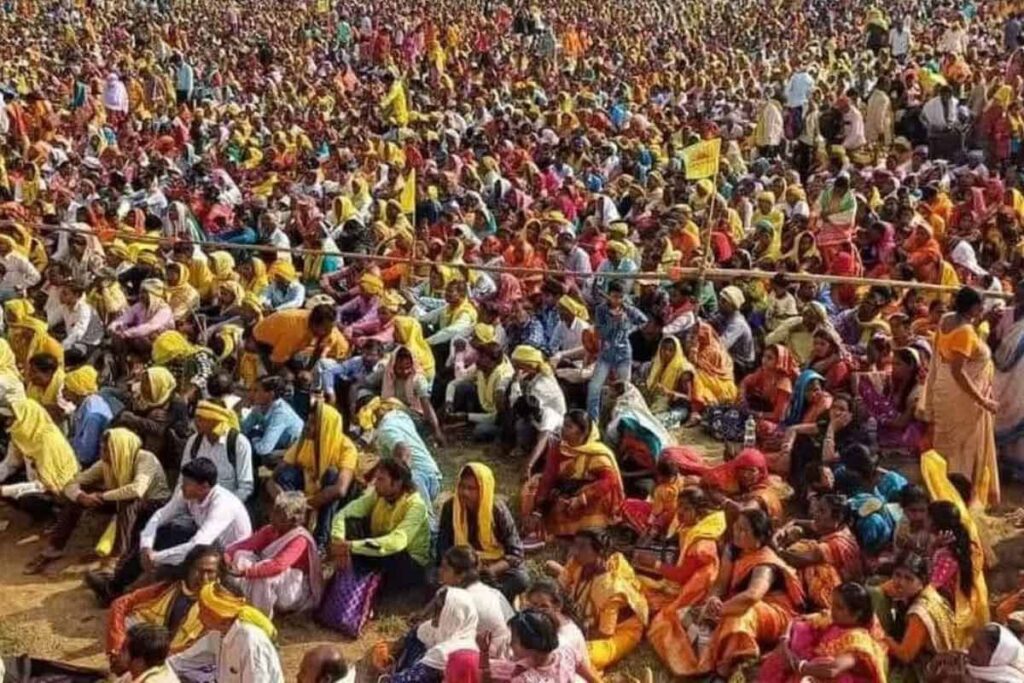
The Kurmi Joint Platform is a significant alliance, bringing together several key groups: the Chhotonagpur Adivasi Kurmi Samaj, Purvanchal Adivasi Kurmi Samaj, and Baisi Kutum. Their unified objective is to press for the inclusion of the Kurmi community in the Scheduled Tribe list. The upcoming public meeting is seen as a major test for this joint front, particularly in the Jangalmahal region, where the community’s organizational strength is closely watched by political observers. Sujit Mahato, a prominent official of the Kurmi Joint Platform and chief advisor to the Chhotonagpur Adivasi Kurmi Samaj, affirmed that preparations for the gathering were complete, though he remained tight-lipped about specific outcomes. The stage is set for a powerful display of community solidarity and a potential announcement regarding their future political path.
The Broader Implications For West Bengal Politics
The Kurmi community, concentrated in the Jangalmahal districts of Purulia, Bankura, and Paschim Medinipur, holds considerable electoral sway. Historically, their votes have been crucial in determining winners in several constituencies. Their demand for Scheduled Tribe status is a long-standing one, rooted in historical classifications that were later changed. Re-inclusion would not only validate their cultural identity but also open avenues for educational, employment, and political reservations.
For political parties like the BJP and TMC, securing the Kurmi vote is paramount. The BJP, having made significant inroads into Jangalmahal in recent elections, understands the importance of tribal and indigenous communities. Amit Shah’s meeting with Ajitprasad Mahato underscores the party’s effort to consolidate support. On the other hand, the TMC, traditionally strong in the region, faces a challenge in assuaging a community that has declared “No Vote to TMC!” This creates a delicate balancing act for both parties, as they navigate the complexities of identity politics and electoral ambitions.
As Omni 360 News observes, the unfolding events in Purulia are more than just local politics. They reflect the broader challenges of identity, recognition, and political representation for marginalized communities across India. The Kurmi community’s careful deliberation, their internal debates, and their strategic engagement with national leaders highlight the vibrant, often unpredictable, nature of democratic participation at the grassroots level. The coming days will reveal whether the assurances from the nation’s capital translate into tangible support for one political side or if the community chooses to forge an independent path, driven solely by the pursuit of its long-cherished demands. The electoral landscape of Purulia, and indeed West Bengal, awaits the Kurmi community’s decisive next step.
Key Takeaways
* Ajitprasad Mahato, chief guide of Adivasi Kurmi Samaj, met Union Home Minister Amit Shah regarding demands for Kurmi Scheduled Tribe status and Kurmali language inclusion in the Eighth Schedule.
* Mahato expressed dissatisfaction with mere assurances, indicating the community seeks concrete action before elections.
* The Adivasi Kurmi Samaj had previously stated “No Vote to TMC” and conditional support for BJP, dependent on action before the election code.
* A state committee meeting will decide the Kurmi community’s electoral strategy, suggesting their support is still undecided.
* Mahato also highlighted internal divisions within the Kurmi movement, questioning the dual loyalties of groups like ‘Chhotonagpur Kurmi Samaj’ and ‘JLKM.’
* A major public meeting by the Kurmi Joint Platform in Purulia is expected to announce the community’s future electoral path.
* The Kurmi community’s vote is crucial in West Bengal’s Jangalmahal region, making their decision a significant factor for both BJP and TMC.