
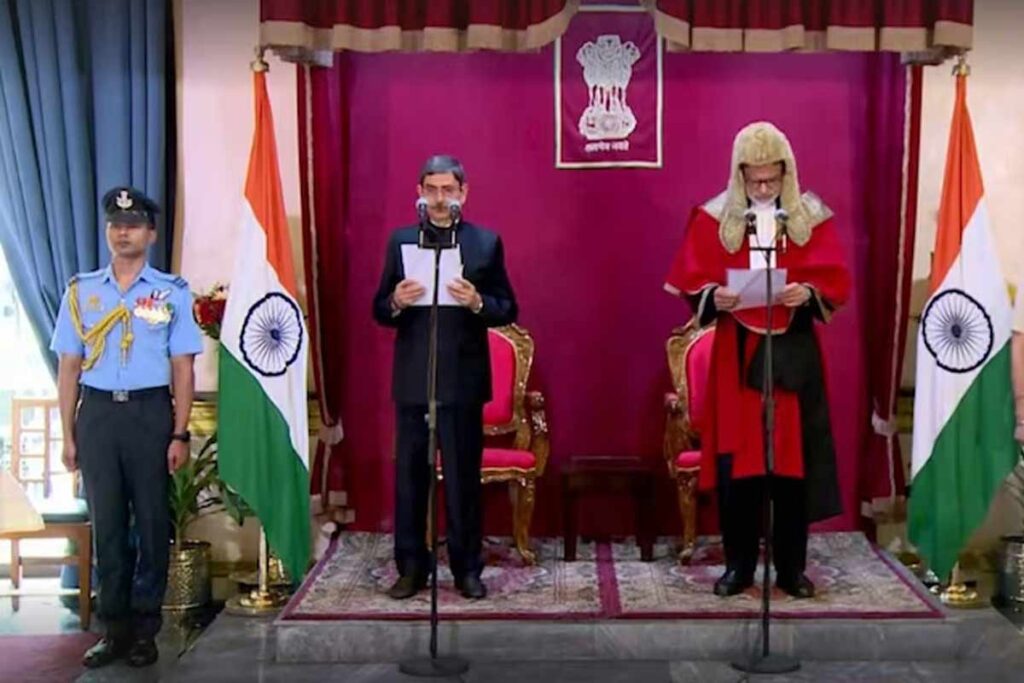
First message of new governor RN Ravi
R.N. Ravi Assumes West Bengal Governorship Amidst Courtesy
Kolkata, West Bengal – In a moment that captured the attention of political observers across the nation, R.N. Ravi recently took the oath as the 22nd Governor of West Bengal. The ceremony, held at the historic Lok Bhavan, was particularly notable for the unexpected display of courtesy extended by Chief Minister Mamata Banerjee. Her presence and warm reception for the newly appointed Governor and his family were widely seen as a significant gesture, especially against the backdrop of the state’s often-charged political atmosphere.
The Chief Minister’s gracious conduct at the swearing-in ceremony left Governor Ravi and his family reportedly touched. Such instances of cross-political goodwill are a rarity in contemporary Indian politics, and this particular event quickly became a talking point, suggesting a potentially smoother start for the Governor’s tenure in the fiercely independent state of West Bengal.
A Spiritual Call to Duty
Immediately after assuming his constitutional duties, Governor Ravi articulated his vision and dedication to the state through a profound message, seeking the blessings of Maa Durga. His initial communication, shared via social media, highlighted a deep reverence for West Bengal’s rich spiritual, intellectual, and cultural heritage, a sentiment that resonated deeply with the state’s identity.
In his message, Governor Ravi expressed immense gratitude for the opportunity to serve the people of West Bengal, describing the land as the “spiritual, intellectual and cultural capital of Bharat for several thousand years.” He meticulously paid homage to the state’s illustrious past, noting it as the cradle where the eternal wisdom of the Vedas flourished for centuries. He pointed out how Gautam Buddha’s teachings found new interpretations and forms within Bengal, and how the powerful Bhakti movement firmly established its roots here, profoundly influencing the nationalistic struggle for freedom.
The Governor’s message meticulously enumerated a pantheon of luminaries who shaped India from Bengal. He invoked Chaitanya Mahaprabhu, who pioneered new directions in religious and social life. He celebrated spiritual stalwarts like Ramakrishna Paramhansa and Swami Vivekananda, whose thoughts and philosophies transcended geographical boundaries to spread globally. Governor Ravi also acknowledged the unforgettable contributions of Bankim Chandra Chattopadhyay to Bengali literature, particularly his iconic ‘Vande Mataram,’ which became a powerful rallying cry during India’s independence movement.
His comprehensive tribute further included mentions of the revered World Poet Rabindranath Tagore, the revolutionary thinker Rishi Aurobindo, the fearless Netaji Subhas Chandra Bose, and the visionary Syama Prasad Mookerjee. Concluding his heartfelt address, Governor Ravi prayed for Maa Durga’s blessings upon every person in Bengal, underscoring a commitment to the welfare and prosperity of all its citizens. This thoughtful and culturally sensitive overture by the new Governor, extensively covered by outlets like Omni 360 News, signaled an intent to connect with the state on a deeper, more intrinsic level, beyond mere administrative duties.
A History of Confrontation in Tamil Nadu
Before his appointment to West Bengal, R.N. Ravi served as the Governor of Tamil Nadu, a tenure marked by considerable friction and open conflict with the Dravida Munnetra Kazhagam (DMK) government. During his time there, Governor Ravi was frequently embroiled in disputes, particularly concerning his stance on various legislative bills passed by the state assembly. These disagreements often escalated, creating a constitutional stalemate where the state government accused him of delaying assent to crucial legislation, thereby impeding governance.
The intense disagreements led the DMK government to repeatedly appeal to President Droupadi Murmu, seeking Governor Ravi’s removal from his post. The core of these conflicts often revolved around the interpretation of the Governor’s constitutional powers versus the democratic mandate of an elected government. Such experiences have painted a picture of Governor Ravi as a constitutional head unafraid to assert his position, often leading to tussles with the ruling dispensation.
Looking Ahead for West Bengal
The transition of R.N. Ravi from a politically tumultuous governorship in Tamil Nadu to West Bengal brings with it a complex set of expectations and potential challenges. West Bengal has its own distinct political landscape, characterized by robust democratic participation, strong regional identity, and a history of sometimes confrontational politics between the state and the central government. The initial show of courtesy at the oath ceremony, while refreshing, might be tested as the new Governor settles into his role and begins to navigate the intricacies of state administration and policy.
Given his past, political analysts are keenly observing how Governor Ravi will balance his constitutional duties with the elected government’s agenda in West Bengal. Will the spirit of cooperation seen at the Lok Bhavan ceremony set a precedent for future interactions, or will the historical patterns of gubernatorial-state government friction resurface? The coming months will reveal whether West Bengal’s unique political culture fosters a different dynamic for Governor Ravi, or if the challenges he faced in Tamil Nadu find new echoes in this new chapter of his public service. For now, the focus remains on the initial positive notes struck, hoping for a period of constructive engagement for the development and welfare of the people of West Bengal.
Key Takeaways
- R.N. Ravi has been sworn in as the 22nd Governor of West Bengal, with Chief Minister Mamata Banerjee offering a notable display of political courtesy.
- The new Governor’s initial message emphasized West Bengal’s profound spiritual, intellectual, and cultural heritage, invoking Maa Durga and celebrating numerous historical figures.
- Governor Ravi’s previous tenure in Tamil Nadu was marked by significant conflicts with the DMK government, particularly over legislative bills, leading to calls for his removal.
- His appointment to West Bengal raises questions about how his past experiences will shape his relationship with the state government, particularly after the initial positive interaction.
- The coming period will be crucial in determining whether a cooperative environment can be sustained in West Bengal’s distinctive political landscape.