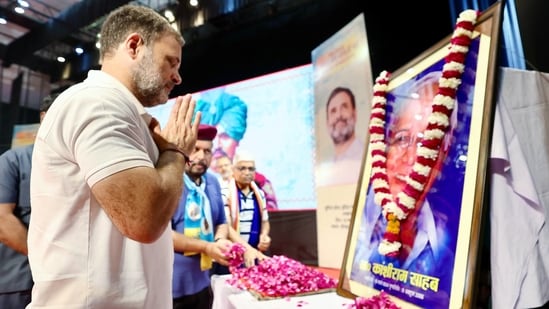
Rahul Gandhi demands Bharat Ratna for Kanshi Ram, writes to PM Modi as Dalit outreach peaks ahead of UP polls| India News
Congress Intensifies Outreach to Dalits and Backward Sections Ahead of Uttar Pradesh Polls
The political landscape of Uttar Pradesh is once again heating up, with major parties already strategizing for assembly elections due within a year. Amidst this simmering electoral fervor, the Indian National Congress is making a determined push to reconnect with Dalits and other socially backward sections, communities that once formed the bedrock of its support but have largely drifted away over the past few decades. This renewed focus marks a crucial attempt by the grand old party to regain its footing in a state critical to national politics.
Uttar Pradesh, a state known for its complex caste dynamics, presents a formidable challenge for any political contender. For generations, Congress enjoyed significant sway, often forming broad coalitions that included Scheduled Castes (Dalits) and Other Backward Classes (OBCs), along with Brahmins and Muslims. However, the rise of powerful regional parties like the Bahujan Samaj Party (BSP), largely representing Dalits, and the Samajwadi Party (SP), with its strong base among Yadavs and some other OBC groups, fractured this support. The Bharatiya Janata Party (BJP) further solidified this fragmentation by successfully wooing large sections of non-Yadav OBCs and non-Jatav Dalits through its broader Hindutva plank and development narrative.
As Omni 360 News understands from various ground reports and local analyses, the current Congress strategy is multifaceted. It acknowledges the historical disconnect and seeks to rebuild trust through a combination of policy emphasis and direct engagement. A key aspect involves highlighting issues of social justice, advocating for greater representation, and addressing the everyday challenges faced by these communities, such as land rights, employment opportunities, and protection against discrimination and atrocities.
Party leadership, including prominent national figures, has been actively involved in events aimed at fostering this outreach. While specifics are often localized, the overarching message from the Congress camp emphasizes its commitment to constitutional values and the welfare of marginalized groups. Local Congress workers are reportedly being tasked with identifying community leaders, understanding specific local grievances, and organizing smaller, more intimate gatherings rather than relying solely on large rallies. This micro-level engagement aims to establish a more personal connect, bypassing the established caste-based political strongholds.
For instance, local news outlets in districts across eastern and central Uttar Pradesh have reported on Congress leaders participating in programs commemorating Dalit icons, engaging with artisans from various OBC communities, and holding chaupals (village meetings) to listen to local concerns. These initiatives are not just about grand policy statements; they are about subtle signals of solidarity and an acknowledgment of past neglect. The party is also attempting to bring forward more Dalit and OBC faces within its organizational structure at the district and block levels, hoping to inspire confidence and offer a visible pathway to empowerment.
However, the path ahead for Congress is fraught with significant challenges. The party’s organizational structure in Uttar Pradesh remains relatively weak compared to its rivals. Competing for Dalit votes means directly challenging the BSP, which, despite its recent electoral setbacks, still commands a loyal base. Similarly, the SP and BJP have deeply entrenched their support among different OBC factions. Congress needs to present a compelling alternative narrative that can cut across these existing loyalties.
Another hurdle is the perception of Congress as an urban-centric or elite party in some rural areas. Overcoming this requires consistent, sustained effort at the grassroots, something that has been sporadic in the past. Credibility built over decades is often lost quickly and takes immense effort to rebuild. The party’s past electoral performance in UP, where it has struggled to cross double digits in vote share, further adds to the skepticism.
Despite these hurdles, the renewed focus is seen as a strategic imperative. Without making significant inroads into these numerically substantial and politically conscious communities, Congress faces an uphill battle in regaining its relevance in Uttar Pradesh. The upcoming elections will serve as a critical test of whether this intensified outreach can translate into tangible electoral gains or if it will remain a valiant, yet ultimately insufficient, effort.
Key Takeaways:
* Congress is making a deliberate attempt to reconnect with its historical Dalit and OBC voter base in Uttar Pradesh.
* The strategy involves highlighting social justice issues, increasing representation, and engaging at the grassroots level.
* Party leadership is actively involved in local events and discussions to build trust and address specific community grievances.
* Significant challenges remain, including strong competition from BJP, SP, and BSP, and the Congress’s own organizational weaknesses in the state.
* The success of this outreach will be crucial for Congress to regain political relevance in Uttar Pradesh in the upcoming elections.