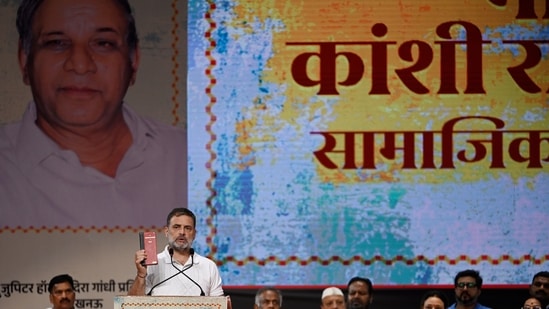
Rahul Gandhi's big Kanshi Ram claim in UP Dalit outreach: 'Nehru would've made him Congress CM'| India News
Uttar Pradesh Political Crossroads Mayawati BSP Navigates Shifting Social Justice Sands
The intricate dance of alliances and rivalries among Uttar Pradesh’s major political players continues to unfold, particularly concerning the Bahujan Samaj Party (BSP) under its seasoned leader, former Chief Minister Mayawati. As assembly elections draw closer, the BSP, born from the vision of Kanshi Ram and now helmed by his protégé, finds itself in a distinctly strained relationship with both the Indian National Congress and the Samajwadi Party (SP), even as these two rivals increasingly champion a robust social justice agenda. Understanding these dynamics is crucial for anyone following Indian politics.
For decades, the BSP has carved a unique niche, primarily advocating for the empowerment of Dalits and other marginalized communities. Its founder, Kanshi Ram, built the party on a powerful plank of self-respect and political assertion for those at the bottom of the social hierarchy. Mayawati, inheriting this legacy, has largely maintained a strategy that prioritizes the party’s independent identity, often keeping a wary distance from both national and regional competitors.
The BSP’s Independent Path and Historical Roots
The Bahujan Samaj Party’s electoral journey has been one of remarkable highs and challenging lows. At its core, the BSP’s philosophy, deeply rooted in the teachings of Babasaheb Ambedkar, centers on giving a voice and political power to the ‘Bahujan’ – the majority community comprising Dalits, Adivasis, Other Backward Classes (OBCs), and religious minorities. Mayawati’s leadership has seen the party form government in Uttar Pradesh multiple times, often by carefully stitching together diverse social groups, including Brahmins in some instances, alongside its core Dalit base.
However, the political landscape is constantly shifting. Mayawati has consistently voiced skepticism about long-term alliances, citing past experiences where coalition partners seemingly gained more while the BSP’s core agenda was diluted. This independent stance, while reinforcing the party’s distinct identity, also presents challenges in an era where larger blocs are often seen as necessary to counter dominant political forces. Local news reports frequently highlight Mayawati’s statements, emphasizing that the BSP prefers to fight elections on its own strength rather than becoming a junior partner in a broader front. This strategy, as observed by political analysts across various regional news desks, is a double-edged sword: it preserves the party’s autonomy but risks political isolation in a multi-polar contest.
Congress’s Renewed Focus on Social Justice
Meanwhile, the Indian National Congress, a party with a long history but diminished presence in Uttar Pradesh, has been attempting a significant resurgence by rekindling its focus on social justice. Initiatives such as advocating for a nationwide caste census and pushing for increased representation for disadvantaged sections are central to its current narrative. This approach directly overlaps with the traditional social justice space cultivated by the BSP and SP, creating a three-way competition for the votes of OBCs, Dalits, and minorities.
From a local perspective, Congress’s efforts are visible in grassroots outreach programs and public statements by state-level leaders emphasizing economic justice and equitable resource distribution. This renewed energy, while attempting to broaden Congress’s appeal, invariably brings it into ideological and electoral contention with Mayawati’s BSP, which views itself as the original and most authentic voice for these very communities. The tension stems from a historical mistrust and the practical reality of competing for the same voter segments, particularly when the stakes are high in a crucial state like Uttar Pradesh.
Samajwadi Party’s Inclusive Agenda and Regional Power
The Samajwadi Party, under Akhilesh Yadav, presents another layer of complexity. Traditionally rooted in OBC politics, particularly among the Yadav community, the SP has also broadened its appeal to include Muslims and, increasingly, other backward and even Dalit communities through its ‘PDA’ (Pichhde, Dalit, Alpsankhyak – Backward, Dalit, Minorities) plank. This expansion positions the SP as a direct rival to the BSP for the Dalit vote, while also competing with Congress for minority support.
The relationship between the SP and BSP is particularly fraught, despite a brief, tactical alliance in the past. Their rivalry is a defining feature of Uttar Pradesh politics, often marked by fierce competition and occasional clashes. Local newspapers frequently detail the historical animosity and the current war of words between leaders of both parties, underscoring the deep-seated political differences. The SP’s vigorous pursuit of a social justice narrative, focused on inclusive growth and representation, directly challenges the BSP’s primary claim as the sole custodian of marginalized voices.
The Electoral Landscape and Strategic Implications
As assembly polls loom, the strained relationships between BSP, Congress, and SP have significant implications. An Omni 360 News analysis reveals that the inability or unwillingness of these parties to form a united front against the dominant political power in the state could fragment the opposition vote. This fragmentation might inadvertently benefit other players, as votes are split among parties with similar social justice objectives but differing leadership and strategies.
Mayawati’s unwavering commitment to an independent path, while stemming from a desire to protect the BSP’s unique identity and prevent a dilution of its core message, also risks isolating the party in a political environment that increasingly favors broad alliances. Conversely, Congress and SP, while attempting to build broader coalitions, face the challenge of convincing voters that their respective social justice platforms are more effective or authentic than the BSP’s established legacy. The choices made by these parties in the coming months will not only shape their own electoral fortunes but also determine the political trajectory of Uttar Pradesh.
Key Takeaways:
* The Bahujan Samaj Party, led by Mayawati, maintains a strategic distance from Congress and the Samajwadi Party, preferring to contest elections independently.
* Congress is actively promoting a renewed social justice agenda, including a caste census, which puts it in direct competition with BSP and SP for votes from marginalized communities.
* The Samajwadi Party under Akhilesh Yadav is also aggressively pursuing an inclusive social justice narrative, particularly through its ‘PDA’ plank, further intensifying rivalry with the BSP.
* The strained relationships among these three parties could lead to a fragmentation of opposition votes in upcoming assembly polls, potentially impacting the overall electoral outcome.
* Mayawati’s strategy of preserving the BSP’s independent identity is a core tenet, though it faces scrutiny in an era of coalition politics.
In the complex tapestry of Uttar Pradesh politics, where social identity and economic justice are paramount, the individual strategies and strained relationships of the BSP, Congress, and SP will undoubtedly be critical determinants of the state’s political future. The narrative of social justice, once a distinct domain, is now a shared battleground, reshaping alliances and rivalries with every passing election cycle.