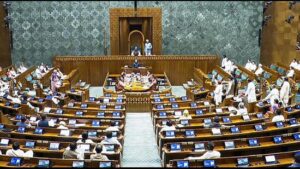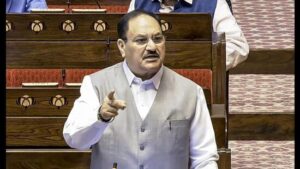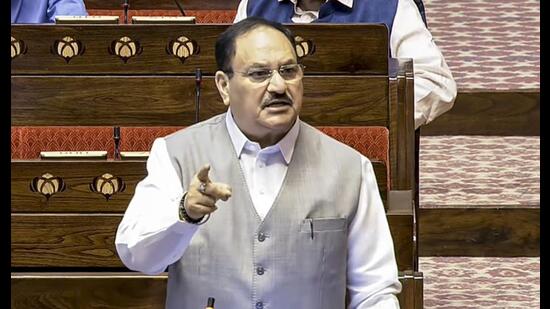
Rajya Sabha: BJP lawmaker alleges OBC quota misuse; prompts Opposition walkout| India News
Unpacking the Debate on Muslim Reservation and OBC Quotas in Indian States
A recent claim by BJP lawmaker K. Laxman in the Rajya Sabha has ignited a fresh round of discussion regarding reservation policies for Other Backward Classes (OBCs) in India. Laxman alleged that states like Telangana, West Bengal, Tamil Nadu, and Kerala have improperly included “all Muslims” in quotas originally designated for OBCs, sparking a political walkout and considerable debate. To understand the complexities of this issue, Omni 360 News delves into the factual landscape of reservation policies in these mentioned states, drawing insights from local reporting and official pronouncements.
Understanding India’s Reservation System
Before examining the specifics of state policies, it’s crucial to grasp the foundational principles of India’s reservation system. Reservations are a form of affirmative action designed to address historical disadvantages and ensure adequate representation for socially and educationally backward communities in education and public employment. The Constitution of India provides for reservations for Scheduled Castes (SCs), Scheduled Tribes (STs), and Other Backward Classes (OBCs). The Mandal Commission report further solidified the framework for OBC reservations, which typically apply to communities identified as socially and educationally backward, irrespective of religion. The Supreme Court has generally upheld a 50% ceiling on total reservations, though exceptions and debates persist.
Telangana’s Stance on Muslim Quotas
In Telangana, the state government has indeed sought to enhance reservation for socially and educationally backward Muslims. Following the recommendations of the G. Sudhir Commission, which surveyed the social and economic conditions of Muslims in the state, the Telangana Rashtra Samithi (now BRS) government passed a bill in 2017 to increase the quota for backward Muslims from 4% to 12% within the OBC category. However, this move was not aimed at “all Muslims.” Instead, it targeted 14 specific Muslim groups identified as socially and educationally backward, akin to other OBC communities. These groups include Dhobi, Nai, Qasab, and others, who have historically faced socio-economic marginalization. The bill, however, has faced legal hurdles, particularly concerning the 50% reservation cap, and has yet to receive presidential assent, effectively stalling its implementation. Local reports from *Telangana Today* and *The Hans India* have consistently highlighted the legal and political tussle surrounding this proposed hike, emphasizing the focus on identified backward sections rather than the entire Muslim population.
West Bengal’s Reservation Landscape and Recent Developments
West Bengal has also had a policy of including specific Muslim communities within its OBC list. Historically, the state identified various Muslim sub-groups as backward and included them in the OBC category, entitling them to reservation benefits. This was done based on socio-economic surveys, aiming to uplift marginalized sections within the Muslim community. However, a significant development occurred recently. In May 2024, the Calcutta High Court struck down several West Bengal government orders issued since 2010 that classified 77 classes, including numerous Muslim communities, as OBCs. The court ruled that such classifications were “illegal” and made on the “sole consideration of religion,” which goes against constitutional provisions. Local news outlets like *The Telegraph India* widely reported this judgment, which observed that the state’s actions were a “fraud on the Constitution.” This ruling specifically targets the inclusion of *entire groups* based on religion, reaffirming the principle that reservation must be based on social and educational backwardness, not religious identity alone. The court clarified that services already provided and appointments made under these classifications before the judgment would not be affected.
Tamil Nadu’s Comprehensive Reservation Model
Tamil Nadu boasts one of India’s most intricate and long-standing reservation systems, with a total reservation reaching 69%, a figure often debated but upheld by state law under specific constitutional amendments. In Tamil Nadu, Muslims are not classified as a single entity for reservation. Instead, specific Muslim communities recognized as backward are included in the Backward Classes (BC) list, alongside various Hindu and other caste groups. Additionally, some extremely marginalized Muslim communities find representation under the Most Backward Classes (MBC) category. In 2007, the state introduced a 3.5% separate reservation for Muslims within the overall 30% BC quota. This sub-quota specifically benefits socially and educationally backward Muslims, not the entire community. Reports from *The Hindu* and *The New Indian Express* in Tamil Nadu frequently cover the nuances of these policies, highlighting how different sub-groups, including those from the Muslim community, are categorized based on their social and economic status for targeted upliftment.
Kerala’s Inclusive Approach to Backward Classes
Kerala’s reservation policy also includes specific Muslim communities within its list of backward classes. The state follows a system where a percentage of government jobs and educational seats are reserved for OBCs, which include various identified Hindu, Christian, and Muslim communities. For instance, backward Muslim communities receive a specific share of the total OBC reservation. Similar to other states, the criteria for inclusion are social and educational backwardness, not merely religious affiliation. The intention is to ensure equitable representation for marginalized groups within the Muslim community, such as Mapilas and certain artisan groups, who have been historically disadvantaged. *Manorama Online* and *Mathrubhumi* often detail the state’s approach to social justice and the various communities benefiting from these quotas, reaffirming that the policy targets specific backward groups, not all adherents of the faith.
Political Claims Versus Policy Realities
K. Laxman’s assertion that states include “all Muslims” in OBC quotas appears to misrepresent the actual policy landscape. While these states do include Muslim communities in their reservation lists, it is predominantly specific, identified backward Muslim groups, not the entire religious population. The legal framework and judicial pronouncements consistently emphasize that reservation must be based on social and educational backwardness, as determined by commissions and surveys, not religion alone. The recent Calcutta High Court judgment further underscores this constitutional mandate, by striking down classifications made solely on religious grounds. Political rhetoric often simplifies complex policies, leading to public discourse that may not fully reflect the detailed and nuanced implementation of social justice measures across different states.
Key Takeaways
* Reservation for Muslims in states like Telangana, West Bengal, Tamil Nadu, and Kerala generally targets *specific socially and educationally backward Muslim communities*, not the entire Muslim population.
* These inclusions are typically based on recommendations from state commissions assessing social and educational backwardness, mirroring the criteria for other OBC groups.
* The recent Calcutta High Court ruling on West Bengal’s OBC list highlights the legal imperative that reservation cannot be solely based on religion, but must be rooted in demonstrated backwardness.
* Political claims often simplify the intricate mechanisms of state reservation policies, potentially overlooking the distinction between specific backward groups and an entire religious community.
* The debate underscores the ongoing challenge of balancing constitutional provisions for social justice with the complexities of identity politics in India.