
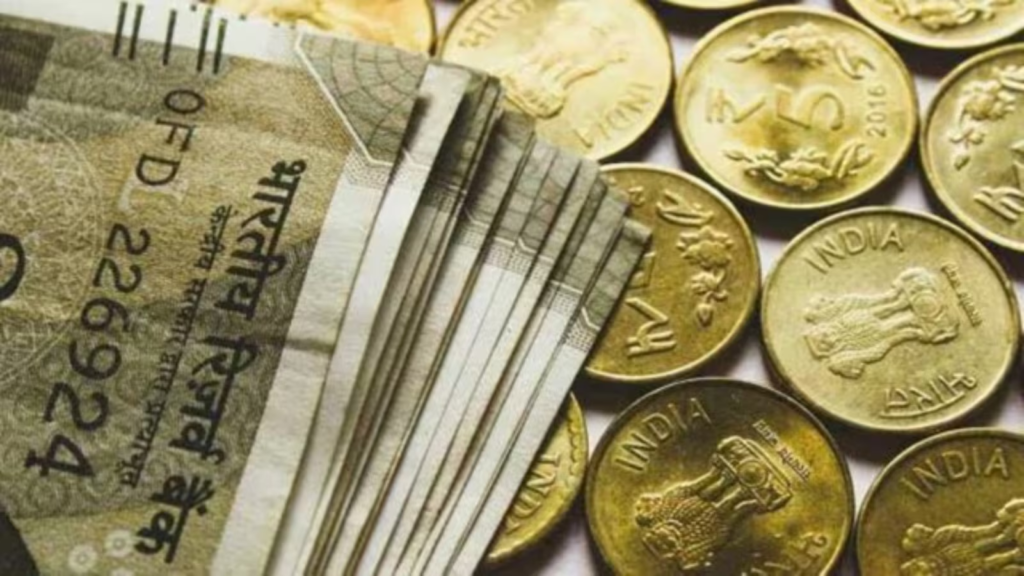
Rupee Falls to Record Low of 92 Against US Dollar as Gold and Silver Hit All-Time Highs
The Indian rupee has fallen to its weakest level ever against the US dollar, touching 92 in early trade on Thursday. This marks the third time in less than a week that the rupee has broken its own record low. On Wednesday, the rupee had already declined by 31 paise to close at 91.99 against the US dollar, and the pressure continued into the next trading session.
In early trade on Thursday, the rupee stood at exactly 92.00 against the US dollar, raising concerns among traders, investors, and policymakers. Currency experts say this sharp fall reflects global economic trends as well as domestic market reactions.
At the same time, gold and silver prices in India surged sharply, reaching their highest levels ever. According to a Reuters report, domestic gold futures jumped by nearly six per cent to a record level of ₹1,75,869 per 10 grams in early trade. Silver futures also rose by around six per cent to touch an all-time high of ₹4,07,456 per kilogram.
The fall in the rupee usually makes imported goods more expensive. Since India imports a large amount of crude oil, electronics, and other essential items, a weaker rupee can increase costs for businesses and consumers. However, a weak currency can also help exporters by making Indian goods cheaper in global markets.
Interestingly, market analysts pointed out that the rupee had actually opened on a slightly stronger note earlier, as the US dollar index softened. The US dollar index measures the strength of the dollar against major global currencies. When this index weakens, emerging market currencies like the Indian rupee often get some temporary relief.
Another major factor influencing market sentiment was a long-awaited trade breakthrough between India and the European Union. According to PTI news agency, analysts said this development boosted investor confidence, even though the rupee eventually slipped due to broader global pressures.
On Tuesday, India and the European Union officially announced the signing of a much-awaited Free Trade Agreement, commonly known as an FTA. This agreement had been under discussion for several years and is being seen as a major step in strengthening economic ties between the two regions.
Under this FTA, several Indian domestic sectors will benefit significantly. Industries such as apparel, chemicals, footwear, and other labour-intensive sectors will get duty-free access to the European Union market. The EU is a bloc of 27 countries, making it one of the largest consumer markets in the world.
This means Indian exporters will be able to sell their products in Europe at more competitive prices, which could help boost manufacturing, employment, and foreign exchange earnings in the long run.
At the same time, the European Union will get access to the Indian market at concessional duty rates for certain products. According to officials, this includes cars and wines, which are popular European exports. This part of the deal is expected to increase competition in the Indian market while giving consumers more choices.
The India-EU Free Trade Agreement has been described by officials and trade experts as the “mother of all deals”. This is because it creates access to a combined market of nearly 2 billion people. The scale of this agreement makes it one of the most significant trade deals India has ever signed.
Despite the positive news around the FTA, global uncertainties continue to affect currency markets. Factors such as interest rate expectations in the United States, geopolitical tensions, and global inflation trends are all putting pressure on emerging market currencies, including the Indian rupee.
The rise in gold and silver prices is also seen as a sign of investor caution. Traditionally, investors turn to precious metals when there is uncertainty in financial markets. A weak rupee also makes gold imports costlier, which further pushes up domestic prices.
Market experts believe that the movement of the rupee in the coming days will depend on global cues, foreign fund flows, crude oil prices, and how markets react to the India-EU trade agreement. While the FTA is a long-term positive for the Indian economy, short-term currency volatility is likely to continue.
For now, the rupee hitting the 92 mark against the US dollar has become a key talking point in financial markets. Investors, businesses, and common citizens will closely watch how the situation develops, especially with rising commodity prices and changing global economic conditions.