Russian deputy PM meets PM Modi and EAM Jaishankar| India News
New Delhi and Moscow Discuss Global Issues West Asia Front and Center
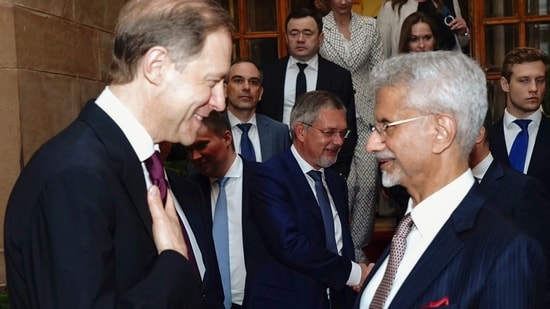
New Delhi has once again served as a crucial diplomatic hub, hosting high-level discussions between India and Russia that delved into a spectrum of regional and global developments. Russian Deputy Prime Minister Denis Manturov’s recent visit to India saw him engaging with both Prime Minister Narendra Modi and External Affairs Minister S. Jaishankar. While economic cooperation and bilateral trade naturally topped the agenda, a significant portion of their deliberations centered on complex global challenges, notably the ongoing conflict in West Asia. This strategic dialogue underscores the enduring partnership between the two nations, even amidst a rapidly shifting international landscape.
The meetings, reported by various Indian news outlets including the Press Trust of India and others following the diplomatic exchanges, highlighted the depth of the India-Russia relationship beyond just commerce and defense. Such high-level consultations are vital for understanding shared perspectives and navigating divergent interests on critical international matters.
Reinforcing Economic Pathways
Manturov’s visit primarily aimed at bolstering the already robust economic ties between India and Russia. Discussions with EAM Jaishankar and PM Modi covered wide-ranging aspects of trade and economic collaboration. There was a particular emphasis on exploring avenues to expand cooperation in key sectors such as energy, including oil and gas, as well as crucial commodities like fertilizers and coking coal, which are vital for India’s industrial growth. This focus reflects both countries’ commitment to diversifying and strengthening their trade basket, building upon existing frameworks that have seen a significant upswing in bilateral trade volumes recently.
Both sides affirmed their commitment to achieving the ambitious bilateral trade target, seeking to identify new sectors for investment and partnership. This includes exploring opportunities in pharmaceuticals, automotive components, and even high-tech areas, ensuring the economic relationship remains dynamic and forward-looking. Such practical steps underpin the broader strategic alignment between New Delhi and Moscow.
Navigating Regional and Global Tensions
Beyond the economic framework, a crucial element of the discussions involved an exchange of views on pressing regional and global developments. This segment of the dialogue is particularly significant as it offers insights into how India and Russia perceive the world’s hot spots and potential solutions. The conflict in West Asia, a region of immense geopolitical importance, was specifically addressed. For a 12th-grade student, imagine two friends discussing a big problem in their neighborhood. They might not agree on everything, but they talk about what’s happening, how it started, and what they think could help make things better. That’s essentially what this diplomatic exchange entails on a global scale.
While specific details of their conversation on West Asia were not publicly detailed, such discussions typically involve both countries sharing their assessments of the situation, outlining their respective interests, and potentially exploring areas where they might coordinate efforts for de-escalation and humanitarian aid. Both India and Russia have significant stakes in the stability of the West Asian region, given their historical ties, energy interests, and the presence of large diasporas.
India’s Principled Stance on West Asia
India has consistently maintained a balanced and principled position on the conflict in West Asia. It advocates strongly for a two-state solution, emphasizing the need for a sovereign, independent, and viable Palestinian state living side-by-side with Israel in peace and security. New Delhi has repeatedly called for an immediate de-escalation of violence, protection of civilians, and the unimpeded delivery of humanitarian assistance to those affected. This stance is rooted in India’s long-standing foreign policy principles that champion dialogue, diplomacy, and the peaceful resolution of disputes.
In discussions with Russian counterparts, India would likely reiterate these core principles, seeking a common ground for fostering stability in a volatile region. While Russia also supports a two-state solution and has called for a ceasefire, its historical engagement and strategic relationships in the region present a complex tapestry. The exchange of views provides both nations an opportunity to understand each other’s nuanced positions and the broader implications for international peace and security.
Broader Geopolitical Implications
The dialogue between Jaishankar and Manturov extends beyond bilateral interests, touching upon the broader geopolitical landscape. As the world witnesses shifting power dynamics and emergent challenges, the India-Russia strategic partnership remains a significant factor. Both countries, as major global players, engage in regular consultations on various multilateral forums and global issues, from climate change to counter-terrorism. The discussions in New Delhi reaffirmed the importance of continued dialogue to manage complex global issues and uphold a multipolar world order.
This meeting underscores that for Omni 360 News, understanding global diplomacy requires looking at how nations, even those with long-standing ties, navigate new and existing challenges. The open communication channels between India and Russia are key to maintaining a degree of predictability in international relations and addressing common concerns, ensuring their strategic partnership continues to evolve responsibly.
Key Takeaways
* The recent high-level meetings between India and Russia focused on both economic cooperation and critical global issues.
* Russian Deputy PM Denis Manturov met with PM Modi and EAM Jaishankar to strengthen trade and explore new economic ventures in energy, fertilizers, and coking coal.
* Discussions included significant regional and global developments, particularly the ongoing conflict in West Asia.
* India maintains a principled stance on West Asia, advocating for a two-state solution, de-escalation, and humanitarian aid.
* These diplomatic exchanges highlight the enduring strategic partnership between India and Russia amidst complex international challenges, underscoring the importance of continued dialogue for global stability.
The consistent engagement between India and Russia on matters of global security and regional stability highlights a pragmatic approach to foreign policy. In an interconnected world, such dialogues are not just about immediate trade benefits but also about fostering mutual understanding on complex geopolitical issues, paving the way for coordinated responses to challenges that affect us all.