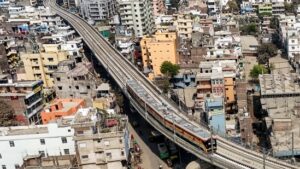
SC directs Centre to submit comprehensive report on encroachments along Ganga| India News
**Supreme Court Seeks Detailed Report on Illegal Ganga River Encroachments**
The mighty Ganga, a lifeline for millions and a symbol of faith, once again stands at the forefront of a crucial judicial directive. India’s highest court has recently ordered the central government to submit a comprehensive report detailing the extent of encroachments along the revered river. This significant move underscores the judiciary’s persistent concern for the health and sanctity of one of the nation’s most vital natural resources.
For decades, the Ganga has battled not only the pressures of industrial and domestic pollution but also the insidious creep of illegal constructions and activities along its banks. From its source in the Himalayas to its delta in the Bay of Bengal, the river’s floodplains and immediate surroundings have witnessed the unchecked expansion of human settlements, agricultural lands, and even commercial ventures, often without proper authorization or environmental consideration. This directive by the Supreme Court serves as a potent reminder that the protection of the Ganga is an ongoing and urgent national priority.
Understanding Encroachments Along the Ganga
To comprehend the gravity of the Supreme Court’s order, it helps to understand what constitutes an “encroachment” in this context. Imagine the river as a living entity that needs space to breathe, flow, and carry its natural sediment. When people build structures, expand farming, or dump waste on land that rightfully belongs to the river’s natural path or its designated floodplains, they are encroaching. This isn’t just about illegal buildings; it includes a range of activities that harm the river ecosystem.
Local news reports from states like Uttar Pradesh, Bihar, and West Bengal frequently highlight various forms of encroachment:
* Illegal Construction: This includes residential houses, shops, guest houses, and even religious establishments built too close to the river or directly on its floodplains. These structures often lack proper sewage systems, leading to direct discharge into the river.
* Agricultural Expansion: Farmers, often out of necessity, push their cultivation boundaries further into the riverbeds during drier seasons. While seemingly benign, this disrupts the river’s natural flow and makes the land vulnerable to erosion during monsoons.
* Waste Dumping: Construction debris, municipal solid waste, and industrial byproducts are sometimes illegally dumped on riverbanks, effectively narrowing the river’s width and polluting its waters.
* Sand Mining: Unregulated sand mining, often occurring in the riverbed or close to its banks, destabilizes the ecosystem, alters the river’s course, and accelerates erosion.
Each of these activities contributes to the degradation of the Ganga, affecting its biodiversity, water quality, and the communities that depend on it.
The Supreme Court’s Stance and Expectations
The Supreme Court, as the ultimate custodian of the Constitution and the environment, has repeatedly emphasized the need for a clean and free-flowing Ganga. Its latest directive to the Centre is not merely a request but a clear instruction for accountability. The court expects a detailed report that isn’t just a list of problems, but a comprehensive overview that identifies:
* Specific locations: Where are these encroachments occurring most prominently?
* Nature of encroachments: What kind of illegal activities are taking place?
* Responsible parties: Who are the individuals or entities behind these encroachments?
* Actions taken: What steps have central and state authorities already taken to remove them or prevent new ones?
* Future plan: What robust strategies are in place to address the issue systematically?
This level of detail suggests the court is looking for a foundational document that can guide future legal and administrative actions. It signifies that superficial measures will no longer suffice; concrete, measurable progress is now expected.
Implications for River Protection and Governance
This judicial push has far-reaching implications. Firstly, it places significant pressure on the central government, particularly the Ministry of Jal Shakti and its various agencies involved in the Namami Gange programme, to coordinate effectively with state governments. The Ganga spans multiple states, each with its own local governance challenges and political dynamics. A comprehensive report will require unprecedented collaboration and data compilation from Uttarakhand, Uttar Pradesh, Bihar, Jharkhand, and West Bengal.
Secondly, the directive could empower local authorities to take stricter action against encroachers. Often, enforcement at the ground level faces challenges due to political interference, lack of resources, or insufficient legal backing. A clear mandate from the Supreme Court strengthens the hand of district administrations and environmental agencies.
Finally, it could lead to increased public awareness and participation. When such a high-profile directive comes from the Supreme Court, it galvanizes public discourse and encourages local communities to become more vigilant protectors of the river. Citizen groups and environmental activists, who have long campaigned against these issues, will find renewed support for their efforts.
Challenges Ahead
Despite the clear directive, compiling such a report and subsequently acting on it will present significant challenges. Demarcating river boundaries, especially in flood-prone areas where the river’s course changes, is technically complex. Identifying and relocating long-standing encroachers, some of whom may have socio-economic vulnerabilities, will require sensitive handling and robust rehabilitation policies. Moreover, ensuring sustained political will across different levels of government will be crucial for the long-term success of any anti-encroachment drive.
This Supreme Court order is a pivotal moment for the Ganga. It moves the conversation beyond just pollution clean-up to reclaiming the river’s physical space, which is fundamental to its ecological health. It underscores that for the Ganga to truly thrive, it must be free from illegal grabs on its banks and floodplains.
Key Takeaways for Omni 360 News Readers:
* The Supreme Court has mandated a detailed report on all illegal encroachments along the Ganga, signaling serious judicial intent for river protection.
* Encroachments include illegal constructions, agricultural expansion, and waste dumping on riverbeds and floodplains.
* The Centre’s report must provide specific locations, types of encroachments, responsible parties, actions taken, and future plans.
* This directive will necessitate greater coordination between central and state governments, potentially strengthening local enforcement against illegal riverbed activities.
* Addressing these long-standing encroachments presents complex challenges, including technical demarcation difficulties and socio-economic considerations.
This critical development is set to reshape efforts to protect the sacred Ganga, ensuring its future flow remains unhindered and its banks are restored to their natural state, a story Omni 360 News will continue to follow closely.