SC slams ‘complete failure’ of West Bengal administration, orders central forces| India News
Supreme Court Scrutiny on West Bengal Administration Amidst Incident Probe
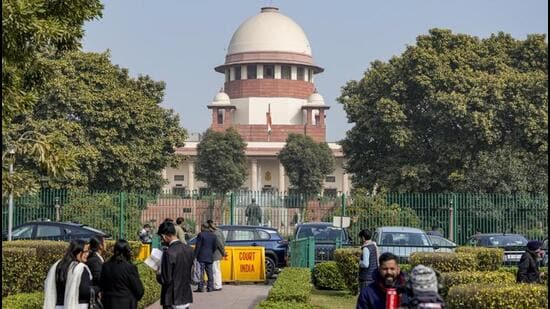
In a significant move underscoring judicial vigilance, the Supreme Court has cast a critical eye on the West Bengal administration, highlighting what it termed a “complete failure” in handling a recent incident. The apex court has not only ordered the deployment of central forces but has also mandated that state officials remain present online, signaling an unprecedented level of direct monitoring over both compliance with its directives and the ongoing investigation. This development, closely tracked by Omni 360 News, brings into sharp focus the imperative for state accountability and the rule of law.
The incident at the heart of the Supreme Court’s robust intervention stems from unsettling reports emanating from parts of West Bengal, particularly from areas like Sandeshkhali in the North 24 Parganas district. For weeks, this region has been embroiled in controversy following serious allegations of land grabbing, sexual assault, and widespread violence against local residents, especially women. These accusations have pointed fingers at powerful local political figures and their associates, creating an atmosphere of fear and distrust among the populace. Local news outlets, often operating under challenging circumstances, have consistently reported on the grievances of the villagers, detailing protests and demands for justice.
The situation escalated to a point where the Calcutta High Court had already taken suo motu cognizance, expressing grave concerns over the law and order situation and the alleged lack of decisive action by the state police. The High Court had directed various measures, including investigations by central agencies and compensation for victims. However, the matter found its way to the Supreme Court, which, after reviewing the various petitions and reports, delivered a stinging indictment of the state machinery.
Unusual Judicial Oversight and Directives
The Supreme Court bench did not mince words in its assessment. Observations from the bench indicated a profound breakdown of governance and a palpable failure to uphold the safety and rights of citizens. The phrase “complete failure of the West Bengal administration” used by the judges resonates deeply, suggesting a systemic issue rather than an isolated oversight. This strong language from the nation’s highest judicial body carries immense weight, prompting a closer examination of administrative efficacy in the state.
A cornerstone of the Supreme Court’s directives is the order for central forces to intervene. This step is typically reserved for situations where local law enforcement is perceived to be either overwhelmed, compromised, or unable to act impartially. The presence of central forces is intended to instill confidence among the affected population and ensure that investigations proceed without undue influence or obstruction. For the common person, this means a neutral agency is now tasked with safeguarding their interests, a crucial aspect of rebuilding trust in the system.
Even more striking is the court’s directive for state officials to remain present online during proceedings. This is an uncommon measure, signifying the Supreme Court’s determination to maintain a direct, transparent, and continuous line of communication and oversight. It means that key personnel responsible for the investigation and administration will be directly answerable to the apex court, in real-time. This mechanism allows the court to monitor every step of the probe and ensure prompt compliance with its orders, thereby minimizing delays and potential evasions.
Understanding the Implications for Governance
For a 12th standard student trying to understand this complex issue, think of it this way: Imagine a school where students are facing serious problems, and the principal and teachers are supposed to help. But if the problems continue and no one feels safe or heard, higher authorities, like the district education officer, might step in. The Supreme Court is like that highest authority. When it says “complete failure,” it means the usual systems and people (the state administration and police) who are supposed to ensure justice and safety haven’t done their job properly.
Ordering central forces is like bringing in a different, neutral set of security guards or investigators from outside the school to make sure everyone is protected and the truth comes out fairly. And making officials stay online during review means the highest authority can directly watch and question them, making sure they follow all instructions immediately and don’t try to hide anything or delay actions. This level of direct watching is meant to ensure that justice is not just promised, but actually delivered.
The Supreme Court’s intent is clear: to ensure accountability and restore faith in the administrative and law enforcement machinery. By closely monitoring compliance and the probe, the court aims to prevent any further erosion of public trust and to guarantee that the victims receive justice. This strong stance by the judiciary serves as a powerful reminder to all government bodies that they are ultimately accountable for protecting their citizens and upholding the law.
Local voices across West Bengal have echoed concerns over the perceived breakdown of law and order and the need for swift, impartial action. Reports from publications like The Statesman and The Telegraph in Kolkata have consistently highlighted the political ramifications and the human cost of such administrative lapses. The Supreme Court’s intervention, therefore, is not just a legal directive but a response to deep-seated public grievances.
Key Takeaways
* The Supreme Court has delivered a stern critique of the West Bengal administration, terming its actions a “complete failure” in managing a recent incident.
* Central forces have been mandated to intervene, signaling a need for impartial law enforcement and investigation.
* State officials are now required to be present online for judicial oversight, marking an unusual degree of direct monitoring by the apex court.
* The directives emphasize the judiciary’s commitment to ensuring administrative accountability and protecting citizens’ rights.
* The court’s actions are a direct response to serious allegations of violence and misconduct, particularly in areas like Sandeshkhali.
As Omni 360 News continues to follow these developments, the focus remains on how effectively these directives are implemented on the ground and whether they ultimately lead to justice for those affected. The Supreme Court’s proactive stance underscores a crucial principle: no administration is above the law, and the judiciary stands as the ultimate guardian of constitutional values and citizens’ rights. The coming weeks will reveal the true impact of this unprecedented judicial oversight on the state’s governance and the lives of its people.