
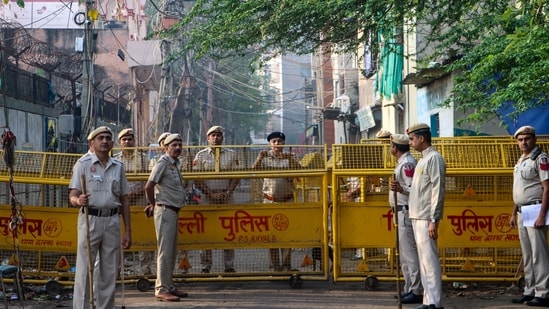
Shabir Ahmed Lone, Lashkar-e-Taiba terrorist from Jammu and Kashmir, arrested by Delhi Police| India News
Janpath Metro Poster Case Lashkar Link Shabir Ahmed Lone Arrested
In a significant development for national security, Delhi Police’s Special Cell has apprehended Shabir Ahmed Lone, an alleged operative of the proscribed terror outfit Lashkar-e-Taiba (LeT). The arrest comes over a month after a disturbing incident where pro-Pakistan and pro-terror posters were brazenly displayed at the bustling Janpath Metro Station in central Delhi during February. This crucial breakthrough brings an important dimension to the ongoing investigation into attempts to spread propaganda and incite disruption within the nation’s capital.
The incident at Janpath Metro Station had initially caused considerable concern among authorities and the public alike. On a seemingly ordinary day in February, commuters discovered posters carrying messages that openly advocated for Pakistan and glorified terror activities. Such a public display, particularly at a vital transportation hub in the heart of Delhi, was immediately recognized as a serious attempt to test security protocols and sow discord. The messages, though seemingly simple, aimed to create an environment of fear and sympathy for extremist ideologies, directly challenging the peace and unity of the city. Security agencies swiftly launched an investigation to identify those responsible for this provocative act, understanding that even seemingly minor acts of propaganda could be precursors to larger threats. The meticulous efforts of the Delhi Police Special Cell, known for its expertise in counter-terrorism operations, have now yielded a tangible result in the form of Lone’s apprehension.
The Extensive Investigation and Apprehension
Following the discovery of the inflammatory posters, investigators embarked on a comprehensive probe that spanned across states. This involved sifting through extensive CCTV footage from the metro station and surrounding areas, cross-referencing intelligence from various human and technical sources, and meticulously tracing any leads that could point towards the perpetrators. The initial challenge lay in identifying individuals who might have placed the posters and understanding their immediate connections. As the investigation progressed, the trail eventually led the Delhi Police Special Cell to Jammu and Kashmir, a region frequently at the forefront of India’s counter-terrorism efforts and known for its complex security landscape. It was there, after weeks of diligent tracking and close coordination with local intelligence units, that Shabir Ahmed Lone was successfully located and taken into custody.
Lone’s arrest over a month after the Janpath incident underscores the persistence and dedication of the investigating agencies. It highlights that no stone is left unturned in pursuing those who seek to undermine national security, even if they attempt to distance themselves geographically or temporally from the scene of the crime. The operation to apprehend Lone in Jammu and Kashmir required careful planning and execution, navigating challenging terrain and operational sensitivities, reflecting the gravity with which law enforcement approaches such cases. His capture is a testament to the relentless pursuit of justice and security.
Shabir Ahmed Lone and Lashkar-e-Taiba Connection
Initial reports from police sources indicate that Shabir Ahmed Lone is suspected of having active links with Lashkar-e-Taiba, a Pakistan-based terrorist organization universally designated as a terror group and responsible for numerous heinous attacks in India, including the horrific 26/11 Mumbai terror attacks. Lone’s alleged association with such a formidable and dangerous group adds a serious layer to the Janpath Metro poster case. It suggests that the incident was not merely an isolated act of vandalism or amateur propaganda, but potentially part of a more organized effort orchestrated or influenced by established terror entities aiming to spread their hateful ideology.
The alleged presence of an LeT operative connected to propaganda activities in Delhi raises pertinent questions about recruitment strategies, funding mechanisms, and the broader network that might be operating within the country. Authorities will undoubtedly be looking to interrogate Lone thoroughly to uncover these deeper connections, understand the motivations behind the Janpath incident, identify any other individuals involved in this conspiracy, and trace the chain of command. His capture is not just about solving one specific case but potentially disrupting a wider web of subversive activities designed to create instability.
Understanding the Intent Behind Such Propaganda
For a 12th-standard student to grasp the seriousness of this, imagine someone trying to trick a group of friends into fighting each other by spreading false rumours or hateful messages. Terrorist groups often operate similarly, but on a much larger and more dangerous scale. They don’t just use bombs or guns; they also try to spread their harmful ideas, not only through violence, but also by putting up posters, distributing leaflets, or sharing content online. Their main aim is to create fear, cause divisions among people, or even secretly persuade vulnerable individuals to join their cause by making their twisted ideologies sound appealing. When posters like these appear in a busy public place like a metro station, it’s like a small, psychological attack. It’s an attempt to poison minds, challenge our sense of unity, and make us question our country’s security. The police’s job is to stop this, because these seemingly small acts of propaganda can often be linked to bigger, more dangerous plots. The arrest of Shabir Ahmed Lone is a crucial step towards stopping that spread and protecting our collective peace of mind.
Wider Security Implications for Urban Centers
The Janpath incident and the subsequent arrest serve as a stark reminder of the persistent and evolving security challenges faced by major urban centers globally. Public spaces like metro stations, bustling markets, and major transport hubs are particularly vulnerable targets for both direct attacks and insidious propaganda efforts due to their high footfall and symbolic significance. These locations are often chosen by those wishing to maximize impact and create widespread panic or discomfort. This event underscores the continuous need for heightened vigilance from both law enforcement agencies and the general public. While sophisticated security infrastructure, including extensive CCTV networks, advanced surveillance technology, and diligent patrolling, plays a vital role, proactive community participation in reporting suspicious activities is equally crucial. It’s a collective responsibility. Omni 360 News consistently highlights how such combined efforts—from intelligence gathering to public awareness—are absolutely essential in maintaining a robust security apparatus against an ever-changing landscape of threats. The effectiveness of intelligence sharing between state police forces and central agencies also proves critical in operations spanning across regions.
The arrest of an alleged LeT operative in connection with a propaganda act in Delhi is a testament to the proactive and reactive capabilities of India’s security forces. It sends a clear and unambiguous message that attempts to destabilize peace and order through any means, whether overt acts of terror or covert acts of propaganda, will be met with resolute action. As the investigation progresses, more details are expected to emerge, shedding further light on the extent of the conspiracy and the individuals involved. This incident reinforces the importance of a vigilant society and a responsive security mechanism.
Key Takeaways
* Shabir Ahmed Lone, identified as an alleged Lashkar-e-Taiba operative, has been arrested by the Delhi Police Special Cell.
* His apprehension is directly linked to the discovery of pro-Pakistan and pro-terror posters found at Janpath Metro Station in February.
* The investigation involved meticulous intelligence gathering and tracking, culminating in his capture in Jammu and Kashmir, more than a month after the incident.
* This case highlights the persistent threat of propaganda and subversive attempts by terror outfits in prominent urban areas.
* The arrest is considered crucial for potentially uncovering broader terror networks and their operational methods within the country.
The incident at Janpath Metro Station and the subsequent arrest of Shabir Ahmed Lone serve as a potent reminder of the enduring threats posed by terror outfits and their proxies. It reaffirms the unwavering commitment of Indian security agencies to safeguard public spaces, uphold law and order, and ensure national security. As investigations continue, public vigilance and inter-agency cooperation remain paramount in protecting the nation’s peace.