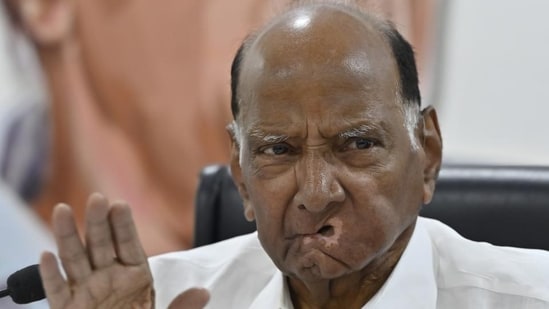
Sharad Pawar, Ramdas Athawale among 19 leaders sworn in as Rajya Sabha members| India News
Rajya Sabha Welcomes New Members Focus on Maharashtra Tamil Nadu West Bengal Odisha Key Takeaways
The hallowed halls of India’s Parliament recently witnessed the swearing-in of new members to the Rajya Sabha, the Upper House. This event marks a significant refreshment of legislative voices, bringing fresh perspectives from various states to the national stage. Among the nineteen leaders taking their oaths, a substantial contingent hailed from four key states: Maharashtra, Tamil Nadu, West Bengal, and Odisha. These elections, often reflecting the political pulse within state assemblies, play a crucial role in shaping legislative debates and policy directions. Omni 360 News delves into the details, offering a clear understanding of these new additions and their potential impact.
Understanding the Rajya Sabha Election Process
For those new to India’s parliamentary system, it’s helpful to understand what the Rajya Sabha is and how its members are chosen. Unlike the Lok Sabha, where members are directly elected by citizens, Rajya Sabha members are elected by the Members of the Legislative Assembly (MLAs) of each state through a system of proportional representation. Think of it like this: your state’s elected representatives (MLAs) vote for who will represent your state in the Rajya Sabha. These elections happen periodically, ensuring a continuous flow of representation in the Upper House, which acts as a chamber of seasoned wisdom and careful legislative review.
Maharashtra’s Representation
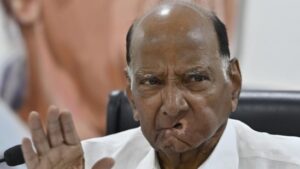
From the politically vibrant state of Maharashtra, five distinguished individuals have joined the Rajya Sabha. The elections here often highlight the intricate coalition dynamics prevalent in the state. Among those sworn in were veteran politician Sharad Pawar, representing the Nationalist Congress Party (Sharadchandra Pawar faction), whose extensive experience adds significant weight. Also taking the oath was Ramdas Athawale of the Republican Party of India (Athawale), a familiar face in national politics known for his advocacy for marginalized communities. The Bharatiya Janata Party (BJP) saw Medha Kulkarni join the ranks, bringing a new voice from the state’s dominant party. The Congress party secured a seat for Ajit Gopchade, reinforcing the presence of the opposition. Finally, Praful Patel from the Nationalist Congress Party (Ajit Pawar faction) was also elected, underscoring the fragmented political landscape in Maharashtra. These elections reflect the current strength and alliances within the Maharashtra Legislative Assembly, where each party aims to maximize its representation in the national legislature.
Tamil Nadu’s Legislative Voices
Tamil Nadu, a state known for its unique political culture and strong regional parties, sent six new members to the Rajya Sabha. The Dravida Munnetra Kazhagam (DMK), currently the ruling party in the state, predictably dominated these selections, given its robust majority in the state assembly. Among the prominent names elected were several from the DMK itself, ensuring their legislative agenda finds strong proponents at the national level. These included S. Kalyanasundaram, R. N. M. Krishnana, and K. R. N. Rajeshkumar. The Congress party, an ally of the DMK, also saw the election of veteran leader P. Chidambaram, a former Union Minister, who brings decades of policy experience to the Upper House. The All India Anna Dravida Munnetra Kazhagam (AIADMK), the principal opposition, secured representation with individuals like V. Jayavardhan and N. Murugaiyan. The smooth conduct of these elections largely mirrored the existing political strength in the state assembly, ensuring that Tamil Nadu’s diverse interests are articulated in Parliament.
West Bengal’s Shift in the Upper House
West Bengal, a state frequently in the national spotlight for its intense political contests, added five new members to the Rajya Sabha. The Trinamool Congress (TMC), led by Chief Minister Mamata Banerjee, holds a significant majority in the state assembly, and this was clearly reflected in the Rajya Sabha selections. All five members elected from West Bengal belonged to the TMC, further strengthening the party’s voice in the national legislature. These new Rajya Sabha members included Sushmita Dev, a seasoned politician with a background in advocating for women’s rights, and journalist-turned-politician Sagarika Ghose, known for her articulate presence. Other TMC members taking oath were Md Nadimul Haque, Mamata Bala Thakur, and Prakash Chik Baraik. Their presence is expected to champion West Bengal’s concerns and contribute to the ongoing national debates from the perspective of the TMC’s political philosophy.
Odisha’s Contribution
From the eastern state of Odisha, three members were elected to the Rajya Sabha, with the Biju Janata Dal (BJD), the long-standing ruling party under Chief Minister Naveen Patnaik, securing all three seats. Odisha’s elections are typically straightforward due to the BJD’s overwhelming dominance in the state assembly, ensuring their chosen candidates sail through without much contest. The newly elected members from Odisha were Subhasish Khuntia, Debashish Samant, and Sasmit Patra. These individuals, all from the BJD, are expected to voice Odisha’s developmental priorities, advocate for the state’s interests, and contribute to national policy discussions with a focus on regional needs and aspirations. Their uncontested election underlines the stable political environment and strong mandate enjoyed by the BJD in Odisha.
The Bigger Picture A National Perspective
The swearing-in of these new members from Maharashtra, Tamil Nadu, West Bengal, and Odisha, alongside others from different states, collectively rejuvenates the Rajya Sabha. Each state’s delegation brings specific regional insights, developmental priorities, and political nuances to the national discourse. The Rajya Sabha, designed to be a continuous body representing the federal structure of India, benefits immensely from this periodic infusion of new and experienced voices. These new members will participate in scrutinizing legislation, debating national policies, and ensuring that the diverse fabric of India is adequately reflected in parliamentary proceedings.
Key Takeaways
* The recent Rajya Sabha elections saw a significant intake of members from Maharashtra (5), Tamil Nadu (6), West Bengal (5), and Odisha (3).
* These elections reflect the current political strength and alliances within each state’s Legislative Assembly.
* Prominent figures like Sharad Pawar, Ramdas Athawale, P. Chidambaram, and Sushmita Dev are among the newly sworn-in.
* Regional parties, particularly DMK in Tamil Nadu, TMC in West Bengal, and BJD in Odisha, leveraged their assembly majorities to secure most seats.
* The infusion of new and experienced legislators from these states enhances the Rajya Sabha’s role in representing India’s federal diversity and facilitating robust legislative review.
This exercise in parliamentary democracy, while often less flashy than general elections, is fundamental to the functioning of India’s legislative system. The new members now carry the mandate to represent their states and contribute to the nation’s progress.