Snowfall in the Sahara Desert: A Rare Natural Event That Surprised the World
The Sahara Desert is famous all over the world for its extreme heat, endless sand dunes, and harsh climate. In many places, the temperature of this desert can go as high as 58 degrees Celsius, making it one of the hottest regions on Earth. Snow is something people associate with mountains, cold countries, or hill stations, not with a desert like the Sahara. But nature often surprises us, and this time it has done so again.
After Saudi Arabia recently experienced unusual weather changes, a similar rare event has now been reported from the Sahara Desert. Snowfall has occurred in some parts of northern Algeria, which lies on the northern edge of the Sahara. This unexpected snowfall has amazed scientists, locals, and people across the world.
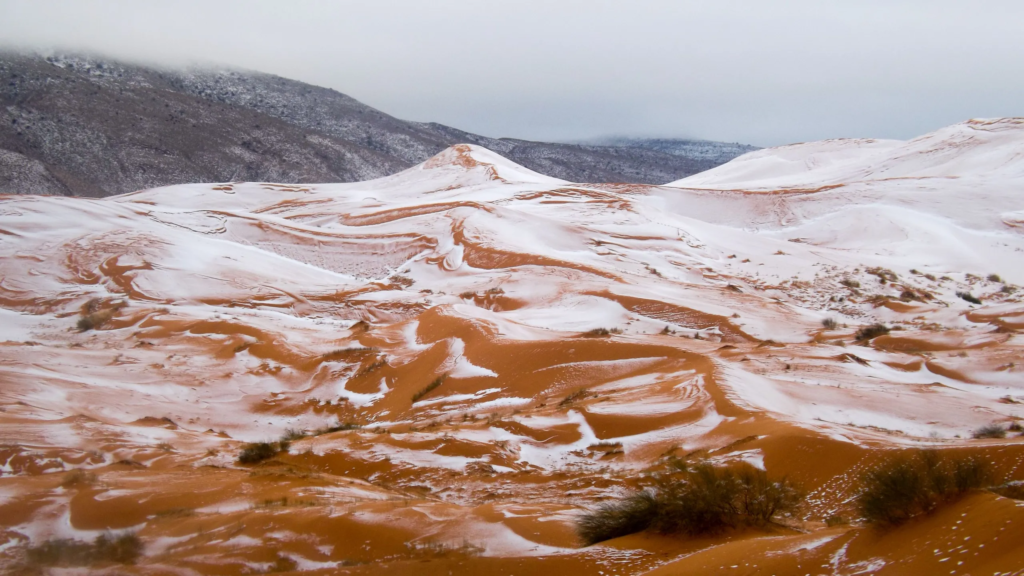
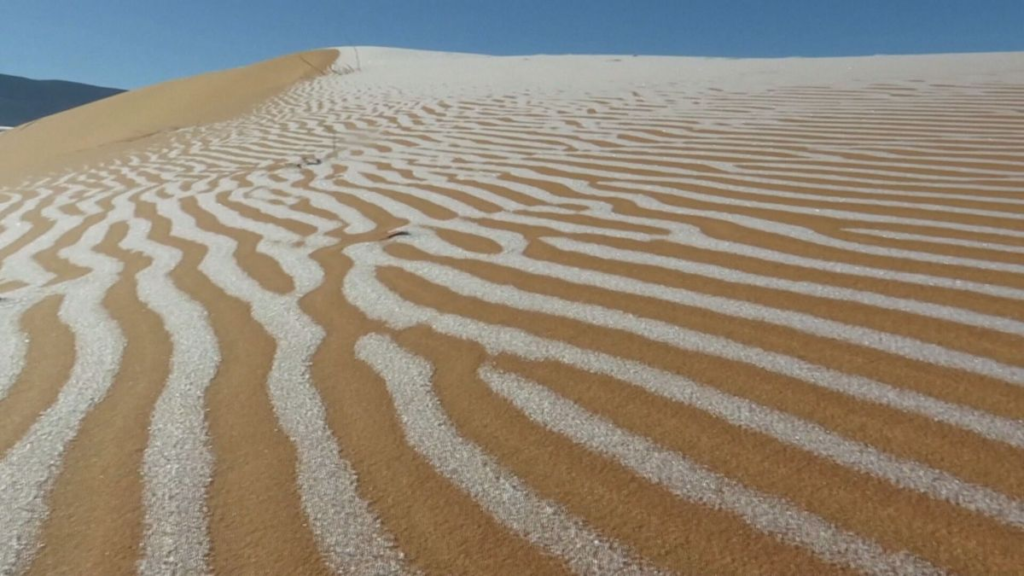
According to reports, the temperature in this region suddenly dropped below zero degrees Celsius. On January 17, the temperature in parts of the Sahara fell to around 2 degrees Celsius. As the cold wave intensified, temperatures dipped even further, allowing snow to fall on the desert surface. Soon, the usually golden sand dunes were covered in a thin white blanket of snow, creating a rare and breathtaking sight.
This unusual snowfall was mainly seen near a town called Ain Sefra. Ain Sefra is located close to the northern border of the Sahara Desert in Algeria. The town lies at a higher altitude compared to other desert areas, which makes it slightly more prone to extreme weather changes. However, even for Ain Sefra, snowfall is extremely rare.
Videos and photographs shared on social media showed sand dunes completely covered in snow. The contrast between white snow and golden sand looked almost unreal. Many people compared the view to scenes from a movie or a dream. Locals were seen touching the snow, clicking pictures, and enjoying a moment they may not see again in their lifetime.
Weather experts say that this rare snowfall happened due to a sudden cold air system moving into North Africa from Europe. When cold winds from the north meet moisture in the air, and temperatures drop sharply, conditions become suitable for snowfall, even in desert regions. Although deserts are generally hot, they can experience extreme temperature changes, especially during winter nights.
This is not the first time snowfall has been recorded in the Sahara Desert. In fact, this is the fifth time in the last 42 years that snow has fallen in this region. Earlier incidents were reported in the years 1979, 2016, 2018, and 2021. Each time, the snowfall lasted only for a short period and melted away quickly as temperatures rose again.
The first recorded snowfall in the Sahara was in 1979, when snow fell in parts of southern Algeria. After that, the desert remained snow free for decades. In 2016, snow once again surprised residents near Ain Sefra. Similar scenes were repeated in 2018 and again in 2021. The latest snowfall in 2025 adds another chapter to this list of rare weather events.
Scientists believe that such unusual weather patterns may become more frequent due to climate change. Global climate change is causing unpredictable shifts in weather systems across the world. Heatwaves, extreme cold, floods, droughts, and unusual snowfall are being reported from many regions that never experienced such conditions before.
However, experts also caution against jumping to conclusions based on a single event. They explain that while climate change increases the chances of extreme weather, deserts have always had the ability to experience sudden temperature drops, especially in winter. Still, the increasing frequency of such rare events is something that scientists are closely monitoring.
For the people living near the Sahara, this snowfall was both exciting and confusing. While many enjoyed the rare beauty, others were concerned about its impact on daily life, agriculture, and livestock. Sudden cold can be harmful to animals and plants that are adapted to hot desert conditions.
Despite these concerns, the snowfall in the Sahara has once again reminded the world of nature’s unpredictable power. It showed that even the hottest places on Earth are not completely immune to cold weather. From burning heat to freezing snow, the Sahara Desert continues to surprise scientists and common people alike.
As temperatures slowly rise again, the snow is expected to melt quickly, returning the desert to its familiar golden look. But the memory of white snow covering the vast sand dunes will remain fresh in the minds of those who witnessed it and in the records of weather history.