South Pars, Ras Laffan: World's largest gas reserve in crosshairs of US-Iran war, what it means for India| India News
South Pars North Field The World’s Biggest Gas Treasure Shared by Iran and Qatar Key Takeaways
Beneath the shimmering waters of the Persian Gulf lies an energy behemoth, a colossal natural gas reservoir known to the world as the South Pars field on the Iranian side and the North Field, or North Dome, in Qatar. This shared geological marvel represents the single largest non-associated natural gas field ever discovered, a true titan in the global energy landscape. For decades, it has been a cornerstone of both nations’ economies, fueling their growth and shaping international energy markets.
A Shared Subterranean Giant
First discovered in 1971 by Qatar and later confirmed by Iran in 1990, the gas field spans an area estimated to be around 9,700 square kilometers. Approximately two-thirds, or 6,000 square kilometers, fall within Qatar’s maritime territory, while the remaining 3,700 square kilometers lie in Iranian waters. Geologically, it is a continuous structure, with both countries tapping into the same vast reserves. Estimates suggest the field holds over 51 trillion cubic meters of natural gas and about 50 billion barrels of natural gas condensates. To put this into perspective, such reserves could meet global demand for years, underscoring its unparalleled significance.
Qatar’s Strategic Approach The North Field’s Dominance
Qatar, recognizing the immense potential of its portion of the field, which it calls the North Field, embarked on an ambitious strategy to become a global leader in liquefied natural gas (LNG). Through substantial investments in state-of-the-art infrastructure, including massive gas processing plants and a fleet of specialized LNG tankers, Qatar rapidly transformed into the world’s largest LNG exporter. Its early and aggressive development of the North Field has positioned it as a reliable and dominant supplier to markets across Asia and Europe. Recent years have seen QatarEnergy, the state-owned energy company, announce further expansion projects for the North Field, aiming to boost its LNG production capacity significantly. This includes the North Field East (NFE) and North Field South (NFS) projects, which are set to increase Qatar’s LNG output by over 50% by the late 2020s. These developments, often reported by regional news outlets like Gulf Times and The Peninsula, highlight Qatar’s steadfast commitment to maximizing its natural gas resources. The country’s stable political environment and consistent investment have allowed it to unlock the full potential of its share of the gas field.
Iran’s Endeavors South Pars Development Amidst Challenges
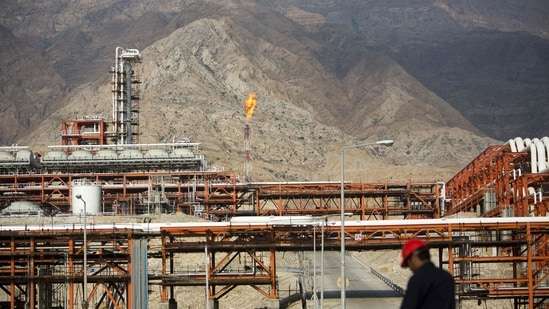
On the Iranian side, the field is known as South Pars. Development efforts by the National Iranian Oil Company (NIOC) have been substantial, albeit often complicated by international sanctions. Despite these hurdles, Iran has steadily increased its extraction capacity, primarily focusing on meeting its growing domestic energy demands and supporting its industrial sector. South Pars is critical for Iran’s energy security, providing fuel for power generation, petrochemical industries, and residential consumption. Projects, frequently detailed in Iranian news agencies such as Mehr News and Fars News, have focused on establishing numerous development phases, each involving drilling platforms, pipelines, and gas processing facilities on the mainland. While sanctions have hindered access to advanced technology and foreign investment, Iranian engineers and companies have persevered, pushing forward with indigenous solutions and partnerships with non-Western entities. This dual approach – Qatar prioritizing exports and Iran focusing on domestic use while also seeking export opportunities – showcases the distinct strategic paths taken by the two nations sharing this monumental resource.
Economic and Geopolitical Impact
The shared South Pars/North Field is more than just a source of energy; it’s a profound economic engine and a significant geopolitical factor in the Middle East and beyond. For Qatar, revenues from LNG exports have fueled remarkable economic diversification, massive infrastructure projects, and a high standard of living. The nation’s influence on global energy markets is undeniable. For Iran, South Pars provides vital economic stability, supports its vast population, and underpins its industrial base, even as it navigates complex international relations. The efficient and secure management of this shared resource remains a subject of ongoing interest and cautious cooperation between the two Gulf neighbors, often reported on by regional analysts and featured in publications like Al-Monitor. The field’s sheer size means that developments on either side have global repercussions, affecting energy prices, supply chains, and international energy policies.
The Future of a Gas Giant
As the world transitions towards cleaner energy, natural gas is often seen as a crucial bridge fuel. Both Iran and Qatar are acutely aware of this, continually assessing extraction methods, environmental impacts, and market demands. The longevity and productivity of the South Pars/North Field will continue to play a pivotal role in the global energy mix for decades to come. Omni 360 News understands the profound implications of this shared natural treasure. Its continued responsible development will not only shape the economic futures of Iran and Qatar but also influence energy security and environmental considerations worldwide. The intricate balance of resource management, technological advancement, and geopolitical strategy surrounding this field ensures its prominence in future energy dialogues.
Key Takeaways
* The South Pars/North Field is the world’s largest non-associated natural gas field, shared by Iran and Qatar.
* It holds immense reserves, estimated at over 51 trillion cubic meters of gas.
* Qatar developed its North Field aggressively for LNG exports, becoming a global leader.
* Iran’s South Pars development focuses on domestic energy needs, facing international sanctions.
* The field is a critical economic engine for both nations and a major geopolitical factor.
* Future expansion projects by Qatar underscore its commitment to maintaining LNG dominance.