NEW DELHI – In what is being characterized as a pivotal moment for “Viksit Bharat 2047,” the Government of India has intensified its efforts to decode the fine print of the recently announced Indo-US trade agreement. Following the release of the draft framework, Union Minister for Commerce and Industry, Piyush Goyal, is scheduled to chair a high-stakes meeting this Wednesday with key stakeholders, including top exporters, industry leaders, and representatives from various Export Promotion Councils.
The primary agenda of this summit is a granular assessment of the “give-and-take” dynamics inherent in the deal. While the broad strokes of the agreement suggest a massive windfall for Indian exporters, domestic manufacturers are cautiously scanning the horizon for potential vulnerabilities.
The Architecture of the Deal: Tariffs and Market Access
The cornerstone of the agreement, as announced by the Ministry of Commerce, is the significant reduction of reciprocal tariffs. In a landmark shift, the United States has agreed to slash tariffs on Indian merchandise from a staggering 50% to 18%. This move is expected to unlock a $30 trillion market for Indian businesses.
According to Ministry sources, the “first tranche” of this formal legal agreement is slated for signing by mid-March 2026. Minister Goyal has emphasized that this deal restores predictability to cross-border commerce, effectively removing the “tariff overhang” that has historically hampered long-term investment.
| Sector | Nature of Benefit | Key Beneficiaries |
| Labour-Intensive | Zero-duty or reduced tariffs | Textiles, Apparel, Leather, Footwear |
| High-Tech/Industrial | Section 232 Exemptions | Aircraft parts, Auto components, Smart devices |
| Pharmaceuticals | Negotiated outcomes | Generic drug manufacturers |
| Agriculture | Strategic protection | Dairy, Sensitive agri-items (Grains/Fruits) |
Balancing Domestic Interests: The “Red Lines”
A critical segment of Wednesday’s meeting will focus on the safeguards built into the agreement. Minister Goyal has been vocal about India’s refusal to compromise on its sensitive agricultural and dairy sectors.
“While we are opening doors for Indian farmers to export to the US at zero duty, we have maintained robust protection for our domestic producers,” Goyal stated in a recent briefing.
Crucially, the government has clarified that Genetically Modified (GM) products from the US will not be granted entry, addressing a long-standing concern of Indian environmentalists and local farmers.
The Energy Pivot and the Russian Oil Dilemma
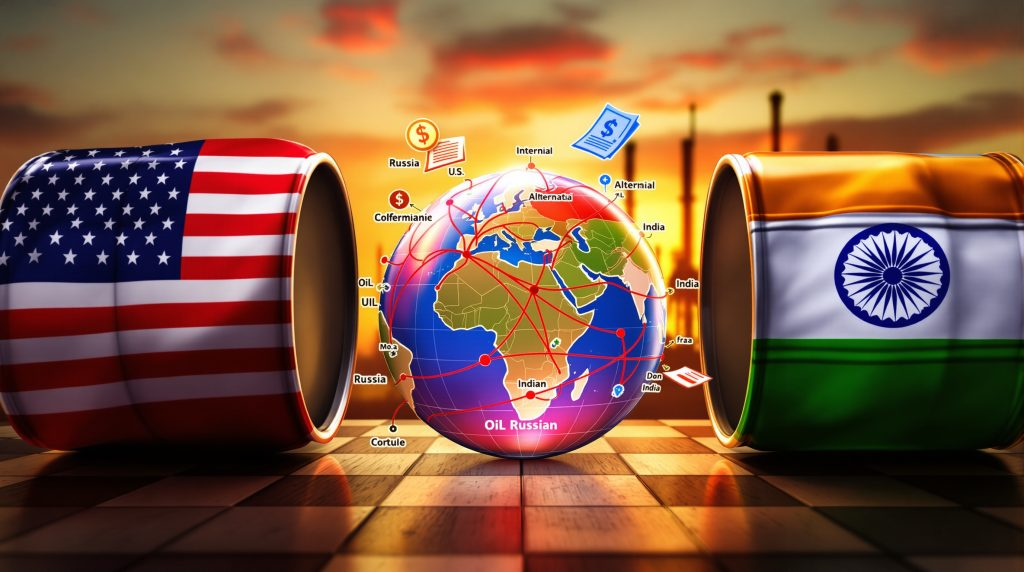
Perhaps the most complex layer of this diplomatic jigsaw puzzle is the geopolitical friction surrounding India’s energy imports. US President Donald Trump recently suggested that the trade concessions were linked to India’s agreement to discontinue purchases of Russian crude oil.
However, Foreign Secretary Vikram Misri has offered a more nuanced, sovereign-centric perspective. Speaking to the press on Tuesday, Misri asserted that India’s energy procurement is dictated solely by national interest.
“As a major net importer, our supreme priority is ensuring that 1.4 billion Indians have access to stable and affordable energy,” Misri remarked. He emphasized that decisions on sourcing are commercial ones made by oil companies based on market conditions, logistics, and pricing. India continues to maintain a diversified “energy basket,” refusing to depend on any single supplier.
Energy Security: The 74-Day Shield
Addressing concerns over potential supply disruptions whether due to geopolitical shifts or sanctions Union Petroleum Minister Hardeep Singh Puri informed the Rajya Sabha that India’s strategic reserves are currently robust.
As of February 2026, India holds a combined reserve (across strategic caverns, refineries, and floating platforms) sufficient to meet 74 days of domestic demand. While this is slightly below the International Energy Agency’s (IEA) recommended 90-day buffer, Minister Puri assured the House that the current level provides a significant “economic stability” cushion. Plans are already underway to expand these reserves, including new facilities in Odisha.
Economic Outlook: A $500 Billion Target
The government’s long-term vision is to scale bilateral trade with the US to $500 billion annually. Economists at major financial institutions, including Goldman Sachs, suggest that this deal could provide a 0.2 to 0.3 percentage point boost to India’s GDP.
By aligning India’s tariff rates with those of other major Asian economies (typically in the 15-19% range), the agreement is expected to:
- Narrow the Current Account Deficit by boosting exports.
- Stabilize the Rupee through increased FDI inflows.
- Unlock Private Investment as policy uncertainty diminishes.
The Road to Mid-March
As the Commerce Ministry prepares for Wednesday’s consultation, the mood in the industry remains one of “cautious optimism.” Exporters are eager to see the “zero-duty” list, which is rumored to include gems, jewelry, spices, and specific engineering goods.
For the veteran journalist, the takeaway is clear: New Delhi is walking a sophisticated tightrope. It is seeking to harness the economic might of the American market while fiercely defending its energy sovereignty and the livelihoods of its rural populace. The mid-March signing will not just be a trade ceremony; it will be a testament to India’s “Strategic Autonomy” in a multi-polar world.