Students should be able to study medicine in India, needn’t go abroad: Amit Shah| India News
**Nation’s Healthcare Future Rises in Guwahati: Amit Shah Calls for Self-Reliance in Medical Education**
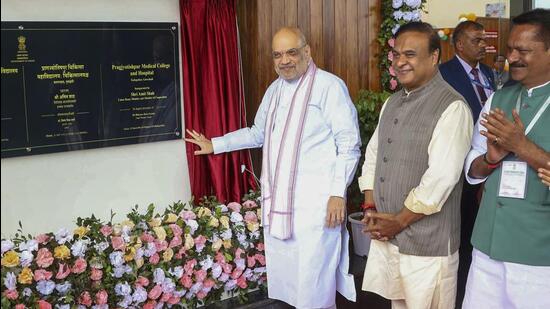
Guwahati, Assam — A significant stride in India’s healthcare landscape unfolded recently in Guwahati with the inauguration of the Prime Minister’s College and Hospital (PMCH). Union Home Minister Amit Shah, presiding over the landmark event, delivered a clear and impactful message: India must cultivate robust medical education facilities within its borders, negating the need for students to venture abroad for their studies. This declaration, shared from the heart of Assam, underscores a broader national ambition to strengthen domestic healthcare infrastructure and empower a new generation of Indian medical professionals.
The newly commissioned PMCH in Guwahati stands as a testament to this commitment. Developed at an estimated cost exceeding 500 crore rupees, this state-of-the-art facility is poised to add a substantial number of MBBS seats, significantly bolstering medical education opportunities in the North-Eastern region. Local reports highlight its potential to alleviate the pressure on existing medical institutions and cater to the growing demand for skilled healthcare providers in Assam and surrounding areas. The hospital component is designed to offer advanced medical services, making specialized care more accessible to local communities, a concern frequently voiced by residents in regional news forums.
Addressing the Exodus of Talent
Shah’s statement resonates deeply with the aspirations of countless Indian families and the broader national interest. For years, the pursuit of medical degrees abroad has been a common trajectory for many aspiring doctors. Factors contributing to this trend are multifaceted: the intense competition for a limited number of MBBS seats in India, the soaring costs associated with private medical colleges, and the perceived challenges of navigating entrance examinations like NEET. Local news analysis often points to the emotional and financial strain this places on families, who invest heavily in overseas education, sometimes in environments with varying quality standards or language barriers.
The Union Minister articulated a vision where such outward migration of talent becomes a choice, not a necessity. By enhancing domestic facilities, the goal is to provide a world-class education environment right at home, retaining valuable intellectual capital and fostering a sense of national self-reliance in the critical healthcare sector. This aligns with broader government initiatives aimed at increasing the number of medical colleges and MBBS seats across the country. Data often cited in regional reports indicates a substantial increase in medical colleges from 387 in 2014 to over 700 currently, with MBBS seats nearing double the previous count. These expansions are not merely quantitative; they aim to improve the geographical distribution of medical education, reaching underserved regions like parts of the North East.
Bolstering National Healthcare Infrastructure
The inauguration of PMCH and the Union Minister’s emphasis on domestic medical education are integral components of a larger strategy to fortify India’s healthcare infrastructure. This strategy extends beyond simply adding colleges; it encompasses upgrading district hospitals, expanding primary healthcare centres, and leveraging technology to improve access to medical services. The “Heal in India, Heal by India” initiative, which promotes both medical tourism and the training of healthcare professionals within the country, reflects this comprehensive approach.
For a nation as vast and diverse as India, ensuring equitable access to quality healthcare professionals is paramount. Every student who studies medicine within the country and then practices here contributes directly to strengthening the local healthcare ecosystem. This vision not only curtails the ‘brain drain’ but also fosters a deeper understanding of indigenous health challenges and healthcare delivery models. Regional medical colleges, like the PMCH in Guwahati, are crucial in producing doctors attuned to the specific health needs and socio-cultural contexts of their respective regions, leading to more effective and culturally sensitive patient care.
The Road Ahead: Challenges and Opportunities
While the vision is ambitious, its successful implementation hinges on addressing several critical factors. Ensuring the availability of qualified faculty, maintaining high educational standards across all new institutions, and continuously updating curriculum to meet evolving global medical practices are paramount. The investment in infrastructure must be matched by an investment in human resources and academic excellence. These are ongoing discussions in medical education circles, frequently covered by dedicated health news segments.
However, the opportunities are immense. A self-reliant medical education system can position India as a global leader in healthcare training, potentially attracting students from other developing nations. It can also drive innovation in medical research and technology, tailored to India’s unique demographic and epidemiological profile. The long-term impact on public health, from improved doctor-patient ratios to enhanced disease prevention and management, promises a healthier future for all citizens. Omni 360 News believes that a holistic approach, continuously evaluating progress and adapting to challenges, will be key to realizing this national aspiration.
Key Takeaways:
* Union Home Minister Amit Shah advocated for robust domestic medical education facilities to reduce the need for Indian students to study abroad.
* The inauguration of PMCH in Guwahati signifies a concrete step towards strengthening healthcare infrastructure and medical education in the North East.
* The government’s broader strategy includes increasing medical colleges and MBBS seats nationally, aiming for self-sufficiency in medical professionals.
* This initiative seeks to retain talent within India, address regional healthcare disparities, and potentially establish India as a global medical education hub.
* Successful implementation requires sustained focus on faculty development, quality assurance, and continuous curriculum enhancement.