Students should be able to study medicine in India, needn’t go abroad: Amit Shah| India News
Enhancing Medical Education at Home Amit Shah Calls for Robust Facilities in India Key Takeaways from Guwahati
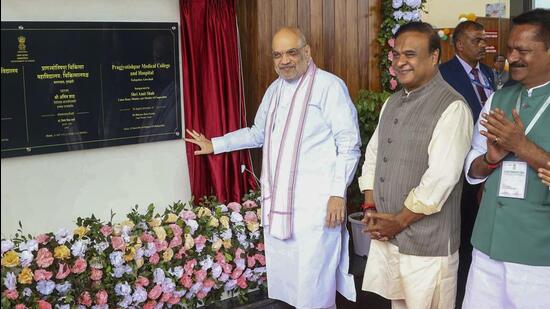
Guwahati, Assam A significant step towards strengthening India’s medical education infrastructure was observed recently as Union Home Minister Amit Shah inaugurated the Pandit Deendayal Upadhyay Medical College and Hospital PMCH in Guwahati. During this pivotal event, Mr. Shah delivered a clear message: India must develop comprehensive medical facilities within its borders, making it unnecessary for students to seek medical degrees abroad. This vision underscores a broader commitment to nurturing homegrown medical talent and bolstering the nation’s healthcare capabilities. Omni 360 News brings you a detailed report on this crucial development and its far-reaching implications.
The inauguration of PMCH marks a tangible stride in expanding healthcare and educational access in Assam. With a state-of-the-art facility now operational, the region gains not only a new medical college contributing to the pool of future doctors but also an advanced hospital ready to serve local communities. This initiative is part of a nationwide effort to ensure that quality medical education and treatment are accessible to all, reflecting a strategic pivot towards self-reliance in the healthcare sector.
Why Indian Students Look Abroad for Medical Studies
For many years, a significant number of Indian students have traveled overseas to pursue medical degrees. To understand why, imagine the intense competition for a limited number of seats in India’s medical colleges. Every year, lakhs of students appear for entrance exams like NEET, but only a fraction secure admission. This fierce competition, coupled with the often high fees of private medical institutions in India, pushes many bright young minds to explore options in countries like Russia, Ukraine, China, and the Philippines.
These foreign universities often present a seemingly more straightforward admission process and, in some cases, lower tuition fees. However, studying abroad comes with its own set of challenges. Students face language barriers, cultural adjustments, and different teaching methodologies. More importantly, upon their return, they must navigate the process of getting their foreign degrees recognized by the National Medical Commission NMC to practice medicine in India. This involves rigorous screening tests, which can be another hurdle. Mr. Shah’s statements highlight the government’s recognition of these challenges and its intent to create a more supportive environment at home.
The Vision for In-Country Medical Facilities
Addressing the gathering in Guwahati, Amit Shah emphasized that the government’s long-term goal is to equip India with sufficient medical colleges and hospitals to cater to the aspirations of its youth. This means increasing the number of MBBS Bachelor of Medicine, Bachelor of Surgery seats, establishing new medical colleges, and upgrading existing infrastructure. The underlying principle is to ensure that every deserving student has the opportunity to pursue medical education without the burden of going abroad.
The establishment of PMCH Guwahati is a direct manifestation of this vision. It is designed to add a substantial number of MBBS seats, contributing to the overall increase in medical professionals available to serve the country. Such institutions are vital for two main reasons. Firstly, they provide a localized pathway for students, saving them the financial and logistical complexities of international study. Secondly, they strengthen regional healthcare systems by ensuring a steady supply of trained doctors who are familiar with local health challenges and demographics.
Building a Robust Healthcare Ecosystem
The initiative extends beyond just increasing college seats. It encompasses building a robust healthcare ecosystem that includes well-equipped hospitals, skilled faculty, and advanced research facilities. The government is actively encouraging both public and private investment in medical education and healthcare infrastructure. This multi-pronged approach aims to elevate the standard of medical training in India, ensuring that graduates are not only academically proficient but also practically adept at addressing the diverse healthcare needs of the population.
This strategy also has significant economic implications. When students study in India, the capital spent on their education remains within the country, stimulating the local economy. It also helps in curbing the ‘brain drain’ phenomenon, where talented individuals leave the country for better opportunities and often do not return. By creating world-class facilities and career prospects at home, India can retain its brightest minds, allowing them to contribute directly to national development and healthcare innovation.
Key Takeaways from the Guwahati Address
Mr. Shah’s address at the PMCH inauguration serves as a powerful reiteration of the government’s commitment to transforming India’s medical education landscape.
* Self-Reliance in Medical Education: The core message is to make India self-sufficient, reducing the reliance on foreign institutions for medical degrees.
* Infrastructure Development: A clear focus on building new medical colleges and hospitals, like PMCH Guwahati, across the country.
* Increasing MBBS Seats: A concentrated effort to expand the number of medical seats available to Indian students, easing the competition.
* Quality over Quantity: While increasing numbers, the emphasis remains on maintaining high standards of education and training.
* Retaining Talent: Creating an environment where Indian students can gain quality education and contribute to their own country’s healthcare system.
The journey to achieve this ambitious goal presents its own challenges, including the need for qualified faculty, consistent funding, and maintaining high educational standards across all new institutions. However, the inauguration of PMCH Guwahati and the accompanying statement from Union Home Minister Amit Shah signal a clear and determined path forward for medical education in India. It is a long-term vision aimed at ensuring that every aspiring doctor finds a place to learn and serve within the nation’s own borders, ultimately strengthening the healthcare fabric of the country for generations to come.